


Trunk training following stroke
- PMID: 36864008
- PMCID: PMC9987175
- DOI: 10.1002/14651858.CD013712.pub2
Trunk training following stroke
Abstract
Background: Previous systematic reviews and randomised controlled trials have investigated the effect of post-stroke trunk training. Findings suggest that trunk training improves trunk function and activity or the execution of a task or action by an individual. But it is unclear what effect trunk training has on daily life activities, quality of life, and other outcomes.
Objectives: To assess the effectiveness of trunk training after stroke on activities of daily living (ADL), trunk function, arm-hand function or activity, standing balance, leg function, walking ability, and quality of life when comparing with both dose-matched as non-dose-matched control groups.
Search methods: We searched the Cochrane Stroke Group Trials Register, CENTRAL, MEDLINE, Embase, and five other databases to 25 October 2021. We searched trial registries to identify additional relevant published, unpublished, and ongoing trials. We hand searched the bibliographies of included studies.
Selection criteria: We selected randomised controlled trials comparing trunk training versus non-dose-matched or dose-matched control therapy including adults (18 years or older) with either ischaemic or haemorrhagic stroke. Outcome measures of trials included ADL, trunk function, arm-hand function or activity, standing balance, leg function, walking ability, and quality of life.
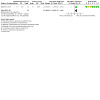
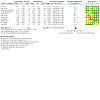
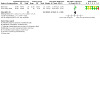
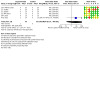
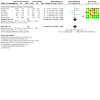
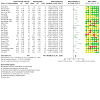
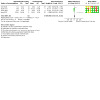
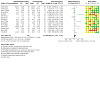
Data collection and analysis: We used standard methodological procedures expected by Cochrane. Two main analyses were carried out. The first analysis included trials where the therapy duration of control intervention was non-dose-matched with the therapy duration of the experimental group and the second analysis where there was comparison with a dose-matched control intervention (equal therapy duration in both the control as in the experimental group). MAIN RESULTS: We included 68 trials with a total of 2585 participants. In the analysis of the non-dose-matched groups (pooling of all trials with different training duration in the experimental as in the control intervention), we could see that trunk training had a positive effect on ADL (standardised mean difference (SMD) 0.96; 95% confidence interval (CI) 0.69 to 1.24; P < 0.001; 5 trials; 283 participants; very low-certainty evidence), trunk function (SMD 1.49, 95% CI 1.26 to 1.71; P < 0.001; 14 trials, 466 participants; very low-certainty evidence), arm-hand function (SMD 0.67, 95% CI 0.19 to 1.15; P = 0.006; 2 trials, 74 participants; low-certainty evidence), arm-hand activity (SMD 0.84, 95% CI 0.009 to 1.59; P = 0.03; 1 trial, 30 participants; very low-certainty evidence), standing balance (SMD 0.57, 95% CI 0.35 to 0.79; P < 0.001; 11 trials, 410 participants; very low-certainty evidence), leg function (SMD 1.10, 95% CI 0.57 to 1.63; P < 0.001; 1 trial, 64 participants; very low-certainty evidence), walking ability (SMD 0.73, 95% CI 0.52 to 0.94; P < 0.001; 11 trials, 383 participants; low-certainty evidence) and quality of life (SMD 0.50, 95% CI 0.11 to 0.89; P = 0.01; 2 trials, 108 participants; low-certainty evidence). Non-dose-matched trunk training led to no difference for the outcome serious adverse events (odds ratio: 7.94, 95% CI 0.16 to 400.89; 6 trials, 201 participants; very low-certainty evidence). In the analysis of the dose-matched groups (pooling of all trials with equal training duration in the experimental as in the control intervention), we saw that trunk training had a positive effect on trunk function (SMD 1.03, 95% CI 0.91 to 1.16; P < 0.001; 36 trials, 1217 participants; very low-certainty evidence), standing balance (SMD 1.00, 95% CI 0.86 to 1.15; P < 0.001; 22 trials, 917 participants; very low-certainty evidence), leg function (SMD 1.57, 95% CI 1.28 to 1.87; P < 0.001; 4 trials, 254 participants; very low-certainty evidence), walking ability (SMD 0.69, 95% CI 0.51 to 0.87; P < 0.001; 19 trials, 535 participants; low-certainty evidence) and quality of life (SMD 0.70, 95% CI 0.29 to 1.11; P < 0.001; 2 trials, 111 participants; low-certainty evidence), but not for ADL (SMD 0.10; 95% confidence interval (CI) -0.17 to 0.37; P = 0.48; 9 trials; 229 participants; very low-certainty evidence), arm-hand function (SMD 0.76, 95% CI -0.18 to 1.70; P = 0.11; 1 trial, 19 participants; low-certainty evidence), arm-hand activity (SMD 0.17, 95% CI -0.21 to 0.56; P = 0.38; 3 trials, 112 participants; very low-certainty evidence). Trunk training also led to no difference for the outcome serious adverse events (odds ratio (OR): 7.39, 95% CI 0.15 to 372.38; 10 trials, 381 participants; very low-certainty evidence). Time post stroke led to a significant subgroup difference for standing balance (P < 0.001) in non-dose-matched therapy. In non-dose-matched therapy, different trunk therapy approaches had a significant effect on ADL (< 0.001), trunk function (P < 0.001) and standing balance (< 0.001). When participants received dose-matched therapy, analysis of subgroup differences showed that the trunk therapy approach had a significant effect on ADL (P = 0.001), trunk function (P < 0.001), arm-hand activity (P < 0.001), standing balance (P = 0.002), and leg function (P = 0.002). Also for dose-matched therapy, subgroup analysis for time post stroke resulted in a significant difference for the outcomes standing balance (P < 0.001), walking ability (P = 0.003) and leg function (P < 0.001), time post stroke significantly modified the effect of intervention. Core-stability trunk (15 trials), selective-trunk (14 trials) and unstable-trunk (16 trials) training approaches were mostly applied in the included trials.
Authors' conclusions: There is evidence to suggest that trunk training as part of rehabilitation improves ADL, trunk function, standing balance, walking ability, upper and lower limb function, and quality of life in people after stroke. Core-stability, selective-, and unstable-trunk training were the trunk training approaches mostly applied in the included trials. When considering only trials with a low risk of bias, results were mostly confirmed, with very low to moderate certainty, depending on the outcome.
Copyright © 2023 The Cochrane Collaboration. Published by John Wiley & Sons, Ltd.
Conflict of interest statement
Thijs L: L. Thijs could be identified as the first author of an included study.
Voet E: E Voets could be identified as a co‐author of an included study.
Denissen S: none known
Mehrholz J: none known
Bernhard E: none known
Lemmens R: R Lemmens could be identified as a co‐author of an included study.
Verheyden G: G. Verheyden could be identified as the first author of an included study.
Figures
Update of
References
References to studies included in this review
An 2017 {published data only}
-
- An S-H, Park D-S. The effects of trunk exercise on mobility, balance and trunk control of stroke patients. Journal of Korean Academy of Rehabilitation Medicine 2017;12(1):25-33. [DOI: 10.13066/kspm.2017.12.1.25] - DOI
Bae 2013 {published data only}
Bilek 2020 {published and unpublished data}
Büyükavcı 2016 {published and unpublished data}
-
- Büyükavcı R, Şahin F, Sağ S, Doğu B, Kuran B. The impact of additional trunk balance exercises on balance, functional condition and ambulation in early stroke patients: randomized controlled trial [Erken inmeli hastalarda gövde denge egzersizlerinin eklenmesinin gövde dengesi, fonksiyonel durum, gövde dengesi ve ambulasyona etkisi: Randomize-kontrollü çalışma]. Turkish Journal of Physical Medicine and Rehabilitation 2016;62(3):248-56.
-
- Büyükavci R, Iahin F, Saʇ S, Doʇu B, Kuran B. The effect of trunk balance training on motor recovery, trunk balance, ambulation and quality of life in subacute stroke patients: a randomized controlled trial. Turkish Journal of Physical Medicine and Rehabilitation 2011;57:270.
Cabanas‐Valdés 2016 {published data only}
-
- Cabanas-Valdés R, Bagur-Calafat C, Girabent-Farrés M, Caballero-Gómez FM, Hernández-Valiño M, Urrútia Cuchí G. The effect of additional core stability exercises on improving dynamic sitting balance and trunk control for subacute stroke patients: a randomized controlled trial. Clinical Rehabilitation 2016;30(10):1024-33. [DOI: 10.1177/0269215515609414] - DOI - PubMed
-
- Cabanas-Valdés R, Bagur-Calafat C, Girabent-Farres M, Caballero-Gomez FM, Du Port de Pontcharra-Serra H, German-Romero A, et al. Long-term follow-up of a randomized controlled trial on additional core stability exercises training for improving dynamic sitting balance and trunk control in stroke patients [with consumer summary]. Clinical Rehabilitation 2017;31(11):1492-9. - PubMed
-
- NCT01864382. "Core Stability" exercises to improve sitting balance in stroke patients. clinicaltrials.gov/ct2/show/NCT01864382 (first received 29 May 2013).
Cano‐Mañas 2020 {published data only}
-
- Cano-Manas MJ, Collado-Vazquez S, Rodriguez Hernandez J, Munoz Villena AJ, Cano-De-La-Cuerda R. Effects of video-game based therapy on balance, postural control, functionality, and quality of life of patients with subacute stroke: a randomized controlled trial. Journal of Healthcare Engineering 2020;2020:1-11. - PMC - PubMed
Chan 2015 {published data only}
-
- Chan BK, Ng SS, Ng GY. A home-based program of transcutaneous electrical nerve stimulation and task-related trunk training improves trunk control in patients with stroke: a randomized controlled clinical trial. Neurorehabilitation and Neural Repair 2015;29(1):70-9. [DOI: 10.1177/1545968314533612] - DOI - PubMed
-
- Chan BK, Ng SS, Ng GY. Transcutaneous electrical nerve stimulation (TENS) enhances the effect of task-related trunk training (TRTT) on trunk control and walking function in subjects with chronic stroke. Cerebrovascular Diseases 2013;36 Suppl 1:17.
Chen 2020 {published data only}
Chitra 2015 {published data only}
-
- Chitra J, Sharan R. A comparative study on the effectiveness of core stability exercise and pelvic proprioceptive neuromuscular facilitation on balance, motor recovery and function in hemiparetic patients: a randomized clinical trial. Romanian Journal of Physical Therapy 2015;21(36):12-8.
Choi 2014 {published data only}
Chung 2013 {published data only}
Chung 2014 {published data only}
Dean 1997 {published and unpublished data}
-
- Dean CM, Shepherd RB, Adams R. The effect of specific balance training in sitting on support and balance through the lower limbs following stroke. In: National Physiotherapy Congress; 1996. 1996:148-9.
-
- Dean CM, Shepherd RB. Task-related training improves performance of seated reaching tasks after stroke. Stroke 1997;28:722-8. - PubMed
Dean 2007 {published and unpublished data}
-
- Dean CM, Channon EF, Hall J. The efficacy of a protocol to train sitting balance early after stroke: a randomised trial. Internal Medicine Journal 2004;34(1/2):A7.
-
- Dean CM, Channon EF, Hall JM. Sitting training early after stroke improves sitting ability and quality and carries over to standing up but not to walking: a randomised controlled trial. Australian Journal of Physiotherapy 2007;53:97-102. - PubMed
DeLuca 2020 {published and unpublished data}
De Sèze 2001 {published data only}
-
- De Sèze M, Wiart L, Bon-Saint-Côme A, Debelleix X, Joseph PA, Mazaux JM, et al. Rehabilitation of postural disturbances of hemiplegic patients by using trunk control retraining during exploratory exercises. Archives of Physical Medicine and Rehabilitation 2001;82(6):793-800. [DOI: 10.1053/apmr.2001.0820793] - DOI - PubMed
Dubey 2018 {published data only}
El‐Nashar 2019 {published data only}
-
- El-Nashar H, ElWishy A, Helmy H, El-Rwainy R. Do core stability exercises improve upper limb function in chronic stroke patients? Egyptian Journal of Neurology, Psychiatry and Neurosurgery 2019;55:38-47. [DOI: ]
Fujino 2016 {published and unpublished data}
-
- Fujino Y, Amimoto K, Fukata K, Ishihara S, Makita S, Takahashi H. Does training sitting balance on a platform tilted 10 degrees to the weak side improve trunk control in the acute phase after stroke? A randomized, controlled trial. Topics in Stroke Rehabilitation 2016;23(1):43-9. - PubMed
Fukata 2019 {published and unpublished data}
-
- Fukata K, Amimoto K, Inoue M, Sekine D, Fujino Y, Makita S, et al. Effects of diagonally aligned sitting training with a tilted surface on sitting balance for low sitting performance in the early phase after stroke: a randomised controlled trial. Disability and Rehabilitation 2019;12:1-9. [DOI: 10.1080/09638288.2019.1688873] - DOI - PubMed
Haruyama 2017 {published and unpublished data}
Jung 2014 {published data only}
Jung 2016a {published data only}
Jung 2016b {published data only}
Jung 2017 {published data only}
Karthikbabu 2011 {published data only}
-
- Karthikbabu S, Nayak A, Vijayakumar K, Misri ZK, Suresh BV, Ganesan S, et al. Comparison of physio ball and plinth trunk exercises regimens on trunk control and functional balance in patients with acute stroke: a pilot randomized controlled trial [with consumer summary]. Clinical Rehabilitation 2011;25(8):709-19. - PubMed
Karthikbabu 2018a {published data only}
-
- Karthikbabu S, Chakrapani M, Ganesan S, Ellajosyula R, Solomon JM. Efficacy of trunk regimes on balance, mobility, physical function, and community reintegration in chronic stroke: a parallel-group randomized trial. Journal of Stroke and Cerebrovascular Diseases 2018;27(4):1003-11. [DOI: 10.1016/j.jstrokecerebrovasdis.2017.11.003] - DOI - PubMed
-
- Karthikbabu S. Benefits of treating trunk on strength and community participation in late stage stroke. www.ctri.nic.in (first received 17th April 2017).
Karthikbabu 2021 {published and unpublished data}
-
- Karthikbabu S, Ganesan S, Ellajosyula R, Solomon J, Rakshith K, Chakrapani M. Core stability exercises yield multiple benefits for patients with chronic stroke – randomized controlled trial. American Journal of Physical Medicine & Rehabilitation 2021;17:1-25. [DOI: doi: 10.1097/PHM.0000000000001794] - PubMed
Kilinç 2016 {published and unpublished data}
-
- Kılınç M, Avcu F, Onursal O, Ayvat E, Savcun Demirci C, Aksu Yildirim S. The effects of Bobath-based trunk exercises on trunk control, functional capacity, balance, and gait: a pilot randomized controlled trial. Topics in Stroke Rehabilitation 2016;23(1):50-8. [DOI: 10.1179/1945511915Y.0000000011] - DOI - PubMed
Kim 2011 {published data only}
-
- Kim Y, Kim E, Gong W. The effects of trunk stability exercise using PNF on the functional reach test and muscle activities of stroke patients. Journal of Physical Therapy Science 2011;23(5):699-702. [DOI: ]
Ko 2016 {published and unpublished data}
Kumar 2011 {published data only}
-
- Kumar V, Babu K, Nayak A. Additional trunk training improves sitting balance following acute stroke: a pilot randomized controlled trial. International Journal of Current Research and Review 2011;2(3):26-43.
Lee 2012 {published data only}
-
- Lee YW, Lee JH, Shin SS, Lee SW. The effect of dual motor task training while sitting on trunk control ability and balance of patients with chronic stroke. Journal of Physical Therapy Science 2012;24(4):345-9.
Lee 2014a {published data only}
Lee 2014b {published data only}
-
- Lee C-H, Kim Y, Lee B-L. Augmented reality-based postural control training improves gait function in patients with stroke: randomized controlled trial. Hong Kong Physiotherapy Journal 2014;32:51-7.
Lee 2016a {published data only}
Lee 2017a {published data only}
Lee 2017b {published data only}
Lee 2020a {published data only}
-
- Lee P-Y, Huang J-C, Tseng H-Y, Yang Y-C, Lin S-I. Effects of trunk exercise on trunk control and balance in persons with stroke. International Journal of Environmental Research and Public Health 2020;17:9135-47. [DOI: 10.3390/ijerph17239135] - DOI
-
- NCT04434443. Effects of trunk exercise on trunk control and balance in persons with stroke. clinicaltrials.gov/ct2/show/NCT04434443 (first received 16 June 2020).
Lee 2020b {published data only}
Lee MM 2018 {published data only}
Liu 2020 {published data only}
-
- Liu J, Feng W, Zhou J, Huang F, Long L, Wang Y, et al. Effects of sling exercise therapy on balance, mobility, activities of daily living, quality of life and shoulder pain in stroke patients: a randomized controlled trial. European Journal of Integrative Medicine 2020;35:1-7. [DOI: 10.1016/j.eujim.2020.101077] [ID 101077] - DOI
Marzouk 2019 {published data only}
-
- Marzouk MH, El-Tamawy MS, Darwish MH, Khalifa HA, Al-Azab IM. Effect of pelvic control exercises on pelvic asymmetry and spatiotemporal gait parameter in stroke patients. Medical Journal of Cairo University 2019;87(2):935-9.
Merkert 2011 {published data only}
-
- Merkert J, Butz S, Nieczaj R, Steinhagen-Thiessen E, Eckardt R. Combined whole body vibration and balance training using Vibrosphere R: improvement of trunk stability, muscle tone, and postural control in stroke patients during early geriatric rehabilitation. Zeitschrift fur Gerontologie und Geriatrie 2011;44(4):256-61. [DOI: ] - PubMed
Mudie 2002 {published data only}
-
- Mudie MH, Winzeler-Mercay U, Radwan S, Lee L. Training symmetry of weight distribution after stroke: a randomized controlled pilot study comparing task-related reach, Bobath and feedback training approaches. Clinical Rehabilitation 2002;16:582-92. - PubMed
Park 2013 {published data only}
Park 2018a {published data only}
Park 2018b {published data only}
Park 2020 {published data only}
-
- Park SJ, Oh S. Effect of diagonal pattern training on trunk function, balance, and gait in stroke patients. Applied Sciences 2020;10(13):4635. [DOI: ]
Park J 2017 {published data only}
-
- Park J, Gong J, Yim J. Effects of a sitting boxing program on upper limb function, balance, gait, and quality of life in stroke patients. NeuroRehabilitation 2017;40(1):77-86. - PubMed
Rangari 2020 {published data only}
-
- Rangari SS, Qureshi MI, Samal SN. Efficacy of core strengthening exercises on swissball versus mat exercises for improving trunk balance in hemiplegic patients following stroke. Indian Journal of Public Health Research and Development 2020;11(4):407-11.
Renald 2016 {published data only}
-
- Renald SF, Regan JR. Efficacy of trunk exercises on Swiss ball versus bed in improving trunk control in hemiparetic patients. International Journal of Physiotherapy and Research 2016;4(2):1444-50. [DOI: 10.16965/ijpr.2016.115] - DOI
Saeys 2012 {published and unpublished data}
Sarwar 2019 {published data only}
-
- Sarwar R, Faizan M, Ahmed U, Waqas M. Effects of unstable and stable trunk exercise programs on trunk motor performance, balance and functional mobility in stroke patients. Rawal Medical Journal 2019;44(1):20-3.
Seo 2012 {published data only}
-
- Seo DK, Kwon OS, Kim JH, Lee DY. The effect of trunk stabilization exercise on the thickness of the deep abdominal muscles and balance in patients with chronic stroke. Journal of Physical Therapy Science 2012;24(2):181-5.
Shah 2016 {published and unpublished data}
-
- Shah P, Karthikbabu S, Syed N, Ratnavalli E. Effects of truncal motor imagery practice on trunk performance, functional balance, and daily activities in acute stroke. Journal of the Scientific Society 2016;43(3):127-34. [DOI: ]
Sharma 2017 {published data only}
Sheehy 2020 {published data only}
-
- Sheehy L, Taillon-Hobson A, Sveistrup H, Bilodeau M, Yang C, Finestone H. Sitting balance exercise performed using virtual reality training on a stroke rehabilitation inpatient service: a randomized controlled study. PM & R : the Journal of Injury, Function, and Rehabilitation 2020;12(8):754-65. [DOI: ] - PubMed
Shim 2020 {published data only}
Shin 2016 {published data only}
Sun 2016 {published data only}
Thijs 2021 {published and unpublished data}
-
- NCT04467554. Providing sitting balance training with a newly developed rehabilitation device. clinicaltrials.gov/ct2/show/NCT04467554 (first received 13 July 2020).
Van Criekinge 2020 {published data only}
Varshney 2019 {published data only}
-
- Varshney V, Gupta N. Unstable surface is more effective than stable surface to improve trunk control in post-stroke patients. Indian Journal of Physiotherapy & Occupational Therapy 2019;13(4):160-4. [DOI: 10.5958/0973-5674.2019.00153.9] - DOI
Verheyden 2009 {published data only}
Viswaja 2015 {published data only}
-
- Viswaja K, Pappala KP, Tulasi PRS, Apparao P. Effectiveness of trunk training exercises versus Swiss ball exercises for improving sitting balance and gait parameters in acute stroke subjects. International Journal of Physiotherapy 2015;2(6):925-32.
Yoo 2010 {published data only}
-
- Yoo SD, Jeong YS, Kim DH, Lee MA, Noh SG, Shin YW. The efficacy of core strengthening on the trunk balance in patients with subacute stroke. Journal of Korean Academy of Rehabilitation Medicine 2010;34(6):677-82.
References to studies excluded from this review
ACTRN12608000457347 {published data only}
-
- ACTRN12608000457347. The efficacy of a novel, non-robotic intervention to train reaching post stroke. www.anzctr.org.au/Trial/Registration/TrialReview.aspx?id=83061&isRev... (first received 12 August 2008).
Awad 2015 {published data only}
Baek 2015 {published data only}
Barker 2008 {published data only}
-
- Barker RN, Brauer SG, Carson RG. Training of reaching in stroke survivors with severe and chronic upper limb paresis using a novel nonrobotic device. A randomized clinical trial. Stroke 2008;39:1800-7. - PubMed
Bonan 2002 {published data only}
-
- Bonan I, Yelnik A, Colle F, Guichard JP, Vicaut E, Eisenfisz M. Effectiveness of a balance rehabilitation programme with visual cue deprivation after stroke: a randomized controlled trial. Clinical Rehabilitation 2002;16:808-9.
Bower 2014 {published data only}
-
- Bower KJ, Clark RA, McGinley JL, Martin CL, Miller KJ. Clinical feasibility of the Nintendo Wii for balance training post-stroke: a phase II randomized controlled trial in an inpatient setting. Clinical Rehabilitation 2014;28(9):912-23. - PubMed
-
- Bower KJ, Clark RA, McGinley JL, Martin CL, Miller KJ. Feasibility and efficacy of the Nintendo Wii gaming system to improve balance performance post-stroke: protocol of a phase II randomized controlled trial in an inpatient rehabilitation setting. Games for Health Journal 2013;2(2):103-8. - PubMed
Brogardh 2012 {published data only}
-
- Brogardh C, Flansbjer UB, Lexell J. No specific effect of whole-body vibration training in chronic stroke: a double-blind randomized controlled study. Neurorehabilitation and Neural Repair 2012;26(6):764. - PubMed
Cekok 2016 {published data only}
-
- Cekok K, Tarsuslu Simsek T. The effect of Nintendo Wii games on balance and upper extremity functions in patients with stroke. Fizyoterapi Rehabilitasyon 2016;27(2):61-71.
Chen 2008 {published data only}
-
- Chen H, Lin K, Chen C, Wu C. The beneficial effects of a functional task target on reaching and postural balance in patients with right cerebral vascular accidents. Motor Control 2008;12:122-35. - PubMed
ChiCTR1800020170 {published data only}
-
- ChiCTR1800020170. Effect of modified Liuzijue on respiratory muscle function and trunk control in subacute stroke patients. www.cochranelibrary.com/central/doi/10.1002/central/CN-01947215/full (first received 19 December 2018).
Cho 2020 {published data only}
-
- Cho Y-H, Cho K-H, Park S-J. Effects of trunk rehabilitation with kinesio and placebo taping on static and dynamic sitting postural control in individuals with chronic stroke: a randomized controlled trial. Topics in Stroke Rehabilitation 2020;27:610-9. [DOI: 10.1080/10749357.2020.1747672] - DOI - PubMed
Cirstea 2007 {published data only}
CTRI/2018/01/011543 {published data only}
-
- CTRI/2018/01/011543. Efficacy of task-oriented training approach on trunk and hip musculature to improve balance in stroke subjects: a randomised controlled trial. ctri.nic.in/Clinicaltrials/pmaindet2.php?trialid=22039 (first received 24 January 2018).
Da Silva Ribeiro 2015 {published data only}
-
- Da Silva Ribeiro NM, Ferraz DD, Pedreira E, Pinheiro I, Da Silva Pinto AC, Neto MG, et al. Virtual rehabilitation via Nintendo Wii and conventional physical therapy effectively treat post-stroke hemiparetic patients. Topics in Stroke Rehabilitation 2015;22(4):299-305. - PubMed
Dell'Uomo 2017 {published data only}
-
- Dell’Uomo D, Morone G, Centrella A, Paolucci S, Caltagirone C, Grasso MG, et al. Effects of scapulohumeral rehabilitation protocol on trunk control recovery in patients with subacute stroke: a randomized controlled trial. NeuroRehabilitation 2017;40(3):337-43. [DOI: ] - PubMed
De Luca 2018 {published data only}
-
- De Luca R, Russo M, Naro A, Tomasello P, Leonardi S, Santamaria F, et al. Effects of virtual reality-based training with BTs-Nirvana on functional recovery in stroke patients: preliminary considerations. International Journal of Neuroscience 2018;128(9):791-6. [DOI: 10.1080/00207454.2017.1403915] - DOI - PubMed
Dursun 1996 {published data only}
-
- Dursun E, Hamamci N, Donmez S, Tuzunalp O, Cakci A. Angular biofeedback device for sitting balance of stroke patients. Stroke 1996;27(8):1354-7. [DOI: ] - PubMed
Foley 2004 {published data only}
-
- Foley SM, O'Sullivan PS, Means KM. Postexercise outcome: does exercise affect functional obstacle course performance in stroke patients? American Journal of Physical Medicine and Rehabilitation 2004;83:249.
Fujino 2012 {published data only}
-
- Fujino Y, Amimoto K, Koizumi Y, Fukata K, Sato D, Togano Y, et al. Immediate effects of sitting training on a tilting platform in the early post stroke period: analysis of EMG and motion of the trunk. Rigakuryoho Kagaku 2012;27(4):451-5.
Glick 1997 {published data only}
-
- Glick J, Van Horn M, Geerhart K, Sirotnak N, Kinney LaPier T. Effects of voluntary weight shifting on lower extremity weight distribution in adults with hemiparesis. Neurology Report 1997;21(5):181-2.
Guillén‐Solà 2017 {published data only}
-
- Guillén-Solà A, Messagi Sartor M, Bofill Soler N, Duarte E, Barrera Mª C, Marco E. Respiratory muscle strength training and neuromuscular electrical stimulation in subacute dysphagic stroke patients: a randomized controlled trial. Clinical Rehabilitation 2017;31(6):761-71. [DOI: 10.1177/0269215516652446] - DOI - PubMed
Ha 2020 {published data only}
-
- Ha S-Y, Sung Y-H. Attentional concentration during physiotherapeutic intervention improves gait and trunk control in patients with stroke. Neuroscience Letters 2020;736:135291. [DOI: ] - PubMed
Hancock 2017 {published data only}
-
- Hancock NJ, Shepstone L, Rowe P, Myint PK, Pomeroy VM. Towards upright pedalling to drive recovery in people who cannot walk in the first weeks after stroke: movement patterns and measurement. Physiotherapy 2017;103(4):400-6. [DOI: ] - PubMed
Hirokawa 2013 {published data only}
-
- Hirokawa T, Matsumoto S, Uema T, Tomokazu N, Sameshima J. Effects of intensive repetition of trunk muscle facilitation on motor functional recovery after stroke: a randomized controlled trial. Journal of the Japanese Physical Therapy Association 2013;40(7):457-64.
Hsieh 2019 {published data only}
ISRCTN14335555 {published data only}
-
- ISRCTN14335555. Wii balance training in stroke patients. www.isrctn.com/ISRCTN14335555 (first received 12 April 2018). [DOI: 10.1186/ISRCTN14335555] - DOI
ISRCTN20398227 {published data only}
-
- ISRCTN20398227. The effects of whole body vibration on balance and physical performance in the older people with chronic stroke. www.isrctn.com/ISRCTN20398227 (first received 3 August 2018).
Jung 2018 {published data only}
-
- Jung K-M. Effects of whole body tilt exercise with visual feedback on trunk control, strength, and balance in patients with acute stroke: a randomized controlled pilot study. Journal of the Korean Society of Physical Medicine 2018;13(4):75-84.
Kal 2019 {published data only}
-
- Kal E, Houdijk H, Van der Kamp J, Verhoef M, Prosée R, Groet E, et al. Are the effects of internal focus instructions different from external focus instructions given during balance training in stroke patients? A double-blind randomized controlled trial. Clinical Rehabilitation 2019;33(2):207-21. - PubMed
Kim 2008 {published data only}
-
- Kim DH, Yi TI, Kim JS, Park JS, Lee JH, Gu HG. The effects of isokinetic strengthening of trunk muscles on balance in hemiplegic patients. Journal of Korean Academy of Rehabilitation Medicine 2008;32(3):280-4.
Kim HY 2018 {published data only}
Kim JC 2018 {published data only}
-
- Kim JC, Lee HM. The effect of action observation training on balance and sit to walk in chronic stroke: a crossover randomized controlled trial. Journal of Motor Behavior 2018;50(4):373-80. - PubMed
Koneva 2018 {published data only}
-
- Koneva ES, Timashkova GV, Shapovalenko TV, Lyadov KV. Functional spatially-oriented rehabilitation of elderly patients after cerebral stroke. Research Journal of Pharmaceutical Biological and Chemical Sciences 2018;9(5):2232-8.
Kozol 2010 {published data only}
-
- Kozol MZ, Filer M, Ring H. Bridging performance of adults with hemiparesis: sliding of the paretic limb. Journal of Geriatric Physical Therapy 2010;33(1):26-33. - PubMed
Krishna 2018 {published data only}
-
- Krishna KR, Sangeetha G. Carryover effect of compelled body weight shift technique to facilitate rehabilitation of individuals with stroke - an assessor blinded randomized controlled trial. International Journal of Pharma and Biosciences 2018;9(2):B245-62.
Kulkarni 2018 {published data only}
-
- Kulkarni TN, Karajgi AK, Pandit U. Comparison between virtual reality training using x-box 360 kinect and conventional physiotherapy on trunk, postural control and quality of life. In: 10th World Congress for NeuroRehabilitation, 2018. Vol. 4-5. 2018:491. [DOI: 10.1177/1545968318765498] - DOI
Lee 2017 {published data only}
-
- Lee HC, Huang CL, Ho SH, Sung WH. The effect of a virtual reality game intervention on balance for patients with stroke: a randomized controlled trial. Games for Health Journal 2017;6(5):303-11. - PubMed
Lee 2018b {published data only}
Liaw 2020 {published data only}
Lin 1998 {published data only}
-
- Lin J-J, Chung K-C. Evaluate a biofeedback training on the dynamic and static balance for preambulation in hemiplegic patients. Chinese Journal of Medical and Biological Engineering 1998;18(1):59-65.
Lobo 2022 {published data only}
-
- Lobo AA, Joshua AM, Nayak A, Prasanna MP, Misri Z, Pai S. Effect of Compelled Body Weight Shift (CBWS) therapy in comparison to proprioceptive training on functional balance, gait, and muscle strength among acute stroke subjects. Annals of Neuroscience 2022;28:162-9. [DOI: 10.1177/09727531211063132] - DOI - PMC - PubMed
Marigold 2005 {published data only}
Mohapatra 2012 {published data only}
Muckel 2014 {published data only}
-
- Muckel S, Mehrholz J. Immediate effects of two attention strategies on trunk control on patients after stroke. A randomized controlled pilot trial [with consumer summary]. Clinical Rehabilitation 2014;28(7):632-6. - PubMed
NCT01304017 {published data only}
-
- NCT01304017. Virtual reality intervention for stroke rehabilitation. www.clinicaltrials.gov/ct2/show/NCT01304017 (first posted 25 February 2011).
NCT01371253 {published data only}
-
- NCT01371253. 10 weeks of NIntendo wIi fit balance training improved postural balance and muscle strength in elderly individuals (WIICAN). clinicaltrials.gov/ct2/show/NCT01371253 (first received 10 June 2011).
NCT02565407 {published data only}
-
- NCT02565407. Robot-aided proprioceptive rehabilitation training. clinicaltrials.gov/ct2/show/NCT02565407 (first received 1 October 2015).
NCT02654951 {published data only}
-
- NCT02654951. Reaching in stroke. clinicaltrials.gov/ct2/show/NCT02654951 (first received 13 January 2016).
NCT02753322 {published data only}
-
- NCT02753322. Training dual-task balance and walking in people with stroke. clinicaltrials.gov/ct2/show/NCT02753322 (first received 27 April 2016).
NCT03234426 {published data only}
-
- NCT03234426. Effectiveness of perturbations exercises in improving balance, function and mobility in stroke patients (perturbation). clinicaltrials.gov/ct2/show/NCT03234426 (first received 31 July 2017).
NCT03602326 {published data only}
-
- NCT03602326. Neurodevelopmental therapy-Bobath approach in the early term of stroke; safe and effective. ClinicalTrials.gov/show/NCT03602326 (first received 26 July 2018).
NCT03757026 {published data only}
-
- NCT03757026. Comparison of three balance training protocols for individuals post stroke. www.clinicaltrials.gov/ct2/show/NCT03757026 (first received 28 November 2018).
NCT04042961 {published data only}
-
- NCT04042961. Reactive balance training and fitness. clinicaltrials.gov/show/NCT04042961 (first received 2 August 2019).
NCT04491279 {published data only}
-
- NCT04491279. Neuropilates compared to general exercise classes in chronic stroke. clinicaltrials.gov/ct2/show/NCT04491279 (first received 29 July 2020).
Nyffeler 2017 {published data only}
Oh 2016 {published data only}
Oh 2017 {published data only}
PACTR201801002927119 {published data only}
-
- PACTR201801002927119. Effect of pelvic control exercises on gait in stroke patients. Pan African Clinical Trials Registry (first received 10th January 2018 ).
PACTR201810717634701 {published data only}
-
- PACTR201810717634701. Task-specific training with multi-sensory biofeedback on ambulation, balance, cognition and societal participation in individuals post stroke. Pan African Clinical Trials Registry (first received 1 October 2018).
Park 2014 {published data only}
Park 2017 {published data only}
Petrofsky 2005 {published data only}
-
- Petrofsky JS, Johnson EG, Hanson A, Cuneo M, Dial R, Somers R, et al. Abdominal and lower back training for people with disabilities using a 6 Second Abs machine: effect on core muscle stability. Journal of Applied Research 2005;5(2):345-59.
Rajaratnam 2011 {published data only}
-
- Rajaratnam BS, Su Y, Xu TT, Howe WW, Hsia AN, Teo ST, et al. Wii-rehab to enhance balance among patients with stroke. In: 5th International Conference on Rehabilitation Engineering & Assistive Technology. 2011.
Ramachandran 2016 {published data only}
-
- Ramachandran A, Vaiyapuri A, Alagesan J, Vasanthi RK. "Trunk dissociation retrainer" for improving balance and gait in hemiplegia. Indian Journal of Physiotherapy and Occupational Therapy 2015;9(3):259-63.
-
- Ramachandran A, Vaiyapuri A, Chandrasekar L. Effects of “Trunk Dissociation Retrainer” in improving trunk performance and functional activities in hemiplegia. Indian Journal of Physiotherapy and Occupational Therapy 2016;10(1):160-5. [DOI: 10.5958/0973-5674.2016.00033.2] - DOI
Rao 2013 {published data only}
-
- Rao T. A community applied research of traditional Chinese medicine rehabilitation scheme on balance dysfunction after stroke. Chinese Clinical Trial Registry (ChiCTR) (first received 22th August 2013).
Rasheeda 2017 {published data only}
-
- Rasheeda V, Sivakumar R. The effect of Swiss ball therapy on sit-to-stand function, paretic limb weight bearing and lower limb motor score in patients with hemiplegia. International Journal of Physiotherapy 2017;4(6):319-23.
Sánchez‐Sánchez 2018 {published data only}
-
- Sánchez-Sánchez ML, Belda-Lois JM, Mena-Del Horno S, Viosca-Herrero E, Igual-Camacho C, Gisbert-Morant B. A new methodology based on functional principal component analysis to study postural stability post-stroke. Clinical Biomechanics 2018;56:18-56. - PubMed
Schmid 2015 {published data only}
-
- Schmid AA, Miller KK, Van Puymbroeck M. Yoga after stroke leads to improvements in multiple domains of quality of life. Archives of Physical Medicine and Rehabilitation 2015;96(10):e93.
Shah 2018 {published data only}
-
- Shah RJ, Pandya A. Compare effect of PNF for trunk versus weight shift therapy on trunk control and dynamic balance in chronic hemiplegia. Neurorehabilitation and Neural Repair 2018;32(4-5):392. [DOI: 10.1177/1545968318765498] - DOI
Shin JW 2016 {published data only}
Shumway‐Cook 1988 {published data only}
-
- Shumway-Cook A, Anson D, Haller S. Postural sway biofeedback: its effect on reestablishing stance stability in hemiplegic patients. Archives of Physical Medicine and Rehabilitation 1988;69:395-400. - PubMed
Singh 2002 {published data only}
-
- Singh NR, Sharma R, Srivastava RK, Gupta N. Effect of postural biofeedback training: its effect on functional outcome in the rehabilitation of hemiplegic patients after stroke. Archives of Physical Medicine and Rehabilitation 2002;83:1690.
Song 2015 {published data only}
Sorinola 2018 {published data only}
-
- Sorinola I, White C, Burgess C, Rudd A, Walmsley N, Petty J. Feasibility of delivering additional trunk training during post stroke rehabilitation to promote 6 months' mobility outcomes in severe stroke. European Stroke Journal 2018;3(1 Suppl 1):130. [DOI: ]
Starke 2002 {published data only}
-
- Starke J, Bennefeld H, Hartmann C, Kaeubler WD, Blumenstein R. Effectiveness of hippotherapy - Part 2: a study with patients in the neurological rehabilitation centre. Neurorehabilitation and Neural Repair 2002;16(1):86.
Subramanian 2007 {published data only}
-
- Subramanian S, Knaut L, Henderson A, Levin M. Repetitive training of arm pointing movements in patients with hemiparesis in virtual vs physical environments. Physiotherapy 2007;93 Suppl 1:S478.
Summa 2015 {published data only}
-
- Summa S, Pierella C, Giannoni P, Sciacchitano A, Iacovelli S, Farshchiansadegh A, et al. A body-machine interface for training selective pelvis movements in stroke survivors: a pilot study. ieeexplore.ieee.org/document/7319434 (accessed prior to 15 November 2022). [DOI: 10.1109/EMBC.2015.7319434] - DOI - PubMed
Sung 2013 {published data only}
-
- Sung Y-H, Kim C-J, Yu B-K, Kim K-M. A hippotherapy simulator is effective to shift weight bearing toward the affected side during gait in patients with stroke. NeuroRehabilitation 2013;33(3):407-12. [DOI: ] - PubMed
Taylor‐Pilliae 2014 {published data only}
-
- Taylor-Pilliae RE, Hoke TM, Hepworth JT, Latt LD, Najafi B, Coull BM. Effect of Tai Chi on physical function, fall rates and quality of life among older stroke survivors. Archives of Physical Medicine and Rehabilitation 2014;95:816-24. - PubMed
Teixeira 1998 {published data only}
-
- Teixeira L, Nadeau S, Olney S, McBride I, Culham E, Zee B. The impact of a muscle strengthening and physical conditioning program on gait and stairclimbing performance in chronic stroke subjects. Gait and Posture 1998;7:144-5.
Thielman 2003 {published data only}
-
- Thielman GT, Gentile AM. Rehabilitation of reaching after stroke (trunk stabilized): task-related training vs progressive resistive exercise. Journal of Neurologic Physical Therapy 2003;27(4):188.
Thielman 2013 {published data only}
U1111‐1239‐3846 {published data only}
-
- U1111-1239-3846. Clinical trial of the effect of breathing exercise on expiratory force and abdominal muscle in stroke patients. ensaiosclinicos.gov.br/rg/RBR-8w44f6 (first received 2 October 2019).
Ustinova 2002 {published data only}
-
- Ustinova K, Chernikova LA, Ioffe ME. Effect of using a special program of balance training in stroke patients. Neurorehabilitation and Neural Repair 2002;16(1):31.
Valdés 2018 {published data only}
Walker 2000 {published data only}
-
- Walker C, Brouwer BJ, Culham EG. Use of visual feedback in retraining balance following acute stroke. Physical Therapy 2000;80(9):886-95. - PubMed
Wu 2001 {published data only}
-
- Wu CY, Wong M-K, Lin K-C, Chen H-C. Effects of task goal and personal preference on seated reaching kinematics after stroke. Stroke 2001;32:70-6. - PubMed
Yavuzer 2006 {published data only}
Yelnik 2008 {published data only}
-
- Yelnik AP, Le Breton F, Colle FM, Bonan IV, Hugeron C, Egal V, et al. Rehabilitation of balance after stroke with multisensorial training: a single-blind randomized controlled study. Neurorehabilitation and Neural Repair 2008;22:468-76. - PubMed
Yoo 2014 {published data only}
Zheng 2021 {published data only}
-
- Zheng Y, Zhang Y, Li H, Qiao L, Fu W, Yu L, et al. Comparative effect of Liuzijue Qigong and conventional respiratory training on trunk control ability and respiratory muscle function in patients at an early recovery stage from stroke: a randomized controlled trial. Archives of Physical Medicine and Rehabilitation 2021;102(3):423-30. [DOI: ] - PubMed
References to studies awaiting assessment
Deshmukh 2018 {published data only}
-
- Deshmukh SU, Kumar TS. Effect of Swissball exercise versus plinth exercises in improving trunk control among hemiparetic patients - a comparative study. Indian Journal of Physiotherapy and Occupational Therapy 2018;12(3):97-100. [DOI: 10.5958/0973-5674.2018.00065.5] - DOI
Kim 2009 {published data only}
-
- Kim YM, Chun MH, Kang SH, Ahn WH. The effect of neuromuscular electrical stimulation on trunk control in hemiparetic stroke patients. Journal of Korean Society for Rehabilitation Medicine 2009;33(3):265-70.
Liao 2006 {published data only}
-
- Liao L, Luo W, Chen S. The effect of trunk control training on balance and lower limb function in patients with hemiplegia. Chinese Journal of Rehabilitation Medicine 2006;21(7):608-16.
Shen 2013 {published data only}
-
- Shen Y, Wang W, Chen Y. Effects of core stability training on standing balance and walking function of stroke hemiplegic patients in convalescent phase. Chinese Journal of Rehabilitation Medicine 2013;28(9):830-3. [DOI: 10.3969/j.issn.1001-1242.2013.09.009] - DOI
Wang 2016 {published data only}
-
- Wang D, Lin J, Liu X. Effects of visual feedback and core stability training program on post-stroke Pusher syndrome: a pilot randomized controlled study. Chinese Journal of Rehabilitation Medicine 2016;31(4):426-9. [DOI: 10.3969/j.issn.1001-1242.2016.04.010] - DOI
Yan 2017 {published data only}
-
- Yan XH, Xiong JZ, Li S-W, Zhou YH, Wei W-X. Rehabilitation effect of trunk control training under suspension on motor function of stroke patients in sequela period. Chinese Journal of Contemporary Neurology and Neurosurgery 2017;17(4):266-9. [DOI: ]
Yoon 2020 {published data only}
References to ongoing studies
ACTRN12617000452392 {published data only}
-
- ACTRN12617000452392. Core muscles strengthening for balance and gait performance in individuals with chronic stroke. www.anzctr.org.au/Trial/Registration/TrialReview.aspx?id=372139&isRe... (first received 27 March 2017).
CTRI201802011894 {published data only}
-
- CTRI/2018/02/011894. Effect of proprioceptive neuromuscular facilitation and truncal exercises on trunk control and dynamic sitting balance in post stroke subjects. www.who.int/trialsearch/Trial2.aspx?TrialID=CTRI/2018/02/011894 (first received 13 February 2018).
CTRI201810016074 {published data only}
-
- CTRI/2018/10/016074. Novel biofeedback on trunk control and balance in acute hemiplegic patients. www.who.int/trialsearch/Trial2.aspx?TrialID=CTRI/2018/10/016074 (first received 18th October 2018).
Karthikbabu 2018b {published data only}
-
- Karthikbabu S. Can core stability training improve trunk strength and balance self-confidence in chronic stroke? 12 months follow-up. Cochrane Central Register of Controlled Trials (CENTRAL) (first received 29 February 2020).
NCT03503617 {published data only}
-
- NCT03503617. RehabTouch home therapy for stroke patients [RehabTouch: a mixed-reality gym for rehabilitating the hands, arms, trunk, and legs after stroke]. clinicaltrials.gov/ct2/show/NCT03503617 (first received 20 April 2018).
NCT03811106 {published data only}
-
- NCT03811106. Neuromuscular electrical stimulation (NMES) in stroke-diagnosed individuals. clinicaltrials.gov/ct2/show/NCT03811106 (first received 22 January 2019).
NCT03975985 {published data only}
-
- NCT03975985. The effectiveness of core stability exercises (CORE). clinicaltrials.gov/ct2/show/NCT03975985 (first received 5 June 2019).
NCT03991390 {published data only}
-
- NCT03991390. Effectiveness of balance exercise program for stroke patients with Pusher Syndrome. clinicaltrials.gov/ct2/show/NCT03991390 (first received 19 June 2019).
NCT04440748 {published data only}
-
- NCT04440748. Feasibility study and pilot RCT into the use of a novel technology to train sitting balance and trunk control. clinicaltrials.gov/ct2/show/NCT04440748 (first received 22 June 2020).
Additional references
Ada 2006
-
- Ada L, Dean C, Mackey F. Increasing the amount of physical activity undertaken after stroke. Physical Therapy Reviews 2006;11:91-100.
Alhwoaimel 2018
An 2017
-
- An S-H, Park D-S. The effects of trunk exercise on mobility, balance and trunk control of stroke patients. Journal of Korean Academy of Rehabilitation Medicine 2017;12(1):25-33. [DOI: 10.13066/kspm.2017.12.1.25] - DOI
Atkins 2004
Bank 2016
Berg 1992
-
- Berg KO, Wood-Dauphinee SL, Williams JI, Maki B. Measuring balance in the elderly: validation of an instrument. Canadian Journal of Public Health 1992;83 Suppl 2:S7-11. - PubMed
Bernhardt 2017
-
- Bernhardt J, Hayward K, Kwakkel G, Ward N, Wolf S, Borschmann K, et al. Agreed definitions and a shared vision for new standards in stroke recovery research: the Stroke Recovery and Rehabilitation Roundtable Taskforce. International Journal of Stroke 2017;12(5):444-50. [DOI: 10.1177/1747493017711816] - DOI - PubMed
Birkfellner 2002
Bohannon 1992
-
- Bohannon RW. Lateral trunk flexion strength: impairment, measurement reliability and implications following unilateral brain lesion. International Journal of Rehabilitation Research 1992;15(3):249-51. - PubMed
Bohannon 2013
-
- Bohannon R, Andrews AW, Glenney SS. Minimal clinically important difference for comfortable gait speed as a measure of gait performance in patients undergoing inpatient rehabilitation after stroke. Journal of Physical Therapy Science 2013;25(10):1223-5. [DOI: doi: 10.1589/jpts.25.1223] - PMC - PubMed
Borenstein 2021
-
- Borenstein M, Hedges LV, Higgins JP, Rothstein HR. Chapter 13, Fixed-effect versus random-effects models. In: Introduction to Meta‐Analysis. New York: John Wiley & Sons Inc, 2021:71-9. [DOI: 10.1002/9781119558378.ch13] - DOI
Cabanas‐Valdés 2013
Cabrera‐Martos 2020
-
- Cabrera-Martos I, Ortiz-Rubio A, Torres-Sánchez I, López-López L, Jarrar M, Valenza C. The effectiveness of core exercising for postural control in patients with stroke: a systematic review and meta-analysis. American Academy of Physical Medicine and Rehabilitation 2020;12(11):1157-68. [DOI: 10.1002/pmrj.12330] - DOI - PubMed
Chen 2021
Collen 1990
-
- Collen FM, Wade DT, Bradshaw CM. Mobility after stroke: reliability of measures of impairment and disability. International Disability Studies 1990;12(1):6-9. - PubMed
Collin 1988
-
- Collin C, Wade DT, Davies S, Horne V. The Barthel ADL Index: a reliability study. International Disability Studies 1988;10(2):61-3. - PubMed
Collin 1990
Covidence 2017 [Computer program]
-
- Covidence. Melbourne, Australia: Veritas Health Innovation, accessed 10 January 2017. Available at: covidence.org.
Davies 1990
-
- Davies PM. Problems associated with the loss of selective trunk activity in hemiplegia. In: Right in the Middle: Selective Trunk Activity in the Treatment of Adult Hemiplegia. New York (NY): Springer, 1990:31-65.
Deeks 2022
-
- Deeks JJ, Higgins JP, Altman DG (editors). Chapter 10: Analysing data and undertaking meta-analyses. In: Higgins JP, Thomas J, Chandler J, Cumpston M, Li T, Page MJ, et al (editors). Cochrane Handbook for Systematic Reviews of Interventions version 6.3 (updated February 2022). Cochrane, 2022. Available from www.training.cochrane.org/handbook.
Devito 2019
-
- Devito N, Goldacre B. Publication bias. catalogofbias.org/biases/publicationbias/ (accessed prior to 16 November 2022).
Dickersin 1993
-
- Dickersin K, Min YI. Publication bias: the problem that won't go away. Annals of the New York Academy of Sciences 1993;31(703):135-46. [DOI: doi: 10.1111/j.1749-6632.1993.tb26343.x] - PubMed
Dickstein 1999
Di Monaco 2010
Duarte 2002
Duncan 1990
Duncan 1999
-
- Duncan PW, Wallace D, Lai SM, Johnson D, Embretson S, Laster LJ. The Stroke Impact Scale version 2.0. Evaluation of reliability, validity, and sensitivity to change. Stroke 1999;30(10):2131-40. - PubMed
Fu 2010
-
- Fu R, Gartlehner G, Grant M, Shamliyan T, Sedrakyan A, Wilt T, et al. Conducting quantitative synthesis when comparing medical interventions: AHRQ and the effective health care program. In: Methods Guide for Effectiveness and Comparative Effectiveness Reviews. Rockville (MD): Agency for Healthcare Research and Quality, 2010:1-18. [http://effectivehealthcare.ahrq.gov/.] - PubMed
Fugl‐Meyer 1975
-
- Fugl-Meyer AR, Jääskö L, Leyman I, Olsson S, Steglind S. The post-stroke hemiplegic patient: 1. a method for evaluation of physical performance. Scandinavian Journal of Rehabilitation Medicine 1975;7(1):13-31. - PubMed
Fujino 2015
-
- Fujino Y, Amimoto K, Fukata K, Ishihara S, Makita S, Takahashi H. Does training sitting balance on a platform tilted 10° to the weak side improve trunk control in the acute phase after stroke? A randomized, controlled trial. Topics in Stroke Rehabilitation 2015;23(1):43-9. [DOI: 10.1179/1945511915Y.0000000010] - DOI - PubMed
Fulk 2011
-
- Fulk G, Ludwig M, Dunning K, Golden S, Boyne P, West T. Estimating clinically important change in gait speed in people with stroke undergoing outpatient rehabilitation. Journal of Neurologic Physical Therapy 2011;35(2):82-9. - PubMed
GBD 2019
GRADEpro GDT [Computer program]
-
- GRADEpro GDT. Hamilton (ON): McMaster University (developed by Evidence Prime), accessed 6 July 2020. Available at gradepro.org.
Hafer‐Macko 2008
Harley 2006
Higgins 2003
Higgins 2021a
-
- Higgins JP, Li T, Deeks JJ (editors). Chapter 6: Choosing effect measures and computing estimates of effect. In: Higgins JPT, Thomas J, Chandler J, Cumpston M, Li T, Page MJ, et al (editors). Cochrane Handbook for Systematic Reviews of Interventions version 6.2 (updated February 2021). Cochrane, 2021. Available from www.training.cochrane.org/handbook.
Higgins 2021b
-
- Higgins JP, Eldridge S, Li T (editors). Chapter 23: Including variants on randomized trials. In: Higgins JP, Thomas J, Chandler J, Cumpston M, Li T, Page MJ, et al (editors). Cochrane Handbook for Systematic Reviews of Interventions version 6.0 (updated July 2019). Cochrane, 2019. Available from www.training.cochrane.org/handbook/archive/v6.0.
Hoffmann 2014
Holden 1984
-
- Holden MK, Gill KM, Magliozzi MR, Nathan J, Piehl-Baker L. Clinical gait assessment in the neurologically impaired: reliability and meaningfulness. Physical Therapy 1984;64(1):35-40. - PubMed
Houglum 2012
-
- Houglum P, Bertoti D. Brunnstrom’s Clinical Kinesiology. 6th edition. Philadelphia (PA): FA Davis Company, 2012. [ISBN-13: 978-0-8036-2352-1]
Hsieh 2002
Hsieh 2007
-
- Hsieh Y-W, Wang C-H, Wu S-C, Chen P-C, Sheu C-F, Hsieh C-L. Establishing the minimal clinically important difference of the Barthel Index in stroke patients. Neurorehabilitation and Neural Repair 2007;21(3):233-8. [DOI: ddoi: 10.1177/1545968306294729] - PubMed
Hwang 2013
Isho 2016
Jung 2016a
Jung 2016b
Jørgensen 2015
-
- Jørgensen H, Nakayama H, Raaschou H, Vive-Larsen J, Støier M, Olsen T. Outcome and time course of recovery in stroke. Part I: outcome. The Copenhagen stroke study. Archives of Physical Medicine and Rehabilitation 2015;76(5):399-405. - PubMed
Karthikbabu 2011
-
- Karthikbabu S, Rao B, Manikandan N, Solomon J, Chakrapani M, Nayak A. Role of trunk rehabilitation on trunk control, balance and gait in patients with chronic stroke: a pre-post design. Neuroscience & Medicine 2011;2:61-7. [DOI: 10.4236/nm.2011.22009] - DOI
Karthikbabu 2011a
-
- Karthikbabu S, Nayak A, Vijayakumar K, Misri ZK, Suresh BV, Ganesan S, et al. Comparison of physio ball and plinth trunk exercises regimens on trunk control and functional balance in patients with acute stroke: a pilot randomized controlled trial. Clinical Rehabilitation 2011;25:709-19. [DOI: 10.1177/0269215510397393] - DOI - PubMed
Keith 1987
-
- Keith R, Granger C, Hamilton B, Sherwin F. The Functional Independence Measure: a new tool for rehabilitation. Advances in Clinical Rehabilitation 1987;1:6-18. - PubMed
Ko 2016
La Scala Teixeira 2019
-
- La Scala Teixeira C, Evangelista A, Silva M, Bocalini D, Da Silva-Grigoletto M, Behm D. Ten important facts about core training. ACSM's Health & Fitness Journal 2019;23(1):16-21. [DOI: 10.1249/FIT.0000000000000449] - DOI
Lee 2015
Lee 2018
Lefebvre 2019
-
- Lefebvre C, Glanville J, Briscoe S, Littlewood A, Marshall C, Metzendorf M-I, et al. Technical Supplement to Chapter 4: Searching for and selecting studies. In: Higgins JP, Thomas J, Chandler J, Cumpston M, Li T, Page MJ, et al, editor(s). Cochrane Handbook for Systematic Reviews of Interventions version 6.0 (updated July 2019). Cochrane, 2019. Available from www.training.cochrane.org/handbook/archive/v6.0.
Lefebvre 2021
-
- Lefebvre C, Glanville J, Briscoe S, Littlewood A, Marshall C, Metzendorf M-I, et al. Chapter 4: Searching for and selecting studies. In: Higgins JPT, Thomas J, Chandler J, Cumpston M, Li T, Page MJ, et al (editors). Cochrane Handbook for Systematic Reviews of Interventions version 6.2 (updated February 2021). Cochrane, 2021. Available from www.training.cochrane.org/handbook.
Liberati 2009
-
- Liberati A, Altman DG, Tetzlaff J, Mulrow C, Gøtzsche PC, Ioannidis JP, et al. The PRISMA Statement for reporting systematic reviews and meta-analyses of studies that evaluate health care interventions: explanation and elaboration. BMJ 2009;6(7):e1000100. [DOI: 10.1371/journal.pmed.1000100] - DOI - PMC - PubMed
Lyle 1981
-
- Lyle RC. A performance test for assessment of upper limb function in physical rehabilitation treatment and research. International Journal of Rehabilitation Research 1981;4(4):483-92. - PubMed
Mahoney 1965
-
- Mahoney FI, Barthel DW. Functional evaluation: the Barthel Index. Maryland State Medical Journal 1965;14:61-5. - PubMed
Mathias 1986
-
- Mathias S, Nayak US, Isaacs B. Balance in elderly patients: the "get-up and go" test. Archives of Physical Medicine and Rehabilitation 1986;67(6):387-9. - PubMed
McKenzie 2019
-
- McKenzie JE, Brennan SE, Ryan RE, Thomson HJ, Johnston RV. Chapter 9: Summarizing study characteristics and preparing for synthesis. In: Higgins JP, Thomas J, Chandler J, Cumpston M, Li T, Page MJ, et al, editor(s). Cochrane Handbook for Systematic Reviews of Interventions version 6.0 (updated July 2019). Cochrane, 2019. Available from www.training.cochrane.org/handbook/archive/v6.0. [www.training.cochrane.org/handbook.]
Messier 2004
Monticone 2019
-
- Monticone M, Ambrosini E, Verheyden G, Brivio F, Brunati R, Longoni L, et al. Development of the Italian version of the trunk impairment scale in subjects with acute and chronic stroke. Cross-cultural adaptation, reliability, validity and responsiveness. Disability and Rehabilitation 2019;41(1):66-73. [DOI: doi: 10.1080/09638288.2017.1373409] - PubMed
Moreland 1993
-
- Moreland J, Gowland C, Van Hullenaar S, Huijbregts M. Theoretical basis of the Chedoke-McMaster Stroke Assessment. Physiotherapy Canada 1993;45(4):231-8.
Pereira 2014
-
- Pereira S, Silva CC, Ferreira S, Silva C, Oliveira N, Santos R. Anticipatory postural adjustments during sitting reach movement in post-stroke subjects. Journal of Electromyography and Kinesiology 2014;24(1):165-71. [DOI: doi: 10.1016/j.jelekin.2013.10.001] - PubMed
Quintino 2018
R [Computer program]
-
- R: A language and environment for statistical computing. Version 3.4.2. Vienna, Austria: R Foundation for Statistical Computing, 2017. Available at www.R-project.org.
RevMan Web [Computer program]
-
- Review Manager Web (RevMan Web). The Cochrane Collaboration, 2019. Available at: revman.cochrane.org.
Ryerson 2008
-
- Ryerson S, Byl N, Brown D, Wong R, Hidler J. Altered trunk position sense and its relation to balance functions in people post-stroke. Journal of Neurologic Physical Therapy 2008;32(1):14-20. - PubMed
Sandercock 2011
-
- Sandercock P. The authors say: ‘The data are not so robust because of heterogeneity’ – so, how should I deal with this systematic review? Methodological notes. Cerebrovascular Diseases 2011;31:615-20. [DOI: DOI: 10.1159/000326068] - PubMed
Santos 2019
Schmucker 2017
-
- Schmucker C, Blümle A, Schell L, Schwarzer G, Oeller P, Cabrera L, on behalf of the OPEN consortium. Systematic review finds that study data not published in full text articles have unclear impact on meta-analyses results in medical research. PLOS One 2017;12(4):e0176210. [DOI: doi: 10.1371/journal.pone.0176210] - PMC - PubMed
Schroll 2011
Schulz 2010
Schünemann 2021
-
- Schünemann HJ, Higgins JPT, Vist GE, Glasziou P, Akl EA, Skoetz N, et al. Chapter 14: Completing ‘Summary of findings’ tables and grading the certainty of the evidence. In: Higgins JPT, Thomas J, Chandler J, Cumpston M, Li T, Page MJ, et al (editors). Cochrane Handbook for Systematic Reviews of Interventions version 6.2 (updated February 2021). Cochrane, 2021. Available from www.training.cochrane.org/handbook.
Silva 2015
-
- Silva P, Franco J, Gusmão A, Moura J, Teixeira-Salmela L, Faria C. Trunk strength is associated with sit-to-stand performance in both stroke and healthy subjects. European Journal of Physical and Rehabilitation Medicine 2015;51:717-24. [PMID: ] - PubMed
Smith 1999
-
- Smith M, Baer G. Achievement of simple mobility milestones after stroke. Archives of Physical Medicine and Rehabilitation 1999;80:442-7. - PubMed
Smith 2017
-
- Smith M-C, Barber PA, Stinaer CM. The TWIST algorithm predicts Time to Walking Independently after STroke. Neurorehabilitation and Neural Repair 2017;31(10-11):955-64. [DOI: DOI: 10.1177/1545968317736820] - PubMed
Song 2018
-
- Song M-J, Lee J-H, Shin W-S. Minimal clinically important difference of Berg Balance Scale scores in people with acute stroke. Physical Therapy Rehabilitation Science 2018;7(3):102-8. [DOI: DOI: 10.14474/ptrs.2018.7.3.102]
Sorinola 2014
Souza 2019
Sterne 2005
-
- Sterne JA, Egger M. Regression methods to detect publication and other bias in meta-analysis. In: Rothstein HR, Sutton AJ, Borenstein M, editors(s). Meta-Analysis: Prevention, Assessment and Adjustments. Chichester: John Wiley & Sons, 2005:99-110.
Tamura 2021
-
- Tamura S, Miyata K, Kobayashi S, Takeda R, Iwamoto H. The minimal clinically important difference in Berg Balance Scale scores among patients with early subacute stroke: a multicenter, retrospective, observational study. Topics in Stroke Rehabilitation 2021;25:1-7. [DOI: doi: 10.1080/10749357.2021.1943800] - PubMed
Tanaka 1998
-
- Tanaka S, Hachisuka K, Ogata H. Muscle strength of trunk flexion-extension in post-stroke hemiplegic patients. American Journal of Physical Medicine & Rehabilitation 1998;77(4):288-90. - PubMed
Tinetti 1986
-
- Tinetti ME, Williams TF, Mayewski R. Fall Risk Index for elderly patients based on number of chronic disabilities. American Journal of Medicine 1986;80:429-34. - PubMed
Van Criekinge 2018
Van Criekinge 2019a
-
- Van Criekinge T, Truijen S, Schröder J, Maebe Z, Blanckaert K, Van der Waal C, et al. The effectiveness of trunk training on trunk control, sitting and standing balance and mobility post-stroke: a systematic review and meta-analysis. Clinical Rehabilitation 2019;33(6):992-1002. - PubMed
Van Criekinge 2019b
-
- Van Criekinge T, Truijen S, Verbruggen C, Van de Venis L, Saeys W. The effect of trunk training on muscle thickness and muscle activity: a systematic review. Disability and Rehabilitation 2019;41(15):1751–9. [DOI: ] - PubMed
Van Criekinge 2020
-
- Van Criekinge T, Hallemans A, Herssens N, Lafosse C, Claes D, De Hertogh W, et al. SWEAT2 Study: effectiveness of trunk training on gait and trunk kinematics after stroke: a randomized controlled trial. Physical Therapy 100;9:1568–81. [DOI: DOI: 10.1093/ptj/pzaa110] - PubMed
Veerbeek 2011
-
- Veerbeek JM, Van Wegen EEH, Harmeling-Van der Wel BC, Kwakkel G. Is accurate prediction of gait in nonambulatory stroke patients possible within 72 hours poststroke? The EPOS Study. Neurorehabilitation and Neural Repair 2011;25(3):268-74. [DOI: DOI: 10.1177/1545968310384271] - PubMed
Verheyden 2004
-
- Verheyden G, Mertin J, Preger R, Kiekens C, Weerdt WD. The Trunk Impairment Scale: a new tool to measure motor impairment of the trunk after stroke. Clinical Rehabilitation 2004;18:326-33. - PubMed
Verheyden 2006
-
- Verheyden G, Vereeck L, Truijen S, Troch M, Herregodts I, Lafosse C, et al. Trunk performance after stroke and relationship with balance, gait and functional ability. Clinical Rehabilitation 2006;20:451-8. - PubMed
Verheyden 2007
Viechtbauer 2010a
-
- Viechtbauer W. Conducting meta-analyses in R with the metafor package. Journal of Statistical Software 36;3:1-48. [DOI: ] [jstatsoft.org/v36/i03/]
Viechtbauer 2010b
-
- Viechtbauer W, Cheung MW-L. Outlier and influence diagnostics for meta-analysis. Research Synthesis Methods 2010;1:112-25. - PubMed
Wan 2014
Wee 2015
-
- Wee SK, Hughes A-M, Warner M, Brown S, Cranny A, Mazomenos E, et al. Effect of trunk support on upper extremity function in people with chronic stroke and people who are healthy. Physical Therapy 2015;95(8):1163-71. - PubMed
Whitehead 2015
WHO 2001
-
- World Health Organization. International classification of functioning, disability and health: ICF. who.int/iris/handle/10665/42407 (accessed prior to 16 November 2022).
Wohlfarth 2014
-
- Wohlfarth K, Szepan AS, Anders C, Taut F, Hofmann GO, Uhlmann F, et al. Impaired central innervation of intrinsic trunk muscles after stroke. Klinische Neurophysiologie 2014;45:23. [DOI: DOI: 10.1055/s-0034-1371236]
Wood‐Dauphinee 1988
-
- Wood-Dauphinee SL, Opzoomer MA, Williams JI, Marchand B, Spitzer WO. Assessment of global function: the reintegration to normal living index. Archives of Physical Medicine and Rehabilitation 1988;69(8):583-90. - PubMed
Yoo 2010
-
- Yoo SD, Jeong YS, Kim DH, Lee M-A, Noh SG, Shin YW, et al. The efficacy of core strengthening on the trunk balance in patients with subacute stroke. Journal of Korean Academy of Rehabilitation Medicine 2010;34:677-82.
References to other published versions of this review
Publication types
MeSH terms
LinkOut - more resources
Full Text Sources
Medical
