. 2023 Apr;42(15):1224-1232.
doi: 10.1038/s41388-023-02638-1. Epub 2023 Mar 2.

Ras protein abundance correlates with Ras isoform mutation patterns in cancer

Affiliations

Ras protein abundance correlates with Ras isoform mutation patterns in cancer

Fiona E Hood et al. Oncogene. 2023 Apr.

Abstract

Activating mutations of Ras genes are often observed in cancer. The protein products of the three Ras genes are almost identical. However, for reasons that remain unclear, KRAS is far more frequently mutated than the other Ras isoforms in cancer and RASopathies. We have quantified HRAS, NRAS, KRAS4A and KRAS4B protein abundance across a large panel of cell lines and healthy tissues. We observe consistent patterns of KRAS > NRAS»HRAS protein expression in cells that correlate with the rank order of Ras mutation frequencies in cancer. Our data provide support for the model of a sweet-spot of Ras dosage mediating isoform-specific contributions to cancer and development. We suggest that in most cases, being the most abundant Ras isoform correlates with occupying the sweet-spot and that HRAS and NRAS expression is usually insufficient to promote oncogenesis when mutated. However, our results challenge the notion that rare codons mechanistically underpin the predominance of KRAS mutant cancers. Finally, direct measurement of mutant versus wildtype KRAS protein abundance revealed a frequent imbalance that may suggest additional non-gene duplication mechanisms for optimizing oncogenic Ras dosage.


Conflict of interest statement

The authors declare no competing interests.

Figures
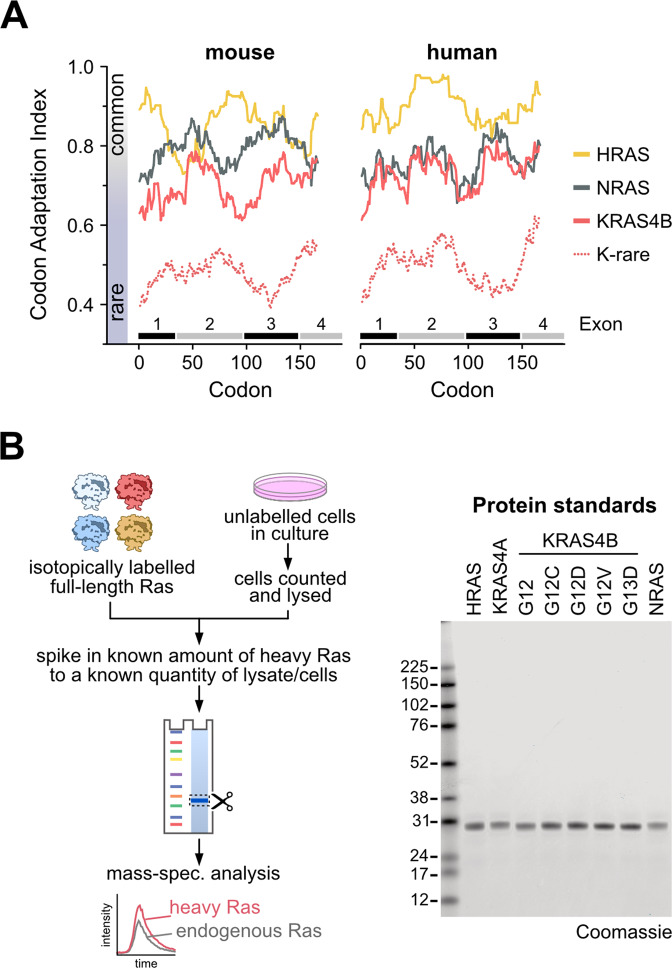
Fig. 1
Fig. 1. Ras codon bias and methods for protein quantitation.
A Rare codons are equally enriched in NRAS and KRAS in humans. B Schematic for absolute quantitation of Ras protein abundance. Coomassie blue staining of 200 ng of isotope labelled “heavy” Ras protein standards indicates high purity suitable for precise quantitation and ratiometric comparison with endogenous Ras proteins.
Fig. 2
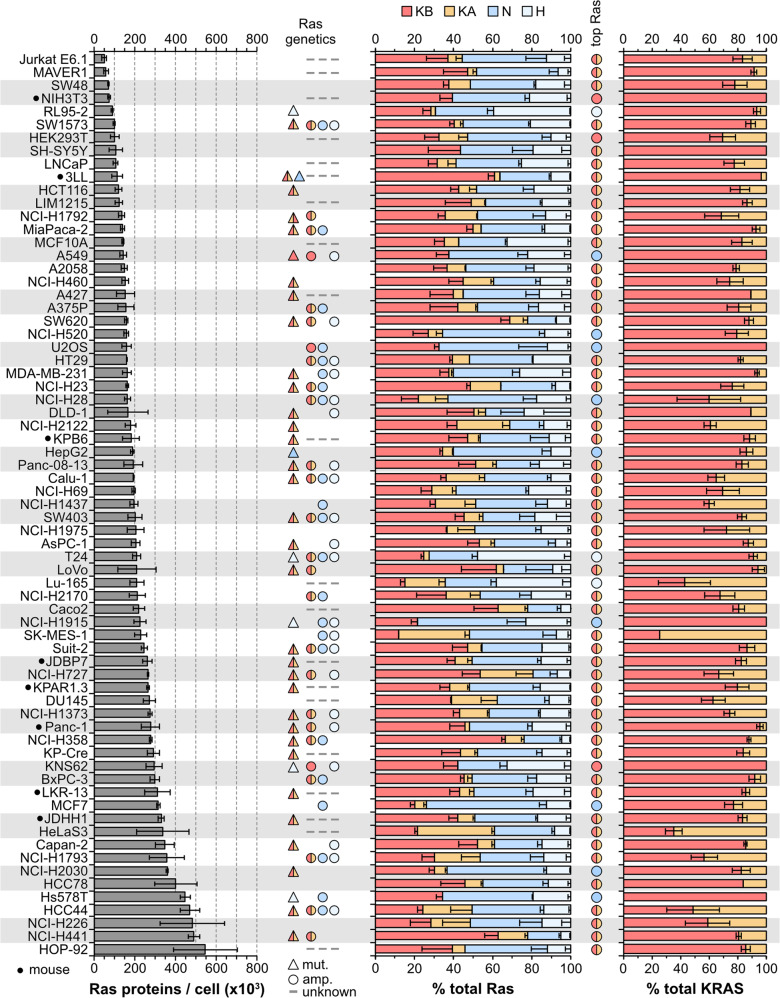
Fig. 2. Ras protein abundance in a panel of cell lines.
Ras proteins are highly abundant, the significant variation in total Ras abundance correlates with cell size (Supplementary Fig. 2). Aggregate KRAS abundance averages ~50% across the cell panel, in most cell lines KRAS4B expression exceeds the other isoforms. Measurements represent mean ± SEM of n = 3 independently processed and analyzed cell samples unless otherwise indicated in Supplementary Table 1.
Fig. 3
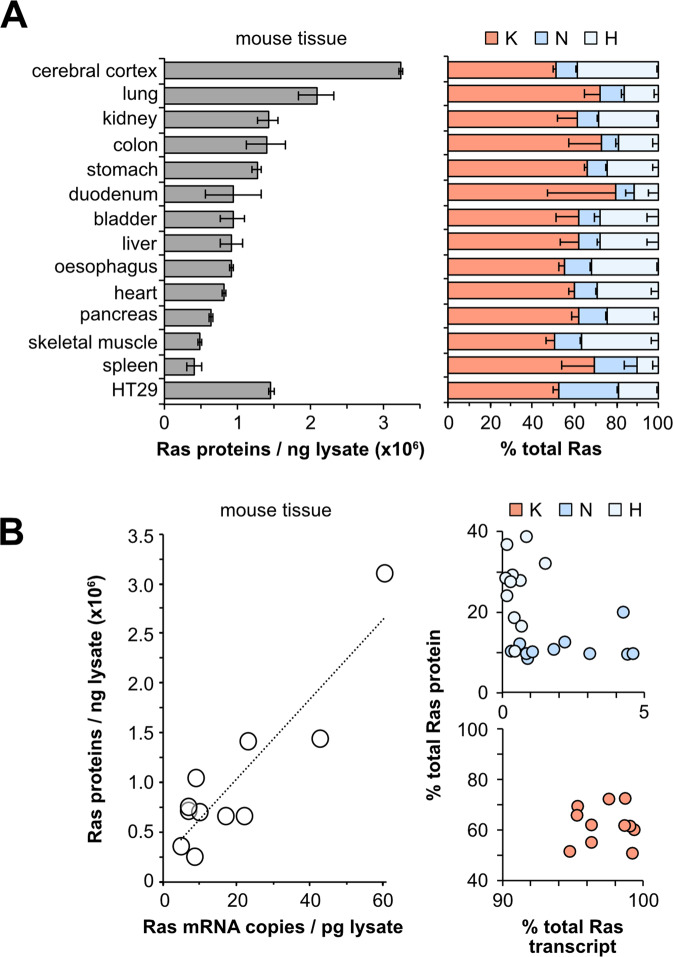
Fig. 3. Ras protein abundance in tissues.
Total Ras (pan-Ras peptide) abundance varies 2-3-fold across mouse tissues (A). KRAS is the most abundant isoform in all tissues. Total Ras protein and transcript abundance correlate in mouse tissues (B). All protein measurements represent mean ± SEM of tissues derived from n = 3 adult mice. Transcript data derived from [20].
Fig. 4
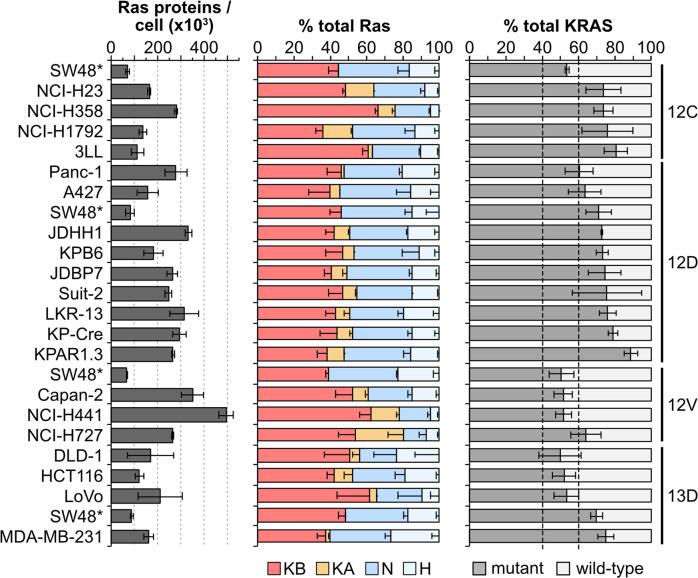
Fig. 4. Imbalanced ratios of mutant: wild type Ras proteins.
Direct quantitation of mutant versus wild type KRAS proteins reveals a frequent excess of the mutant protein in heterozygously mutated cell lines. All measurements represent mean ± SEM of n = 3 independently processed and analyzed cell samples.
Fig. 5
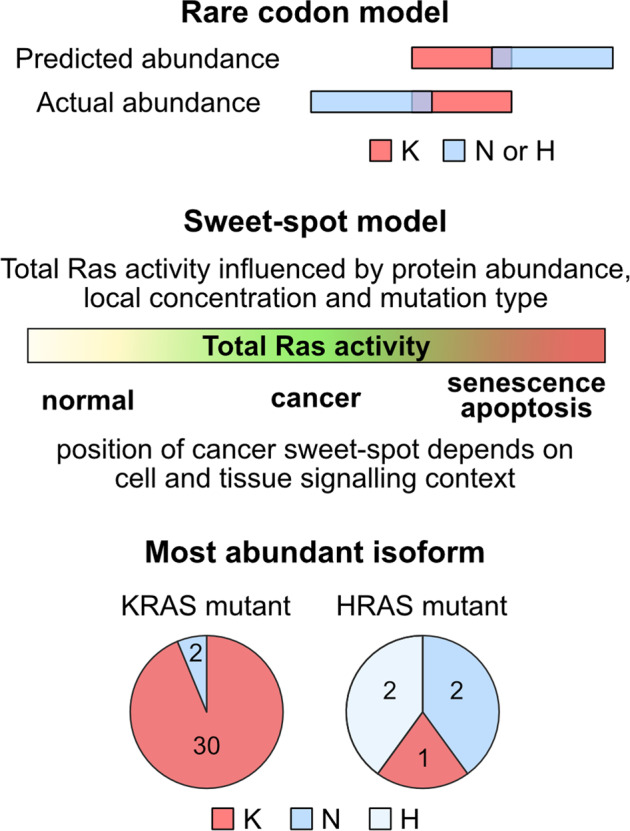
Fig. 5. Rare codons and the Ras sweet-spot model.
Our data are not consistent with the predictions of the rare codon model. The sweet spot for oncogenic Ras signaling will be influenced by cellular and tissue context. Often but not always, the most abundance isoform sits in the sweet spot when it becomes mutated.

References

    1. Prior IA, Hood FE, Hartley JL. The Frequency of Ras Mutations in Cancer. Cancer Res. 2020;80:2969–74. doi: 10.1158/0008-5472.CAN-19-3682. - DOI - PMC - PubMed
    1. Hobbs GA, Der CJ, Rossman KL. RAS isoforms and mutations in cancer at a glance. J Cell Sci. 2016;129:1287–92. - PMC - PubMed
    1. Bos JL. ras oncogenes in human cancer: A review. Cancer Res. 1989;49:4682–9. - PubMed
    1. Li S, Balmain A, Counter CM. A model for RAS mutation patterns in cancers: finding the sweet spot. Nat Rev Cancer. 2018;18:767–77. doi: 10.1038/s41568-018-0076-6. - DOI - PubMed
    1. Amin AD, Rajan SS, Groysman MJ, Pongtornpipat P, Schatz JH. Oncogene Overdose: Too Much of a Bad Thing for Oncogene-Addicted Cancer Cells. Biomark Cancer. 2015;7:25–32. - PMC - PubMed

Publication types