


Whole exome sequencing in unexplained recurrent miscarriage families identified novel pathogenic genetic causes of euploid miscarriage
- PMID: 36864708
- PMCID: PMC10152170
- DOI: 10.1093/humrep/dead039
Whole exome sequencing in unexplained recurrent miscarriage families identified novel pathogenic genetic causes of euploid miscarriage
Abstract
Study question: Can whole exome sequencing (WES) followed by trio bioinformatics analysis identify novel pathogenic genetic causes of first trimester euploid miscarriage?
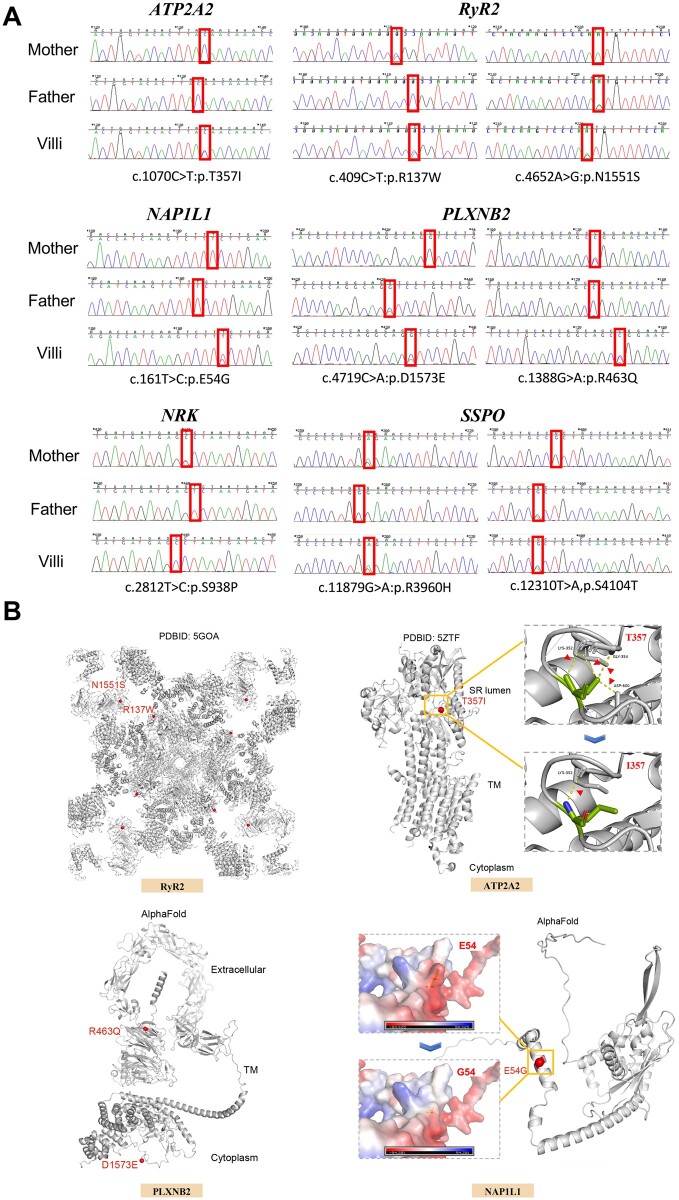
Summary answer: We identified genetic variants in six candidate genes that indicated plausible underlying causes of first-trimester euploid miscarriage.
What is known already: Previous studies have identified several monogenic causes of Mendelian inheritance in euploid miscarriages. However, most of these studies are without trio analyses and lack cellular and animal models to validate the functional effect of putative pathogenic variants.
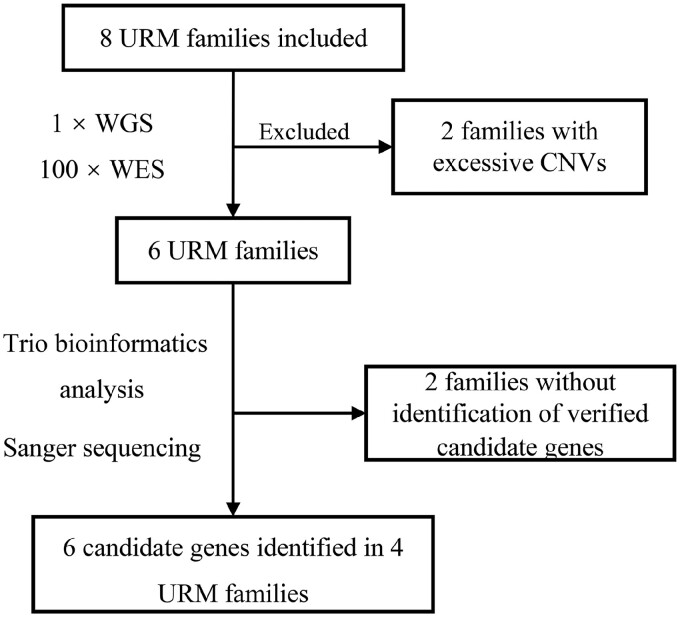
Study design, size, duration: Eight unexplained recurrent miscarriage (URM) couples and corresponding euploid miscarriages were included in our study for whole genome sequencing (WGS) and WES followed by trio bioinformatics analysis. Knock-in mice with Rry2 and Plxnb2 variants and immortalized human trophoblasts were utilized for functional study. Additional 113 unexplained miscarriages were included to identify the mutation prevalence of specific genes by multiplex PCR.
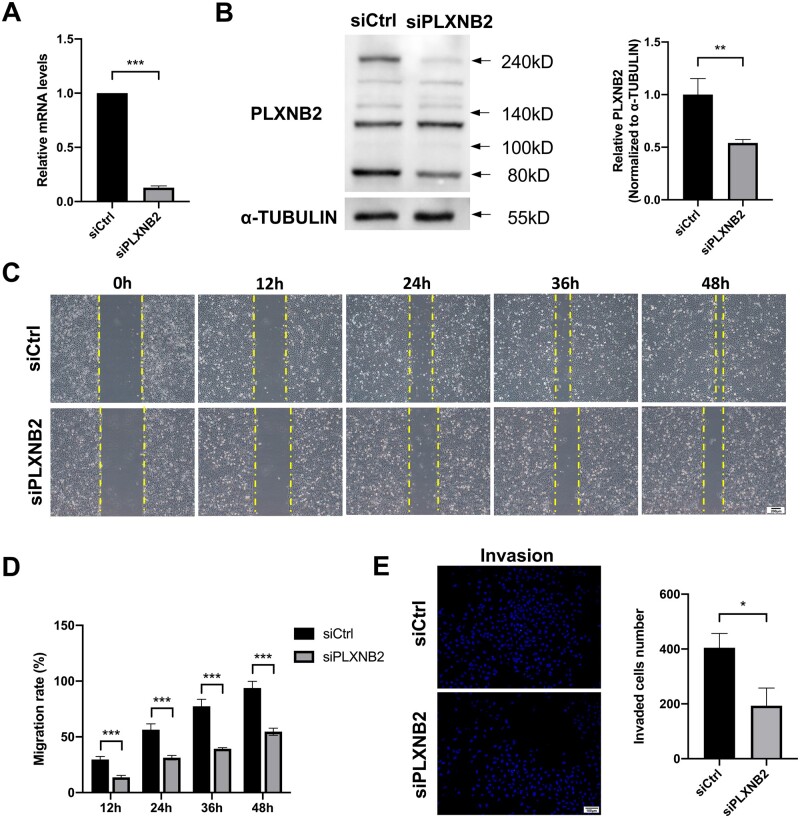
Participants/materials, setting, methods: Whole blood from URM couples and their <13 weeks gestation miscarriage products were both collected for WES, and all variants in selected genes were verified by Sanger sequencing. Different stage C57BL/6J wild-type mouse embryos were collected for immunofluorescence. Ryr2N1552S/+, Ryr2R137W/+, Plxnb2D1577E/+, and Plxnb2R465Q/+ point mutation mice were generated and backcrossed. Matrigel-coated transwell invasion assays and wound-healing assays were performed using HTR-8/SVneo cells transfected with PLXNB2 small-interfering RNA and negative control. Multiplex PCR was performed focusing on RYR2 and PLXNB2.
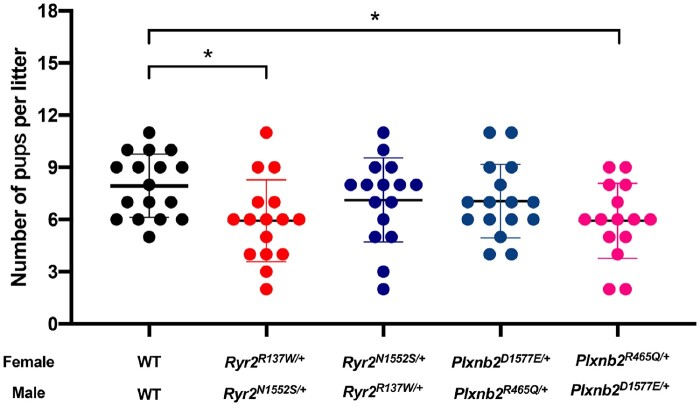
Main results and the role of chance: Six novel candidate genes, including ATP2A2, NAP1L1, RYR2, NRK, PLXNB2, and SSPO, were identified. Immunofluorescence staining showed that ATP2A2, NAP1L1, RyR2, and PLXNB2 were widely expressed from the zygote to the blastocyst stage in mouse embryos. Although compound heterozygous mice with Rry2 and Plxnb2 variants did not show embryonic lethality, the number of pups per litter was significantly reduced when backcrossing Ryr2N1552S/+ ♂ with Ryr2R137W/+ ♀ or Plxnb2D1577E/+ ♂ with Plxnb2R465Q/+ ♀ (P < 0.05), which were in accordance with the sequencing results of Family 2 and Family 3, and the proportion of Ryr2N1552S/+ offspring was significantly lower when Ryr2N1552S/+ female mice were backcrossed with Ryr2R137W/+ male mice (P < 0.05). Moreover, siRNA-mediated PLXNB2 knockdown inhibited the migratory and invasive abilities of immortalized human trophoblasts. Besides, additional 10 variants of RYR2 and PLXNB2 were detected in 113 unexplained euploid miscarriages by multiplex PCR.
Limitations, reasons for caution: The relatively small number of samples is a limitation of our study which may result in the identification of variants in unique candidate genes with no definitive although plausible causal effect. Larger cohorts are needed to replicate these findings and additional functional research is needed to confirm the pathogenic effects of these variants. Moreover, the sequencing coverage restricted the detection of low-level parental mosaic variants.
Wider implications of the findings: For first-trimester euploid miscarriage, variants in unique genes may be underlying genetic etiologies and WES on trio could be an ideal model to identify potential genetic causes, which could facilitate individualized precise diagnostic and therapeutic regimens in the future.
Study funding/competing interests: This study was supported by grants from the National Key Research and Development Program of China (2021YFC2700604), National Natural Science Foundation of China (31900492, 82101784, 82171648), Basic Science Center Program of the National Natural Science Foundation of China (31988101), Key Research and Development Program of Shandong Province (2021LCZX02), Natural Science Foundation of Shandong Province (ZR2020QH051), Natural Science Foundation of Jiangsu Province (BK20200223), Taishan Scholars Program for Young Experts of Shandong Province (tsqn201812154) and Young Scholars Program of Shandong University. The authors declare no conflicts of interest.
Trial registration number: N/A.
Keywords: candidate gene; euploid; miscarriage; single-nucleotide variant; whole exome sequencing.
© The Author(s) 2023. Published by Oxford University Press on behalf of European Society of Human Reproduction and Embryology.
Conflict of interest statement
This study was supported by grants from the National Key Research and Development Program of China (2021YFC2700604), National Natural Science Foundation of China (31900492, 82101784, 82171648), Basic Science Center Program of the National Natural Science Foundation of China (31988101), Key Research and Development Program of Shandong Province (2021LCZX02), Natural Science Foundation of Shandong Province (ZR2020QH051), Natural Science Foundation of Jiangsu Province (BK20200223), Taishan Scholars Program for Young Experts of Shandong Province (tsqn201812154) and Young Scholars Program of Shandong University. The authors declare no conflicts of interest.
The authors declare no conflicts of interest.
Figures
References
-
- Bhatt SJ, Marchetto NM, Roy J, Morelli SS, McGovern PG.. Pregnancy outcomes following in vitro fertilization frozen embryo transfer (IVF-FET) with or without preimplantation genetic testing for aneuploidy (PGT-A) in women with recurrent pregnancy loss (RPL): a SART-CORS study. Hum Reprod 2021;8:2339–2344. - PubMed
Publication types
MeSH terms
Substances
LinkOut - more resources
Full Text Sources
Medical
Research Materials
Miscellaneous
