


Dietary supplementation of Acanthopanax senticosus extract alleviates motor deficits in MPTP-induced Parkinson's disease mice and its underlying mechanism
- PMID: 36865944
- PMCID: PMC9971719
- DOI: 10.3389/fnut.2023.1121789
Dietary supplementation of Acanthopanax senticosus extract alleviates motor deficits in MPTP-induced Parkinson's disease mice and its underlying mechanism
Abstract
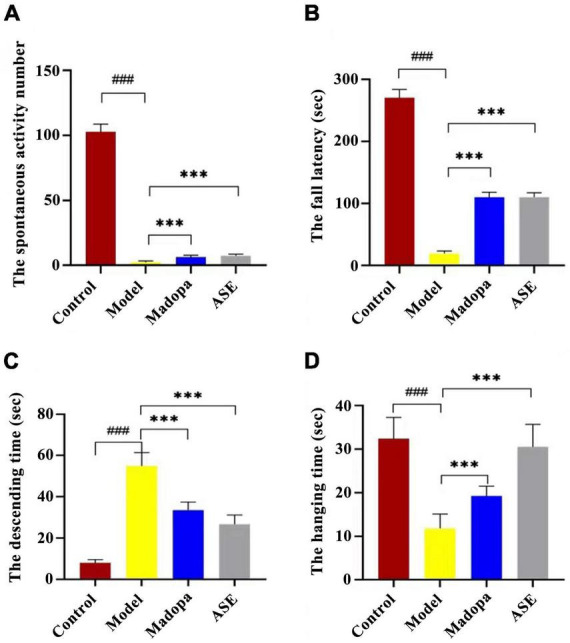
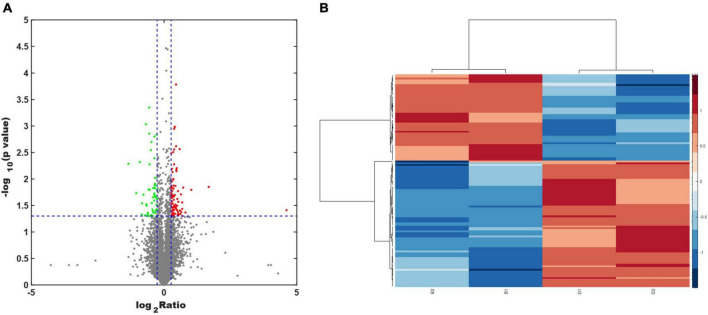
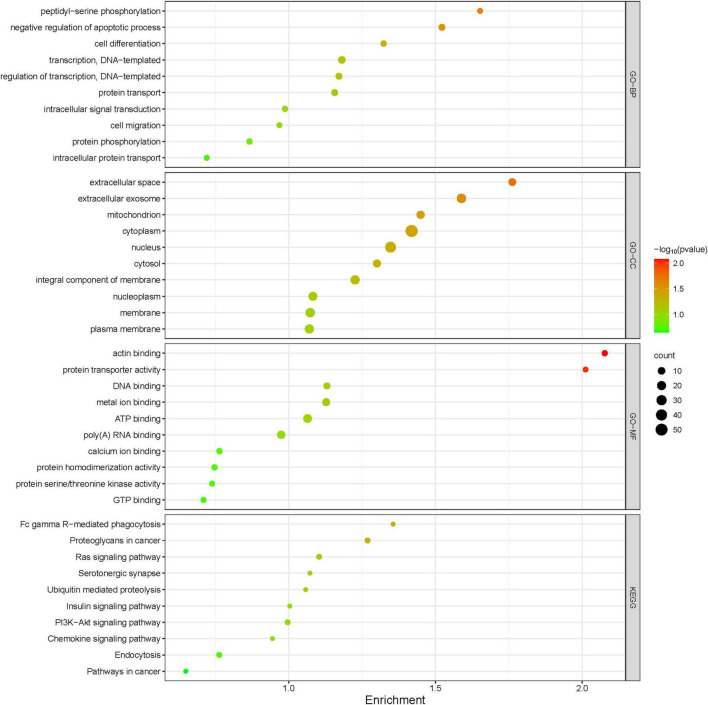
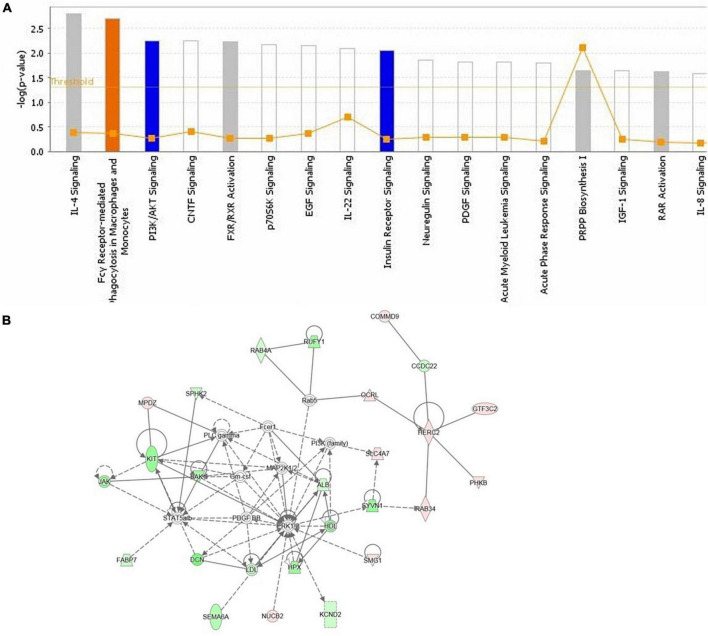
Acanthopanax senticosus extract (ASE), a dietary supplement with antifatigue, neuroprotective, and immunomodulatory properties, has been widely used due to its high polyphenol content. Our previous study showed that ASE could be used to treat Parkinson's disease (PD) as it contains multiple monoamine oxidase B inhibitors prescribed in early PD. However, its mechanism remains ambiguous. In this study, we investigated the protective effects of ASE on MPTP-induced PD in mice and explored the underlying mechanisms of action. We found that the administration of ASE significantly improved motor coordination in mice with MPTP-induced PD. As shown by quantitative proteomic analysis, 128 proteins' expression significantly changed in response to ASE administration, most of which were involved with Fcγ receptor-mediated phagocytosis in macrophages and monocytes signaling pathway, PI3K/AKT signaling pathway, and insulin receptor signaling pathway. Furthermore, the network analysis results showed that ASE modulates protein networks involved in regulating cellular assembly, lipid metabolism, and morphogenesis, all of which have implications for treating PD. Overall, ASE served as a potential therapeutic because it regulated multiple targets to improve motor deficits, which could lay the strong foundation for developing anti-PD dietary supplements.
Keywords: Acanthopanax senticosus extract; MPTP; Parkinson’s disease; proteomics; signaling pathway; therapeutic mechanism.
Copyright © 2023 Li, He, Fu, Wang, Fan, Zhong and Zhou.
Conflict of interest statement
The authors declare that the research was conducted in the absence of any commercial or financial relationships that could be construed as a potential conflict of interest.
Figures
References
LinkOut - more resources
Full Text Sources
Research Materials
