Observational Study
. 2023 May:130:126-135.
doi: 10.1016/j.ijid.2023.02.022. Epub 2023 Mar 1.

Vaccination from the early second trimester onwards gives a robust SARS-CoV-2 antibody response throughout pregnancy and provides antibodies for the neonate

Affiliations
Observational Study

Vaccination from the early second trimester onwards gives a robust SARS-CoV-2 antibody response throughout pregnancy and provides antibodies for the neonate

Sanne J M Zilver et al. Int J Infect Dis. 2023 May.

Abstract

Objectives: Preventive measures against COVID-19 are essential for pregnant women. Pregnant women are particularly vulnerable to emerging infectious pathogens due to alterations in their physiology. We aimed to determine the optimum timing of vaccination to protect pregnant women and their neonates from COVID-19.

Methods: A prospective observational longitudinal cohort study in pregnant women who received COVID-19 vaccination. We collected blood samples to evaluate levels of antispike, receptor binding domain and nucleocapsid antibodies against SARS-CoV-2 before vaccination and 15 days after the first and second vaccination. We determined the neutralizing antibodies from mother-infant dyads in maternal and umbilical cord blood at birth. If available, immunoglobulin A was measured in human milk.

Results: We included 178 pregnant women. Median antispike immunoglobulin G levels increased significantly from 1.8 to 5431 binding antibody units/ml and receptor binding domain from 6 to 4466 binding antibody units/ml. Virus neutralization showed similar results between different weeks of gestation at vaccination (P >0.3).

Conclusion: We advise vaccination in the early second trimester of pregnancy for the optimum balance between the maternal antibody response and placental antibody transfer to the neonate.

Keywords: Antispike IgG; COVID-19; Placental antibody transfer; Pregnancy; Vaccination; Virus neutralization.


Conflict of interest statement

Declaration of Competing Interest The authors have no competing interests to declare.

Figures
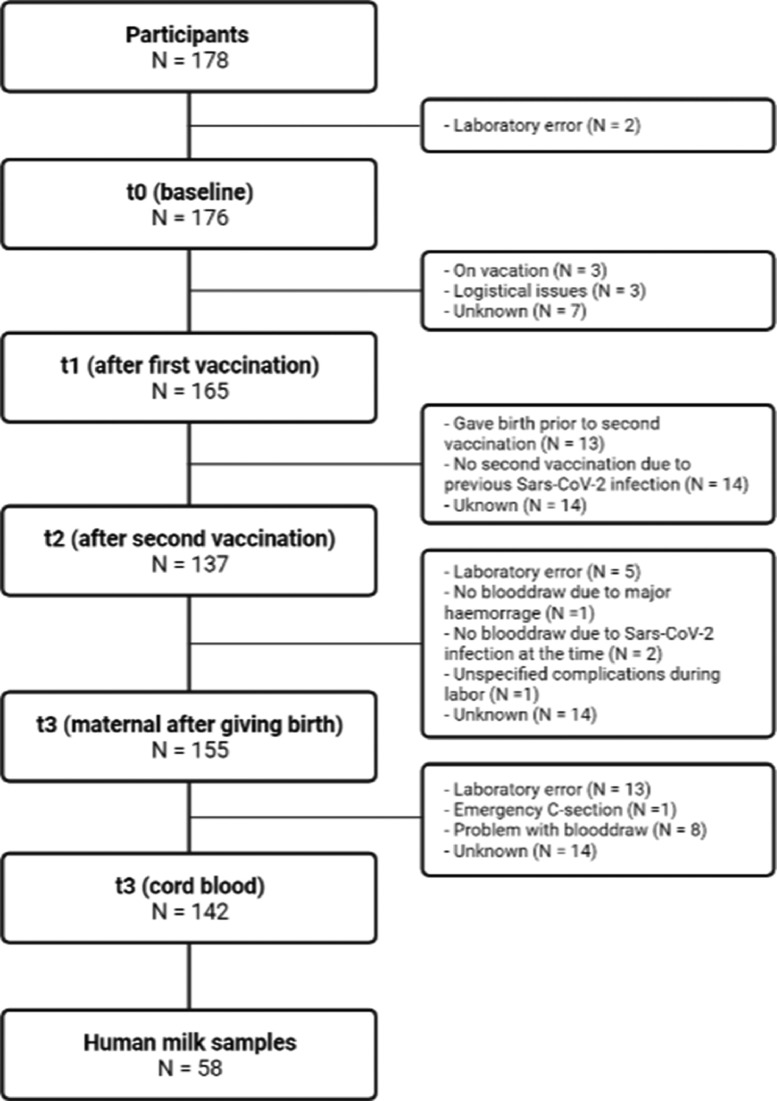
Figure 1
Figure 1
Included patients and blood draw at each time point.
Figure 2
Figure 2
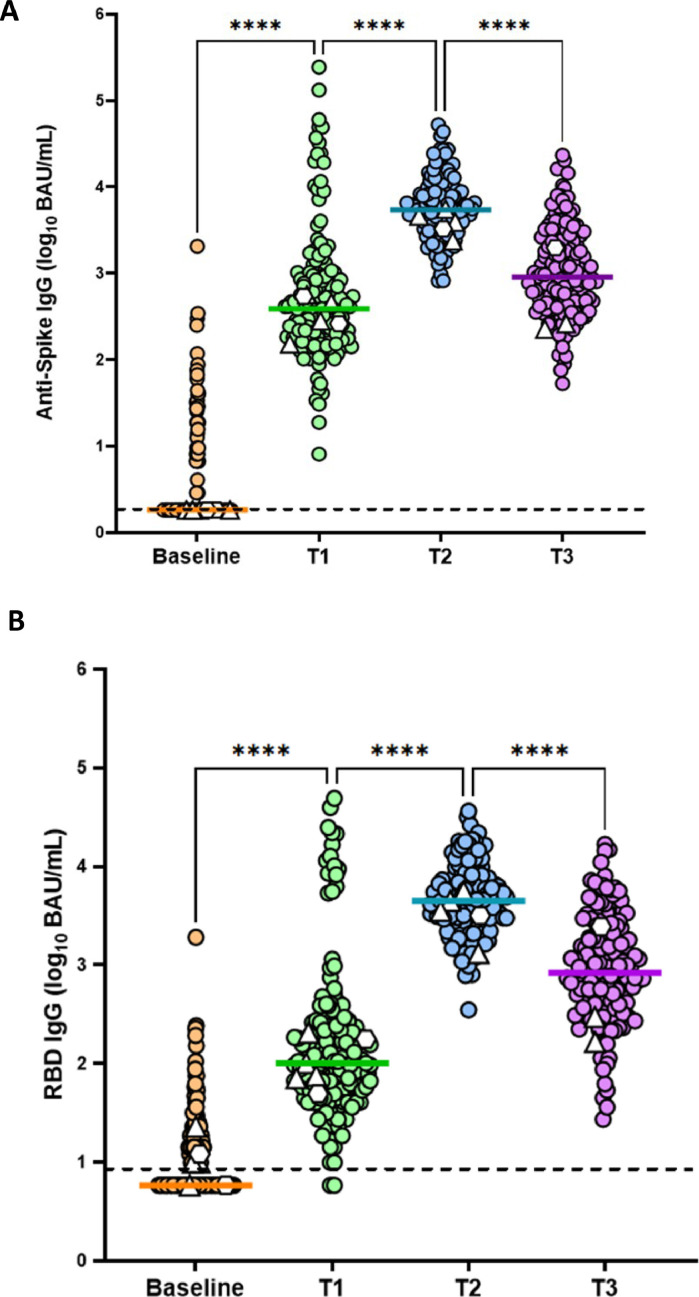
Evaluation of Log10 antispike IgG (panel a), RBD IgG (panel b) at baseline (before vaccination), t1 (15 days after the first vaccination) and t2 (15 days after the second vaccination) and t3 (final blood sample from the participant at birth). Colored lines indicate the median. Dashed lines indicate detection limits. Differences in antibody levels between the different time points were determined by one-way analysis of variance and differences between specific time points were determined by post hoc paired t-tests and Wilcoxon signed rank tests for skewed data. Δ women who received a booster vaccination during pregnancy ◯ women who had a SARS-CoV-2 infection between vaccination and giving birth BAU, binding antibody unit; Ig, immunoglobulin; RBD, receptor binding domain.
Figure 3
Figure 3
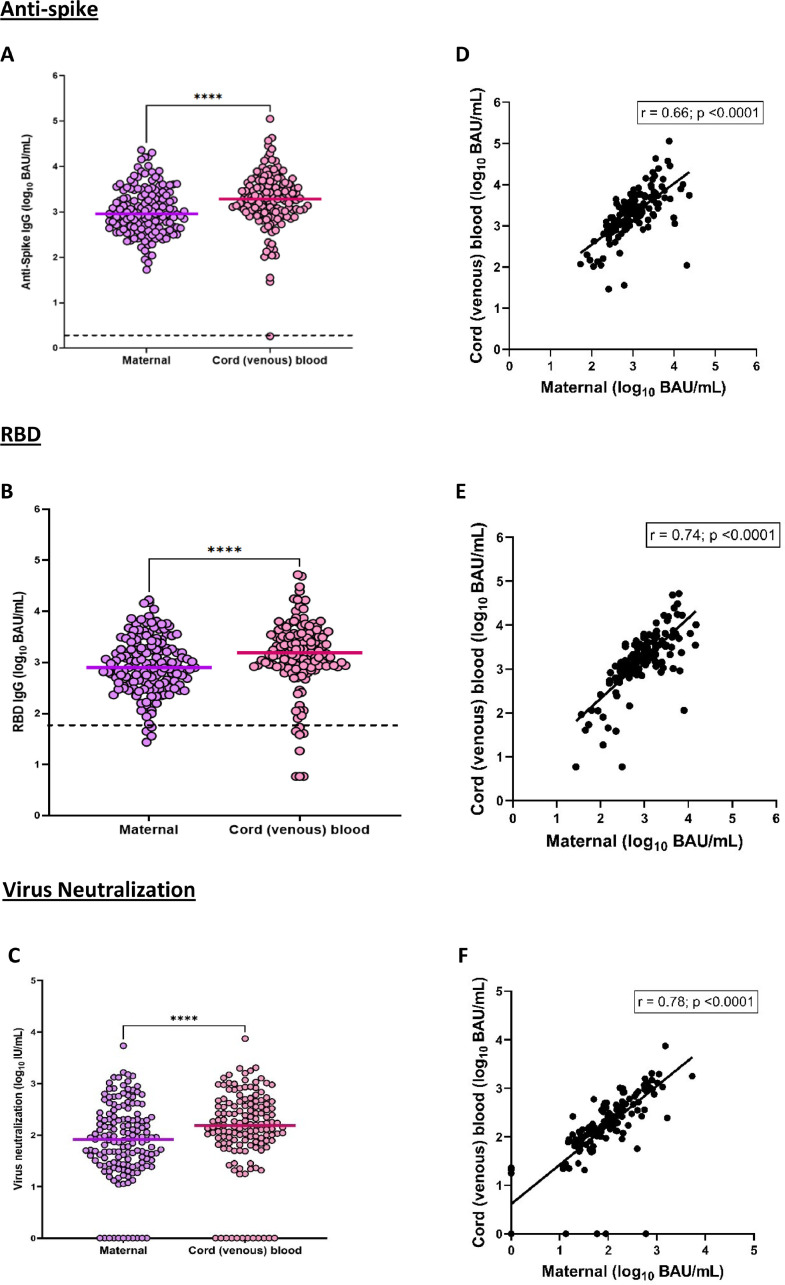
Evaluation of Log10 antispike and RBD IgG at t3 (maternal and cord blood, a and b) and virus neutralization at t3 (maternal and cord blood, c). d, e, and f show the maternal and cord blood correlation for antispike and RBD IgG as well as virus neutralization. Panels a, b and c: paired t-test. Panels d, e and f: Pearson correlation BAU, binding antibody unit; Ig, immunoglobulin; RBD, receptor binding domain.
Figure 4
Figure 4
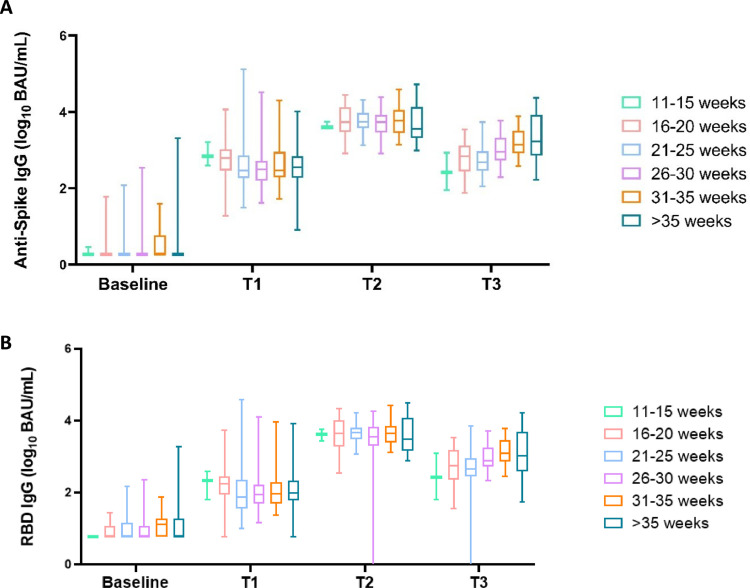
Antispike and RBD IgG maternal antibodies in relation to gestational age at the time of the last vaccination before delivery was administered, divided into six groups (11-15 weeks N = 4, 16-20 weeks N = 24, 21-25 weeks N = 27, 26-30 weeks N = 35, 31-35 weeks, N = 33, >35 weeks N = 20). BAU, binding antibody unit; Ig, immunoglobulin; RBD, receptor binding domain.
Figure 5
Figure 5
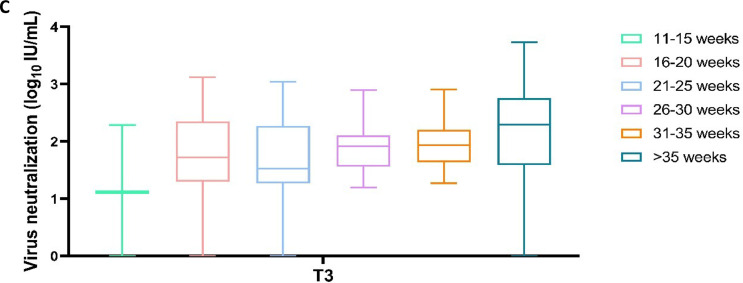
Virus neutralization antibodies in maternal blood in relation to gestational age at the time of the last vaccination before delivery, divided into six groups (11-15 weeks N = 4, 16-20 weeks N = 24, 21-25 weeks N = 27, 26-30 weeks N = 35, 31-35 weeks, N = 33, >35 weeks N = 20).
Figure 6
Figure 6
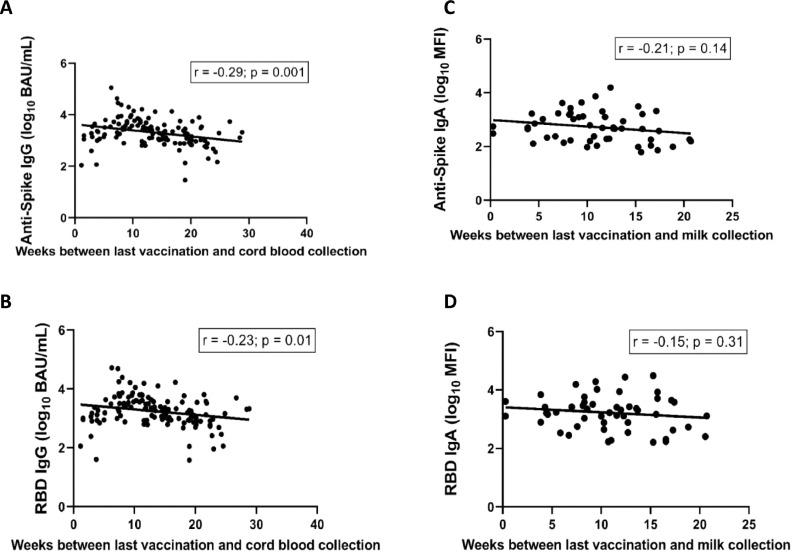
Linear regression of weeks between last vaccination and cord blood collection (a and b) and weeks between last vaccination and human milk collection (c and d). BAU, binding antibody unit; Ig, immunoglobulin; RBD, receptor binding domain.

References

    1. Blumberg D, Sridhar A, Lakshminrusimha S, Higgins RD, Saade G. COVID-19 vaccine considerations during pregnancy and lactation. Am J Perinatol. 2021;38:523–528. doi: 10.1055/s-0041-1726390. - DOI - PubMed
    1. Whitehead CL, Walker SP. Consider pregnancy in COVID-19 therapeutic drug and vaccine trials. Lancet. 2020;395:e92. doi: 10.1016/S0140-6736(20)31029-1. - DOI - PMC - PubMed
    1. Collin J, Byström E, Carnahan A, Ahrne M. Public Health Agency of Sweden's Brief Report: pregnant and postpartum women with severe acute respiratory syndrome coronavirus 2 infection in intensive care in Sweden. Acta Obstet Gynecol Scand. 2020;99:819–822. doi: 10.1111/aogs.13901. - DOI - PMC - PubMed
    1. Mor G, Aldo P, Alvero AB. The unique immunological and microbial aspects of pregnancy. Nat Rev Immunol. 2017;17:469–482. doi: 10.1038/nri.2017.64. - DOI - PubMed
    1. Wise RA, Polito AJ, Krishnan V. Respiratory physiologic changes in pregnancy. Immunol Allergy Clin North Am. 2006;26:1–12. doi: 10.1016/j.iac.2005.10.004. - DOI - PubMed

Publication types