Review
. 2023 Mar 5;15(1):5.
doi: 10.1186/s41479-023-00110-y.

Acute organ injury and long-term sequelae of severe pneumococcal infections

Affiliations
Review

Acute organ injury and long-term sequelae of severe pneumococcal infections

Katherine L Kruckow et al. Pneumonia (Nathan). .

Abstract

Streptococcus pneumoniae (Spn) is a major public health problem, as it is a main cause of otitis media, community-acquired pneumonia, bacteremia, sepsis, and meningitis. Acute episodes of pneumococcal disease have been demonstrated to cause organ damage with lingering negative consequences. Cytotoxic products released by the bacterium, biomechanical and physiological stress resulting from infection, and the corresponding inflammatory response together contribute to organ damage accrued during infection. The collective result of this damage can be acutely life-threatening, but among survivors, it also contributes to the long-lasting sequelae of pneumococcal disease. These include the development of new morbidities or exacerbation of pre-existing conditions such as COPD, heart disease, and neurological impairments. Currently, pneumonia is ranked as the 9th leading cause of death, but this estimate only considers short-term mortality and likely underestimates the true long-term impact of disease. Herein, we review the data that indicates damage incurred during acute pneumococcal infection can result in long-term sequelae which reduces quality of life and life expectancy among pneumococcal disease survivors.

Keywords: Acute kidney injury; Adverse cardiac events; Inflammation; Invasive pneumococcal disease (IPD); Mortality; Organ injury; Pneumolysin; Pneumonia; Sequelae; Streptococcus pneumoniae.


Conflict of interest statement

The authors declare no competing interests.

Figures
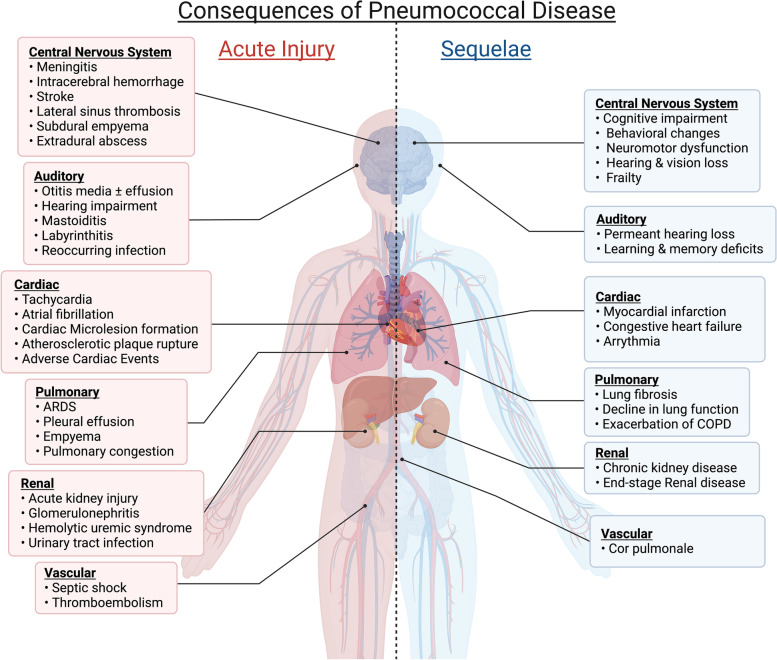
Fig. 1
Fig. 1
Consequences of pneumococcal disease during acute infection occur system-wide. Acute pneumococcal pneumonia and invasive disease can be life-threatening. It can also result in organ damage that results in debilitating long-term sequelae. These sequelae, in turn, contribute to loss of physiological resilience and early mortality
Fig. 2
Fig. 2
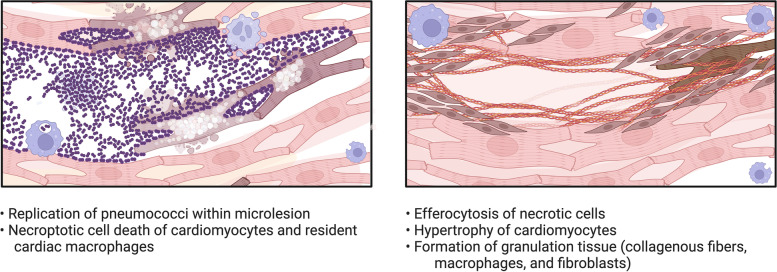
Cardiac microlesion formation and resolution. Microlesions form in the heart as a result of an individual pneumococcus adhering to the vasculature in the bloodstream and invading the myocardium by crossing vascular endothelial cells. Invaded pneumococci are capable of replicating to form a foci of infection (left panel). Infiltrating macrophages die of H2O2 and pneumolysin-mediated necroptosis preventing further infiltration of immune cells. Additionally, cardiomyocytes undergo necroptotic death leaving “holes” within the heart. The resolution of infection is characterized by the remodeling of cardiac tissue (right panel). This includes the infiltration of fibroblasts that deposit collagen to form long-lasting scar tissue. Microlesion morphology based on high-resolution images of cardiac sections from mice infected with Streptococcus pneumoniae strain TIGR4, shown 30 h post-infection, intraperitoneal challenge

References

    1. Kastenbauer S, Pfister HW. Pneumococcal meningitis in adults: spectrum of complications and prognostic factors in a series of 87 cases. Brain. 2003;126(Pt 5):1015–1025. doi: 10.1093/brain/awg113. - DOI - PubMed
    1. O'Connor TE, Perry CF, Lannigan FJ. Complications of otitis media in Indigenous and non-Indigenous children. Med J Aust. 2009;191(S9):S60–S64. - PubMed
    1. Bohte R, van Furth R, van den Broek PJ. Aetiology of community-acquired pneumonia: a prospective study among adults requiring admission to hospital. Thorax. 1995;50(5):543–547. doi: 10.1136/thx.50.5.543. - DOI - PMC - PubMed
    1. Garcia-Vidal C, et al. Early mortality in patients with community-acquired pneumonia: causes and risk factors. Eur Respir J. 2008;32(3):733–739. doi: 10.1183/09031936.00128107. - DOI - PubMed
    1. Koivula I, Sten M, Makela PH. Risk factors for pneumonia in the elderly. Am J Med. 1994;96(4):313–320. doi: 10.1016/0002-9343(94)90060-4. - DOI - PubMed

LinkOut - more resources