


Age-related decline in peak oxygen uptake: Cross-sectional vs. longitudinal findings. A review
- PMID: 36874046
- PMCID: PMC9975246
- DOI: 10.1016/j.ijcrp.2023.200171
Age-related decline in peak oxygen uptake: Cross-sectional vs. longitudinal findings. A review
Abstract
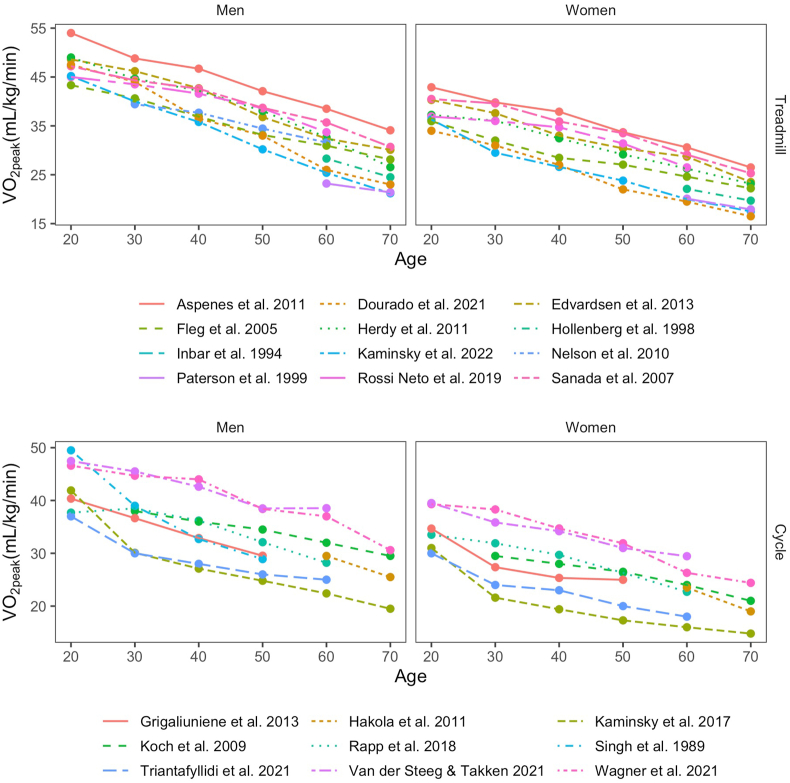
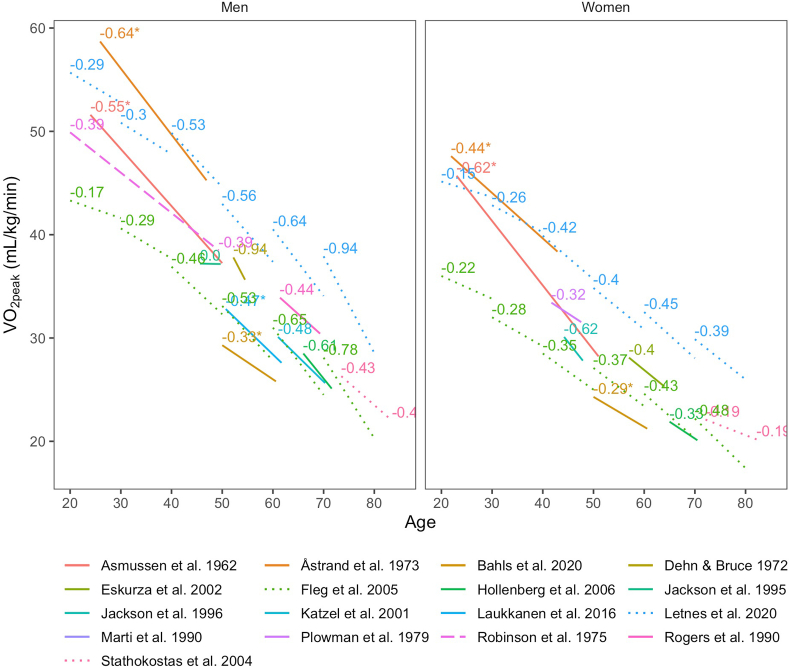
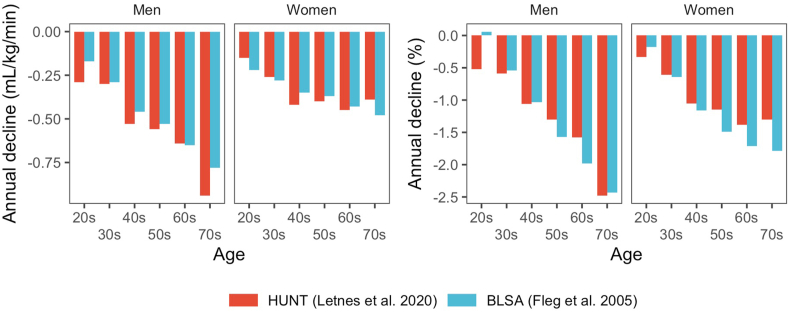
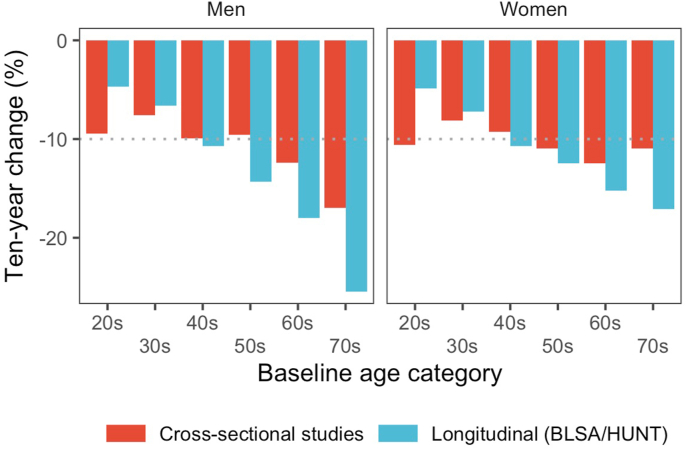
Cardiorespiratory fitness is established as an important prognostic factor for cardiovascular and general health. In clinical settings cardiorespiratory fitness is often measured by cardiopulmonary exercise testing determining the gold-standard peak oxygen uptake (VO2peak). Due to the considerable impact of age and sex on VO2peak, results from cardiopulmonary exercise testing are typically assessed in the context of age- and sex-specific reference values, and multiple studies have been conducted establishing reference materials by age and sex using cross-sectional designs. However, crossectional and longitudinal studies have shown somewhat conflicting results regarding age-related declines of VO2peak, with larger declines reported in longitudinal studies. In this brief review, we compare findings from crossectional and longitudinal studies on age-related trajectories in VO2peak to highlight differences in these estimates which should be acknowledged when clinicians interpret VO2peak measurements repeated over time.
Keywords: Cardiopulmonary reference data; Cardiorespiratory fitness; Exercise testing; Peak oxygen uptake.
© 2023 The Authors.
Conflict of interest statement
The authors declare that they have no known competing financial interests or personal relationships that could have appeared to influence the work reported in this paper.
Figures
References
-
- Kodama S., Saito K., Tanaka S., et al. Cardiorespiratory fitness as a quantitative predictor of all-cause mortality and cardiovascular events in healthy men and women. JAMA. 2009;301(19):2024–2035. - PubMed
-
- Harber M.P., Kaminsky L.A., Arena R., et al. Impact of cardiorespiratory fitness on all-cause and disease-specific mortality: advances since 2009. Prog. Cardiovasc. Dis. 2017;60(1):11–20. - PubMed
-
- Ross R., Blair S.N., Arena R., et al. Importance of assessing cardiorespiratory fitness in clinical practice: a case for fitness as a clinical vital sign: a scientific statement from the American Heart association. Circulation. 2016;134(24):e653–e699. - PubMed
Publication types
LinkOut - more resources
Full Text Sources