


The effect of perioperative blood transfusion on survival after renal cell carcinoma nephrectomy: A systematic review and meta-analysis
- PMID: 36874080
- PMCID: PMC9978807
- DOI: 10.3389/fonc.2023.1092734
The effect of perioperative blood transfusion on survival after renal cell carcinoma nephrectomy: A systematic review and meta-analysis
Abstract
Background: The effect of perioperative blood transfusion (PBT) on postoperative survival in RCC patients who underwent partial nephrectomy (PN) or radical nephrectomy (RN) remains controversial. Two meta-analyses in 2018 and 2019 reported the postoperative mortality of PBT patients with RCC, but they did not investigate the effect on the survival of patients. We performed a systematic review and meta-analysis of relevant literature to demonstrate whether PBT affected postoperative survival in RCC patients who received nephrectomy.
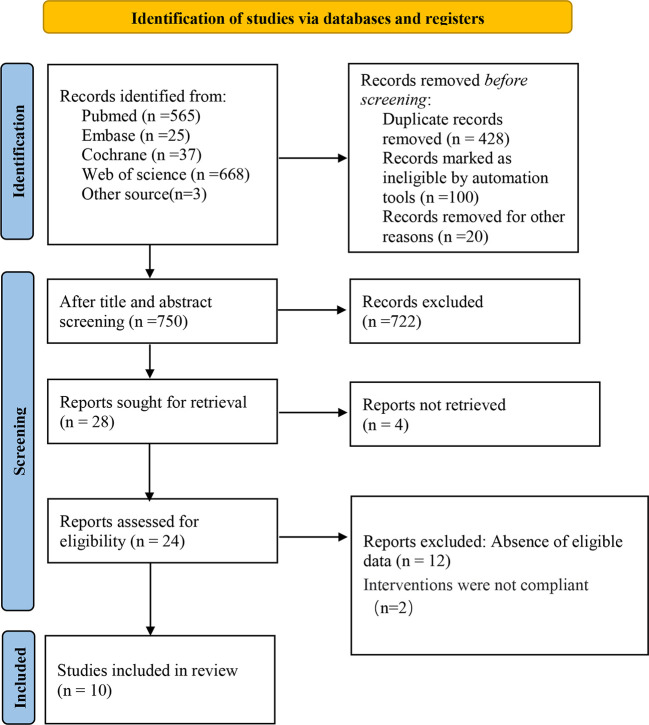
Methods: Pubmed, Web of Science, Cochrane, and Embase databases were searched. Studies comparing RCC patients with or without PBT following either RN or PN were included in this analysis. Newcastle-Ottawa Scale (NOS) was used to evaluate the quality of the included literature, and hazard ratios (HRs) of overall survival (OS), recurrence-free survival (RFS), and cancer-specific survival (CSS), as well as 95% confidence intervals, were considered as effect sizes. All data were processed using Stata 15.1.
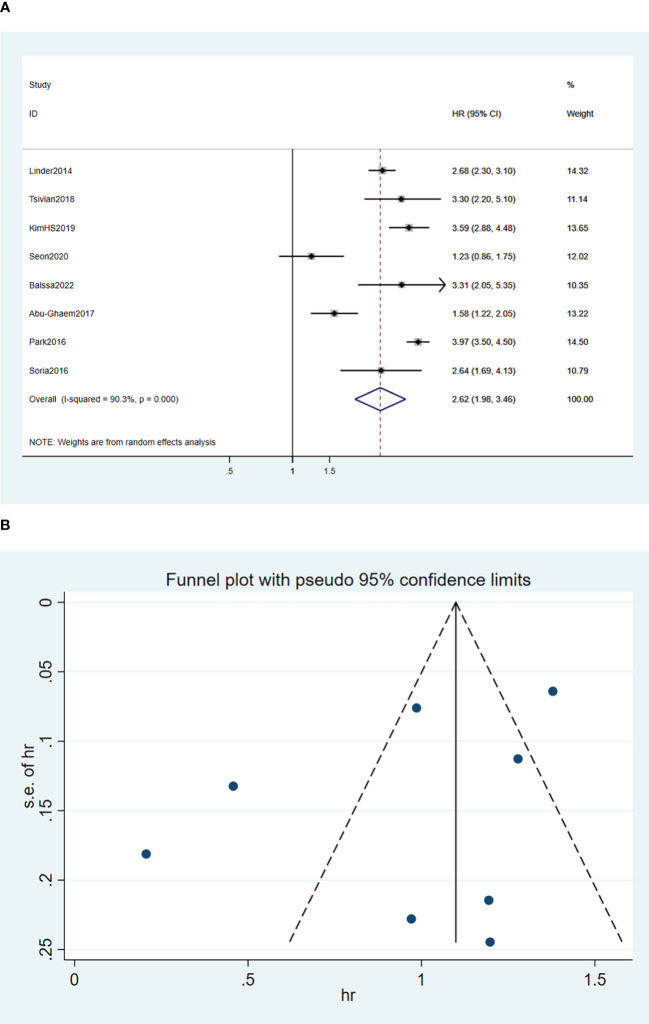
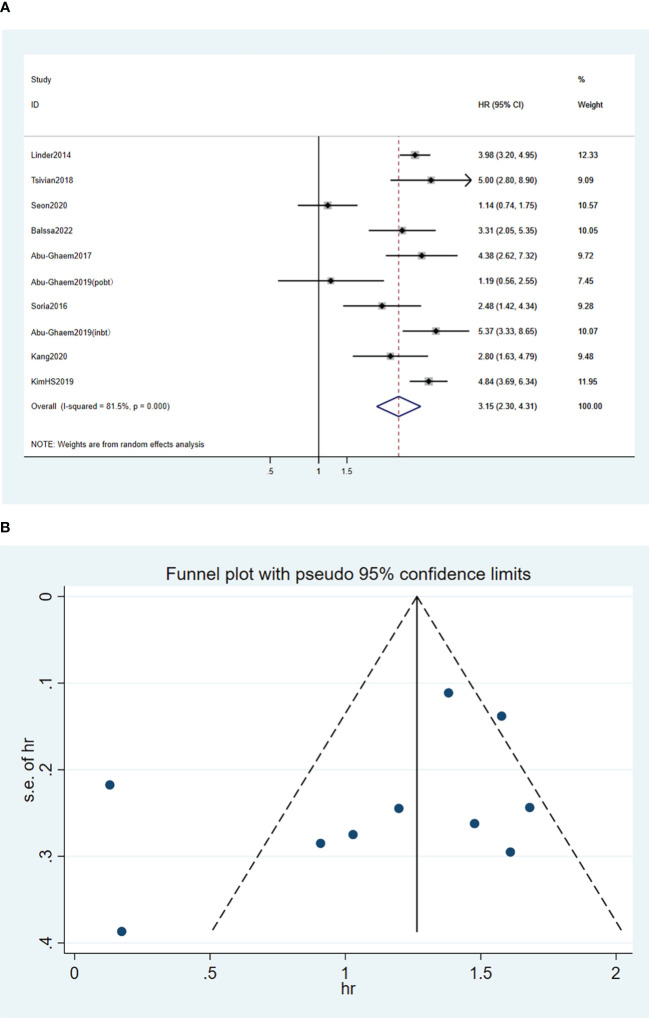
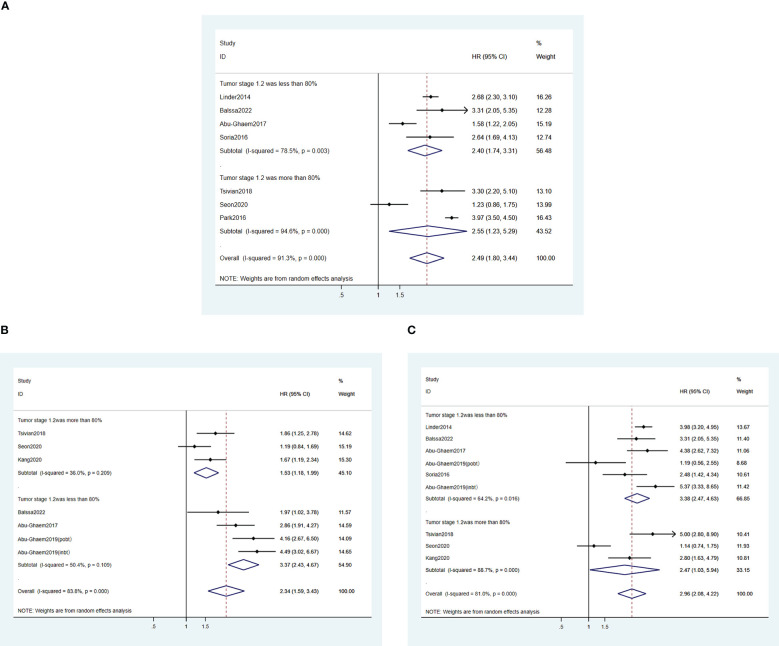
Results: Ten retrospective studies involving 19,240 patients were included in this analysis, with the publication dates ranging from 2014 to 2022. Evidence revealed that PBT was significantly associated with the decline of OS (HR, 2.62; 95%CI: 1,98-3.46), RFS (HR, 2.55; 95%CI: 1.74-3.75), and CSS (HR, 3.15; 95%CI: 2.3-4.31) values. There was high heterogeneity among the study results due to the retrospective nature and the low quality of the included studies. Subgroup analysis findings suggested that the heterogeneity of this study might be caused by different tumor stages in the included articles. Evidence implied that PBT had no significant influence on RFS and CSS with or without robotic assistance, but it was still linked to worse OS (combined HR; 2.54 95% CI: 1.18, 5.47). Furthermore, the subgroup analysis with intraoperative blood loss lower than 800 ML revealed that PBT had no substantial impact on OS and CSS of postoperative RCC patients, whereas it was correlated with poor RFS (1.42, 95% CI: 1.02-1.97).
Conclusions: RCC patients undergoing PBT after nephrectomy had poorer survival.
Systematic review registration: https://www.crd.york.ac.uk/PROSPERO/, identifier CRD42022363106.
Keywords: blood transfusion; meta-analysis; renal cell carcinoma; survival; systematic review.
Copyright © 2023 Liu, Deng, Wen, Huang, Wang, Chen and Yang.
Conflict of interest statement
The authors declare that the research was conducted in the absence of any commercial or financial relationships that could be construed as a potential conflict of interest.
Figures

References
-
- Steven C. Campbell-Walsh Urology, 11 edition. Elsevier eLibrary. (2015). pp. 1320–1.
-
- Ljungberg B, Bensalah K, Canfield S, Dabestani S, Hofmann F. European association of urology guidelines on renal cell carcinoma: The 2019 update. Eur Urol (2019) 75(5):799–810. - PubMed
Publication types
LinkOut - more resources
Full Text Sources
