


Bullous pemphigoid: The role of type 2 inflammation in its pathogenesis and the prospect of targeted therapy
- PMID: 36875098
- PMCID: PMC9978795
- DOI: 10.3389/fimmu.2023.1115083
Bullous pemphigoid: The role of type 2 inflammation in its pathogenesis and the prospect of targeted therapy
Abstract
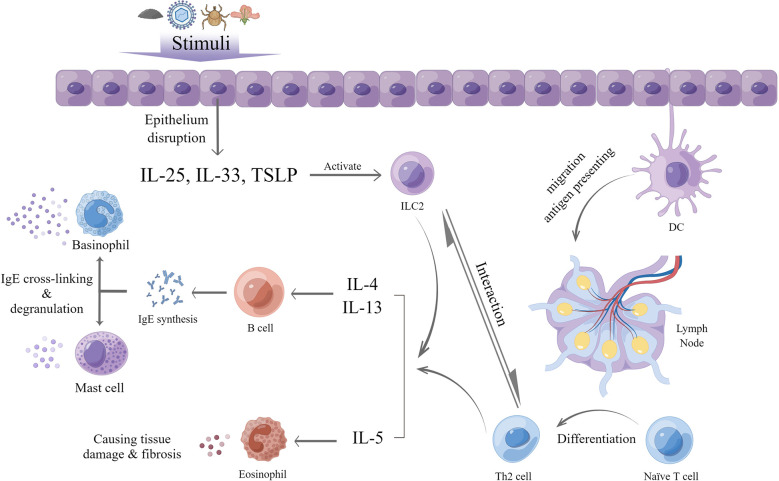
Bullous pemphigoid (BP) is an autoimmune disease that mainly occurs in the elderly, severely affecting their health and life quality. Traditional therapy for BP is mainly based on the systemic use of corticosteroids, but long-term use of corticosteroids results in a series of side effects. Type 2 inflammation is an immune response largely mediated by group 2 innate lymphoid cells, type 2 T helper cells, eosinophils, and inflammatory cytokines, such as interleukin (IL)-4, IL-5 and IL-13. Among patients with BP, the levels of immunoglobulin E and eosinophils are significantly increased in the peripheral blood and skin lesions, suggesting that the pathogenesis is tightly related to type 2 inflammation. To date, various targeted drugs have been developed to treat type 2 inflammatory diseases. In this review, we summarize the general process of type 2 inflammation, its role in the pathogenesis of BP and potential therapeutic targets and medications related to type 2 inflammation. The content of this review may contribute to the development of more effective drugs with fewer side effects for the treatment of BP.
Keywords: bullous pemphigoid; eosinophils; immunoglobulin E; targeted therapy; type 2 inflammation.
Copyright © 2023 Zhang, Chen, Wang and Luo.
Conflict of interest statement
The authors declare that the research was conducted in the absence of any commercial or financial relationships that could be construed as a potential conflict of interest.
Figures
References
Publication types
MeSH terms
LinkOut - more resources
Full Text Sources
Medical
