


A Practical Guide to Relugolix: Early Experience With Oral Androgen Deprivation Therapy
- PMID: 36888587
- PMCID: PMC10400130
- DOI: 10.1093/oncolo/oyad036
A Practical Guide to Relugolix: Early Experience With Oral Androgen Deprivation Therapy
Abstract
Background: Relugolix is the newest form of androgen deprivation therapy (ADT) approved for prostate cancer. However, as an oral drug, several real-world concerns exist, particularly medication compliance, safety with other androgen receptor-targeted agents, and financial burden to patients.
Methods: A single institution retrospective chart review was conducted evaluating all patients who were prescribed relugolix for any prostate cancer indication from January 1, 2021 to January 31, 2022. Demographic data, cardiac risk factors, concomitant therapy usage, and PSA/testosterone levels, were abstracted from the chart review. Adverse effects were obtained by examining progress notes. Compliance was assessed by clinic notes as well as prescription fills by specialty pharmacy records. The reasons patients did not fill or discontinued the medication were noted.
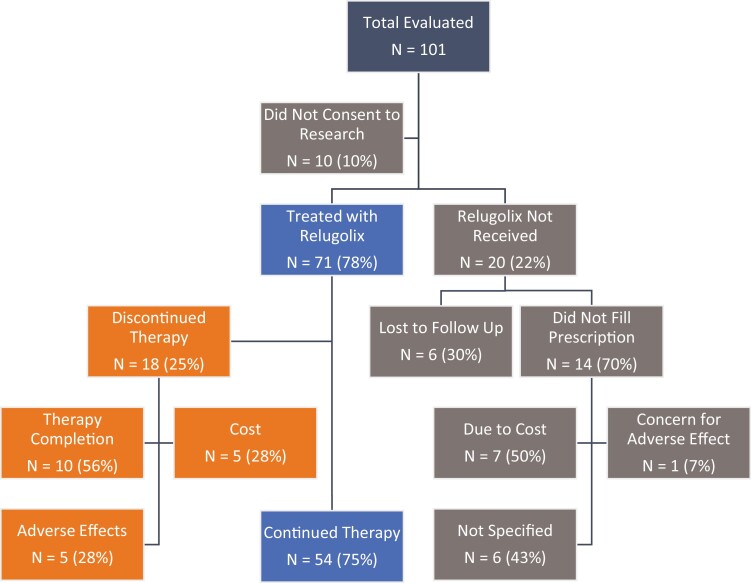
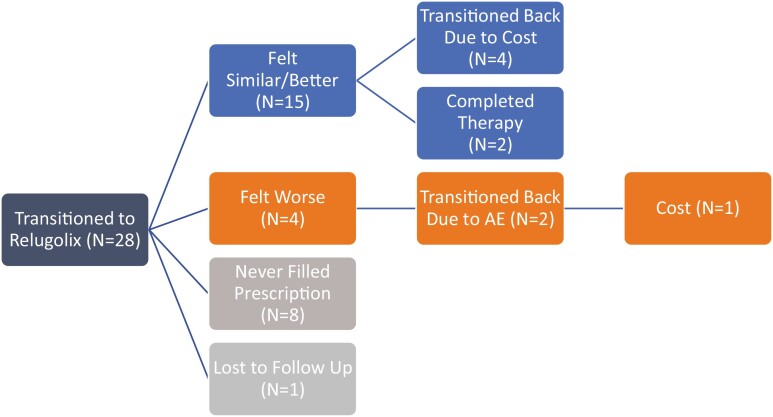
Results: Hundred and one patients were prescribed relugolix, and 91 patients consented to research. Seventy-one (78%) patients filled the prescription to relugolix, with a median follow-up of 5 months. Prescription fill data were available for 45 (63%) patients, with 94% of days covered. The most commonly reported reason not to fill was cost at 50%. Sixty-six (93%) patients reported never missing a dose. PSA levels were available in 71 (100%) patients with 69 (97%) showing stable or improved PSA. Testosterone levels were available in 61 (86%) of patients, which showed 61 (100%) stable or successful castration. Twenty-four (34%) patients used relugolix in combination. No new major safety signals were seen in combination therapy. Nineteen (27%) patients had switched to another form of ADT. Fifteen of these (79%) felt similar or better on relugolix therapy.
Conclusions: Compliance with relugolix seemed acceptable. No major new safety signals were seen, even in combination. Among patients who switched therapy, most tolerated relugolix similarly or better than the previous form of ADT. The cost was a major reason for patients not initiating and for discontinuing therapy.
Keywords: androgen deprivation therapy; combination therapy; compliance; prostate cancer; relugolix.
© The Author(s) 2023. Published by Oxford University Press.
Conflict of interest statement
Figures
References
-
- Oh WK, Landrum MB, Lamont EB, McNeil BJ, Keating NL.. Does oral antiandrogen use before leuteinizing hormone-releasing hormone therapy in patients with metastatic prostate cancer prevent clinical consequences of a testosterone flare? Urology. 2010;75(3):642-647. 10.1016/j.urology.2009.08.008 - DOI - PubMed
-
- Shore ND, Saad F, Cookson MS, et al. Oral relugolix for androgen-deprivation therapy in advanced prostate cancer. N Engl J Med. 2020;(382):2187-2196. - PubMed
Publication types
MeSH terms
Substances
Grants and funding
LinkOut - more resources
Full Text Sources
Medical
Research Materials
Miscellaneous
