


Relationship Between Auditory-Perceptual and Objective Measures of Resonance in Children with Cleft Palate: Effects of Intelligibility and Dysphonia
- PMID: 36890706
- PMCID: PMC11823720
- DOI: 10.1177/10556656231162238
Relationship Between Auditory-Perceptual and Objective Measures of Resonance in Children with Cleft Palate: Effects of Intelligibility and Dysphonia
Abstract
Objective: To investigate the relationship between auditory-perceptual ratings of resonance and nasometry scores in children with cleft palate. Factors which may impact this relationship were examined including articulation, intelligibility, dysphonia, sex, and cleft-related diagnosis.
Design: Retrospective, observational cohort study.
Setting: Outpatient pediatric cranio-facial anomalies clinic.
Patients: Four hundred patients <18 years of age identified with CP ± L, seen for auditory-perceptual and nasometry evaluations of hypernasality as well as assessments of articulation and voice.
Main outcome measure: Relationship between auditory-perceptual ratings of resonance and nasometry scores.
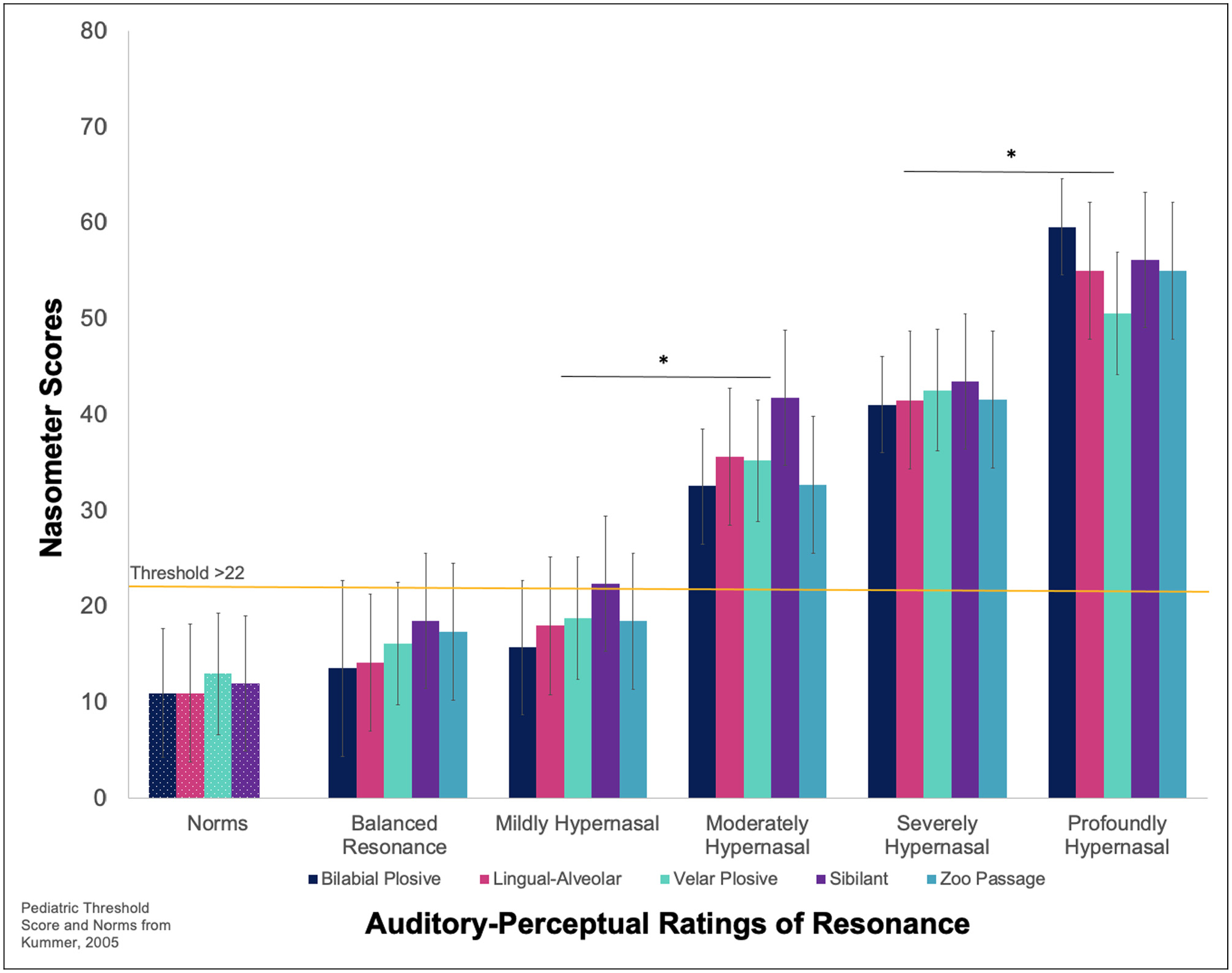
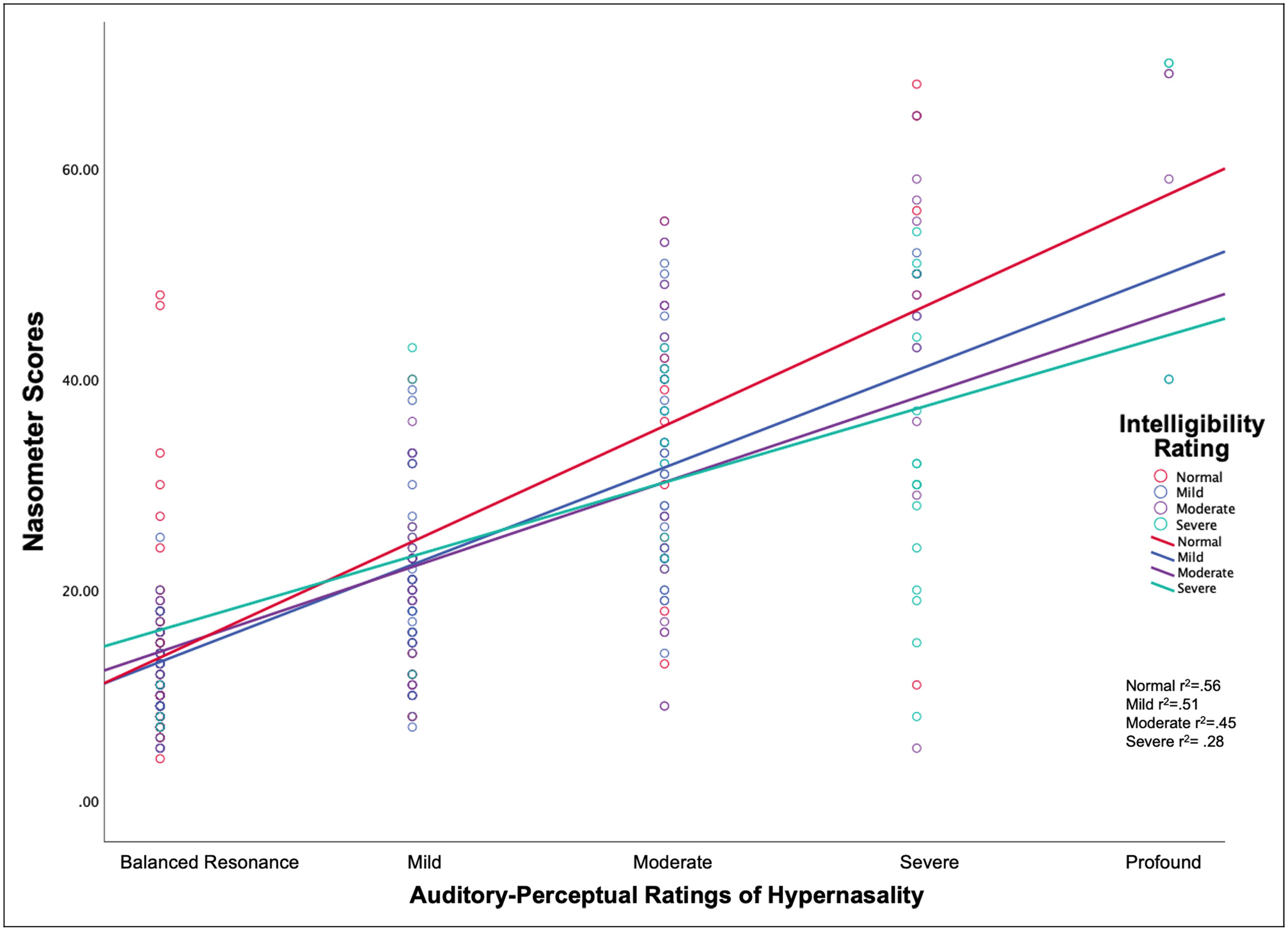
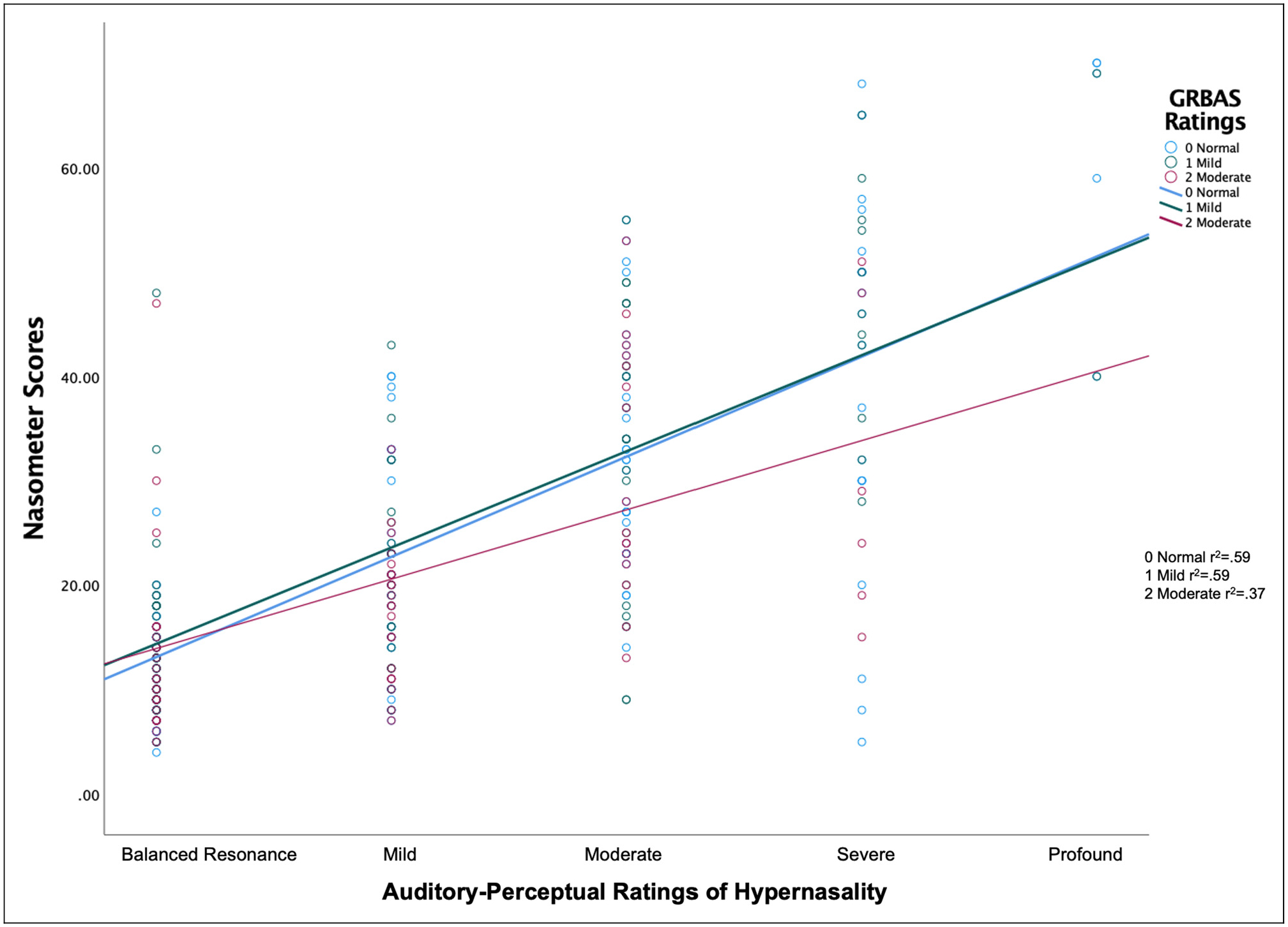
Results: Pearson's correlations indicated that auditory-perceptual resonance ratings and nasometry scores were significantly correlated across oral-sound stimuli on the picture-cued portion of the MacKay-Kummer SNAP-R Test (r values .69 to.72) and the zoo reading passage (r = .72). Linear regression indicated that intelligibility (p ≤ .001) and dysphonia (p = .009) significantly impacted the relationship between perceptual and objective assessments of resonance on the Zoo passage. Moderation analyses indicated that the relationship between auditory-perceptual and nasometry values weakened as severity of speech intelligibility increased (P < .001) and when children presented with moderate dysphonia (p ≤ .001). No significant impact of articulation testing or sex were observed.
Conclusions: Speech intelligibility and dysphonia alter the relationship between auditory-perceptual and nasometry assessments of hypernasality in children with cleft palate. SLPs should be aware of potential sources of auditory-perceptual bias and shortcomings of the Nasometer when following patients with limited intelligibility or moderate dysphonia. Future study may identify the mechanisms by which intelligibility and dysphonia affect auditory-perceptual and nasometry evaluations.
Keywords: cleft palate; hypernasality; nasalance; nasality; nasometer; pediatrics; resonance; speech perception.
Conflict of interest statement
Declaration of Conflicting InterestsThe author(s) declared no potential conflicts of interest with respect to the research, authorship, and/or publication of this article.
Figures
References
-
- Bzoch KR. Articulation proficiency and error patterns of pre-school cleft palate and normal children. Cleft Palate J. 1965;2(4):340–349. http://cleftpalatejournal.pitt.edu/ojs/cleftpalate/article/view/87. Accessed July 31, 2022. - PubMed
-
- Demark DRV, Morris HL, VandeHaar C. Patterns of articulation abilities in speakers with cleft palate. Cleft Palate J. 1979;16(3): 230–239. http://cleftpalatejournal.pitt.edu/ojs/cleftpalate/article/view/789. Accessed July 31, 2022. - PubMed
Publication types
MeSH terms
Grants and funding
LinkOut - more resources
Full Text Sources
Medical
Miscellaneous
