


In a secondary analysis from a randomised, double-blind placebo-controlled trial Dexmedetomidine blocks cholinergic dysregulation in delirium pathogenesis in patients with major surgery
- PMID: 36894596
- PMCID: PMC9998872
- DOI: 10.1038/s41598-023-30756-z
In a secondary analysis from a randomised, double-blind placebo-controlled trial Dexmedetomidine blocks cholinergic dysregulation in delirium pathogenesis in patients with major surgery
Abstract
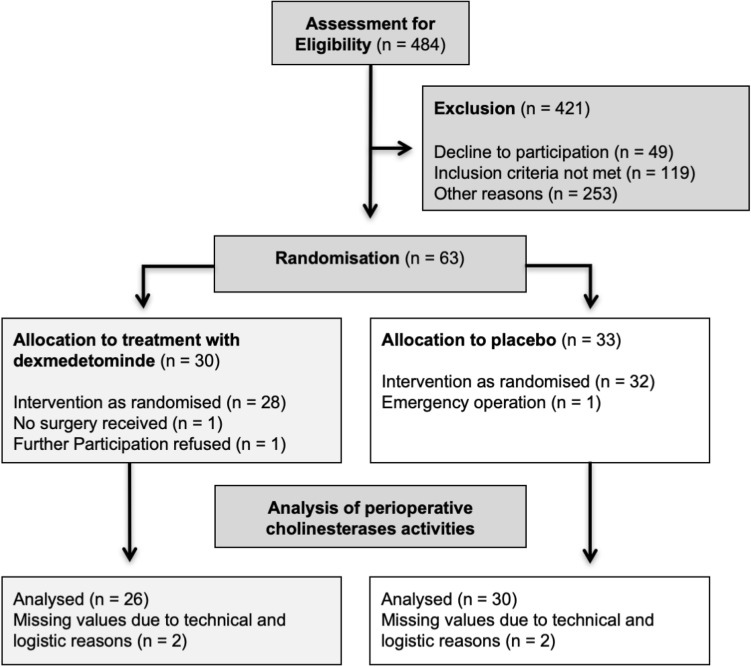
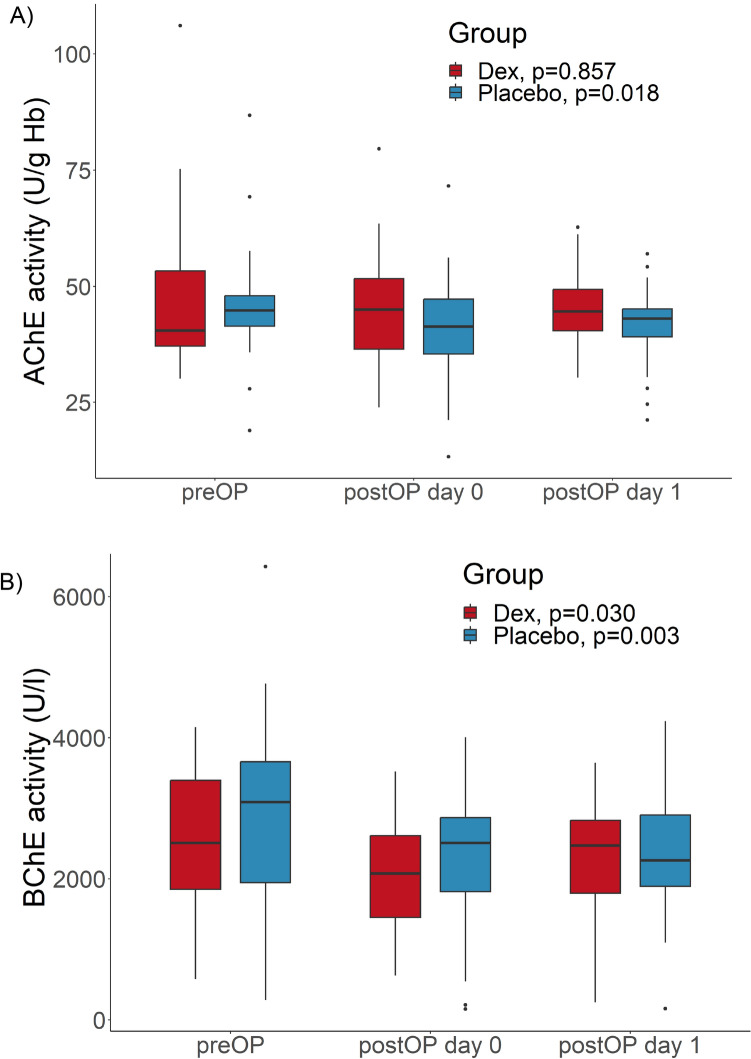
Dexmedetomidine is an alpha-2 adrenoreceptor agonist with anti-inflammatory and anti-delirogenic properties. Pathogenesis of postoperative delirium (POD) includes cholinergic dysfunction and deregulated inflammatory response to surgical trauma. Acetylcholinesterase (AChE) and butyrylcholinesterase (BChE) are discussed as biomarkers for both POD and severity in acute inflammation. To show whether there is a link between blood cholinesterase activities and dexmedetomidine, we performed a secondary analysis of a randomised, double-blind, placebo-controlled trial that recently showed a lower incidence of POD in the dexmedetomidine group. Abdominal or cardiac surgical patients aged ≥ 60 years were randomised to receive dexmedetomidine or placebo intra- and postoperatively in addition to standard general anaesthesia. We analysed the course of perioperative cholinesterase activities of 56 patients, measured preoperatively and twice postoperatively. Dexmedetomidine resulted in no change in AChE activity and caused a rapid recovery of BChE activity after an initial decrease, while placebo showed a significant decrease in both cholinesterase activities. There were no significant between-group differences at any point in time. From these data it can be assumed that dexmedetomidine could alleviate POD via altering the cholinergic anti-inflammatory pathway (CAIP). We advocate for further investigations to show the direct connection between dexmedetomidine and cholinesterase activity.
© 2023. The Author(s).
Conflict of interest statement
The authors declare no competing interests.
Figures
References
-
- Ngwenyama NE, et al. Effects of dexmedetomidine on propofol and remifentanil infusion rates during total intravenous anesthesia for spine surgery in adolescents. Paediatr. Anaesth. 2008;18(12):1190–1195. - PubMed
-
- Soliman RN, et al. Prospective, randomized study to assess the role of dexmedetomidine in patients with supratentorial tumors undergoing craniotomy under general anaesthesia. Middle East J. Anaesthesiol. 2011;21(3):325–334. - PubMed
Publication types
MeSH terms
Substances
LinkOut - more resources
Full Text Sources
Medical
Miscellaneous
