


Potential antiviral activities of chrysin against hepatitis B virus
- PMID: 36895013
- PMCID: PMC9995728
- DOI: 10.1186/s13099-023-00531-6
Potential antiviral activities of chrysin against hepatitis B virus
Abstract
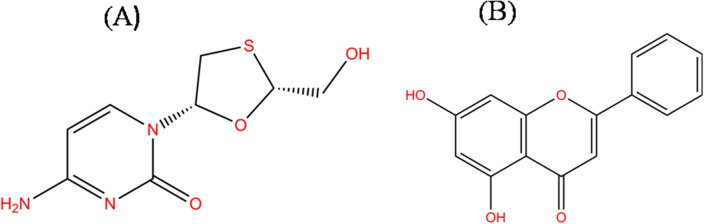
Background: Interferon and nucleos(t)ide analogues are current therapeutic treatments for chronic Hepatitis B virus (HBV) infection with the limitations of a functional cure. Chrysin (5, 7-dihydroxyflavone) is a natural flavonoid, known for its antiviral and hepatoprotective activities. However, its anti-HBV activity is unexplored.
Methods: In the present study, the anti-hepatitis B activity of chrysin was investigated using the in vitro experimental cell culture model, HepG2 cells. In silico studies were performed where chrysin and lamivudine (used here as a positive control) were docked with high mobility group box 1 protein (HMGB1). For the in vitro studies, wild type HBV genome construct (pHBV 1.3X) was transiently transfected in HepG2. In culture supernatant samples, HBV surface antigen (HBsAg) and Hepatitis B e antigen (HBeAg) were measured by enzyme-linked immunosorbent assay (ELISA). Secreted HBV DNA and intracellular covalently closed circular DNA (cccDNA) were measured by SYBR green real-time PCR. The 3D crystal structure of HMGB1 (1AAB) protein was developed and docked with the chrysin and lamivudine. In silico drug-likeness, Absorption, Distribution, Metabolism, Excretion and Toxicity (ADMET) properties of finest ligands were performed by using SwissADME and admetSAR web servers.
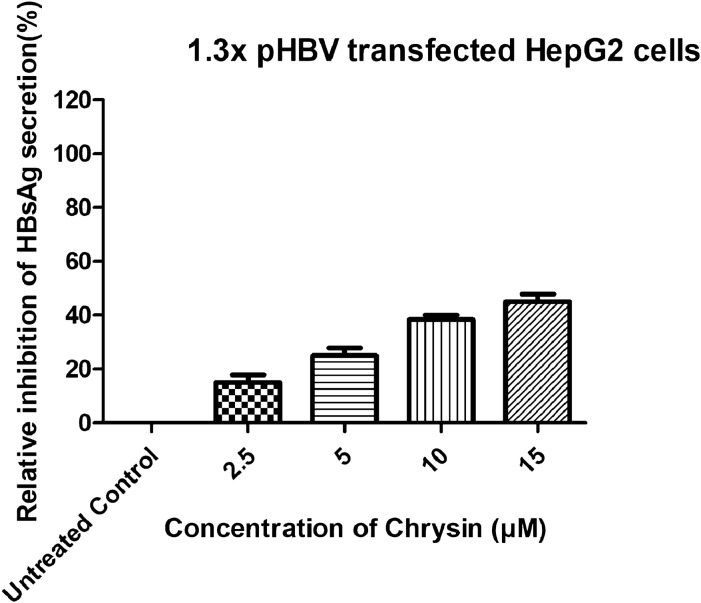
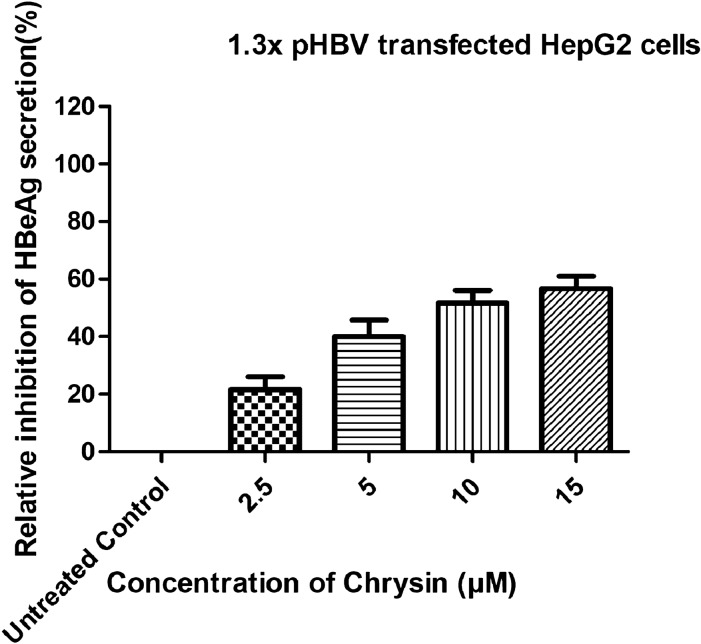
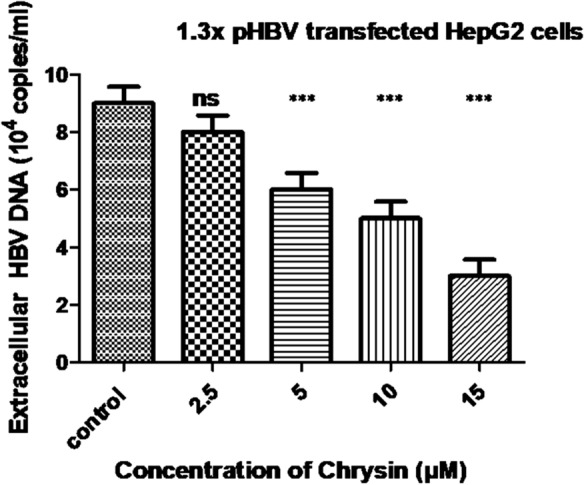
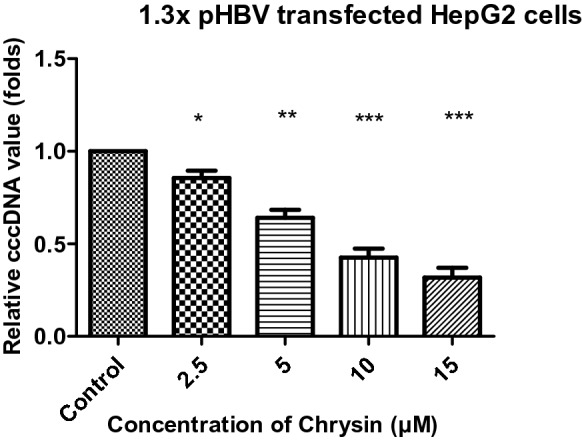
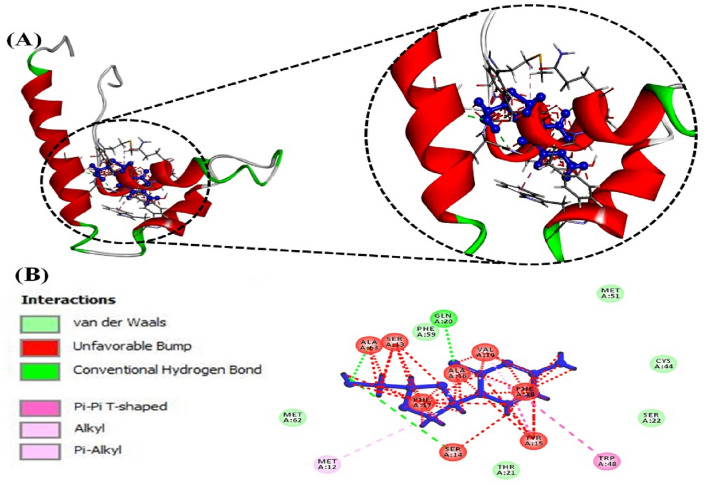
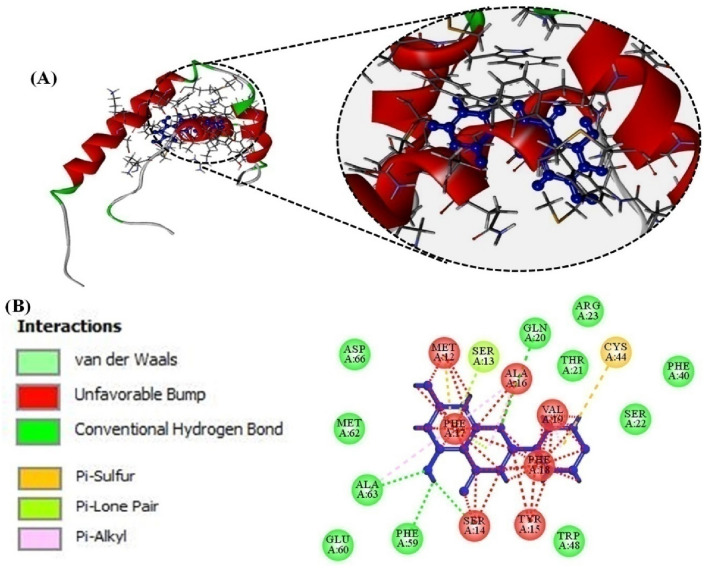
Results: Data showed that chrysin significantly decreases HBeAg, HBsAg secretion, supernatant HBV DNA and cccDNA, in a dose dependent manner. The docking studies demonstrated HMGB1 as an important target for chrysin as compared to lamivudine. Chrysin revealed high binding affinity and formed a firm kissing complex with HMGB1 (∆G = - 5.7 kcal/mol), as compared to lamivudine (∆G = - 4.3 kcal/mol), which might be responsible for its antiviral activity.
Conclusions: The outcome of our study establishes chrysin as a new antiviral against HBV infection. However, using chrysin to treat chronic HBV disease needs further endorsement and optimization by in vivo studies in animal models.
Keywords: CccDNA; Chrysin; HMGB1; Hepatitis B virus; In silico.
© 2023. The Author(s).
Conflict of interest statement
The authors declare that no competing interests exist in publishing this article.
Figures
References
-
- Fung J. Prevention of hepatitis B virus recurrence. Hepat Res. 2021;7:33.
Grants and funding
LinkOut - more resources
Full Text Sources
