


Self-medication practice in Kathmandu Metropolitan City: A cross-sectional study
- PMID: 36896193
- PMCID: PMC9989370
- DOI: 10.1177/20503121231158966
Self-medication practice in Kathmandu Metropolitan City: A cross-sectional study
Abstract
Objectives: Self-medication is increasingly popular among people in developing nations like Nepal where the expense of healthcare is relatively high and over-the-counter) medications are widely and easily accessible. Although this method has certain advantages, it is also clear that it has some drawbacks, including the potential for adverse drug reactions, drug resistance, medication interactions, and increased morbidity and mortality. This study aimed to evaluate the use of self-medication in nine wards of Kathmandu Metropolitan City (ward no. 4, 5, 13, 15, 16, 17, 23, 31, and 32).
Methods: This cross-sectional descriptive survey was conducted in the chosen wards of Kathmandu Metropolitan city for 3 months from August to October 2021. A semi-structured questionnaire was used to collect data from 372 patients who were seeking self-medication. The participants were chosen randomly.
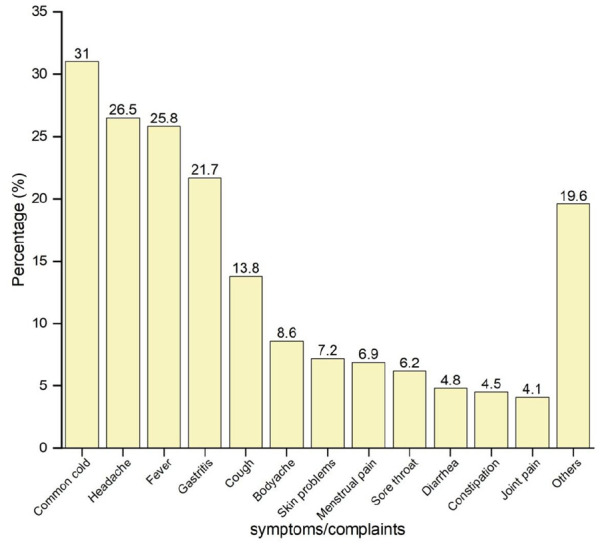
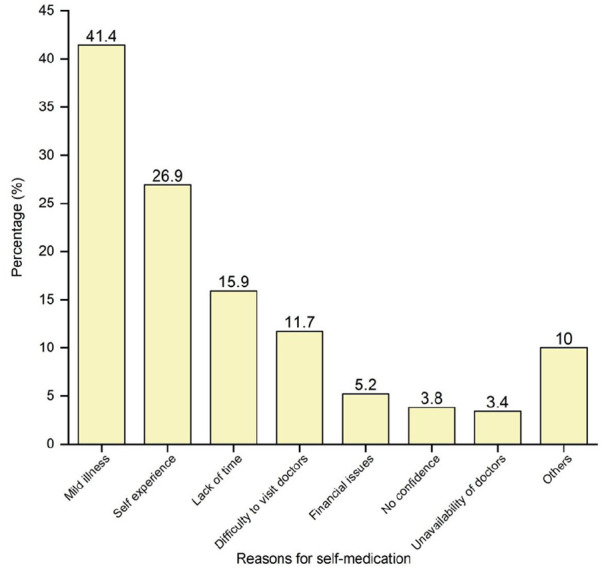
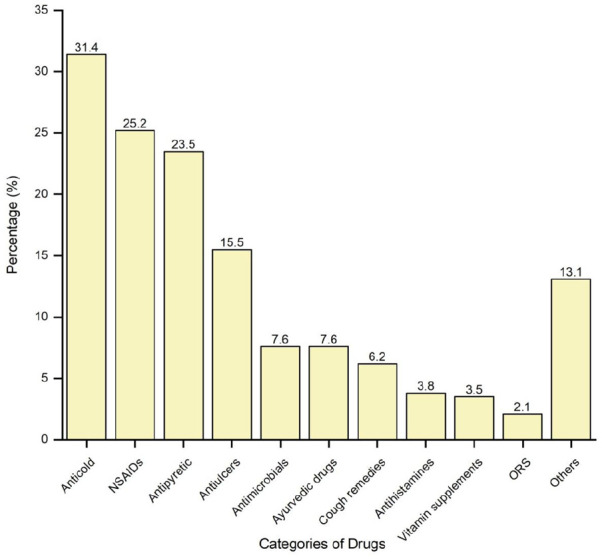
Results: Self-medication was common among people (78%). The most frequent ailments for which participants self-medicated were the common cold (17.1%), headache (14.7%), fever (14.5%), and cough (7.6%). Anticold medications (18.2%), non-steroidal anti-inflammatory drugs (17.4%), antipyretics (15.2%), and analgesics (9.1%) were the most popular drug classes used in self-medication. The two most frequent justifications for self-medication were the absence of any major ailment (35%) and self-experience (22.7%). When symptoms started, the majority of patients started taking medication for themselves, and 47.7% of them got their prescriptions directly from the pharmacist by explaining their symptoms. When the symptoms were not relieved by the medication used for self-medication, it was found that the majority of participants (79.7%) stopped using the medication and visit the doctor.
Conclusion: The prevalence of self-medication in Kathmandu city was ascertained by assessing the practice among residents of the Kathmandu Metropolitan city. The study showed self-medication is common among people and therefore, proper education about drug use and self-medication is needed.
Keywords: Drug use; Kathmandu; practice; prevalence; self-medication.
© The Author(s) 2023.
Conflict of interest statement
The authors declared no potential conflicts of interest with respect to the research, authorship, and/or publication of this article.
Figures
References
-
- World Self-Medication Industry (WSMI). The story of self-care and self-medication: 40 Years of Progress, 1970-2010. Ferney-Voltaire.
-
- Pokharel R, Chapagain K. Prevalence of self medication among patients visiting outpatient services of ear nose and throat department of government hospital of eastern nepal and nepalese Journal of Ent Head & Neck Surgery 2016; 7: 1, https://www.njehns.org.np/index.php/njehns/article/view/158 (accessed 5 September 2022).
-
- Hughes CM, McElnay JC, Fleming GF. Benefits and risks of self medication. Drug Saf 2001; 24: 1027–1037. - PubMed
-
- Pokharel R, Chapagain K. Guidelines for the regulatory assessment of medicinal products for use in self-medication. Nepal J ENT Head Neck Surg 2016; 7: 1.
LinkOut - more resources
Full Text Sources
