


Ultrahigh loading dry-process for solvent-free lithium-ion battery electrode fabrication
- PMID: 36899006
- PMCID: PMC10006413
- DOI: 10.1038/s41467-023-37009-7
Ultrahigh loading dry-process for solvent-free lithium-ion battery electrode fabrication
Abstract
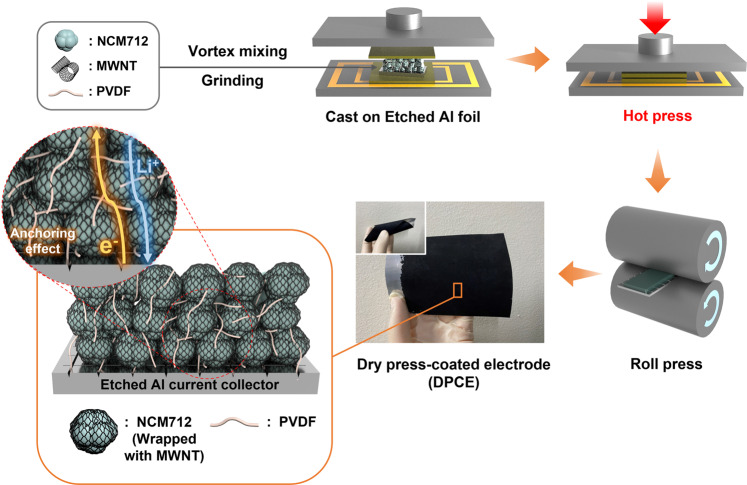
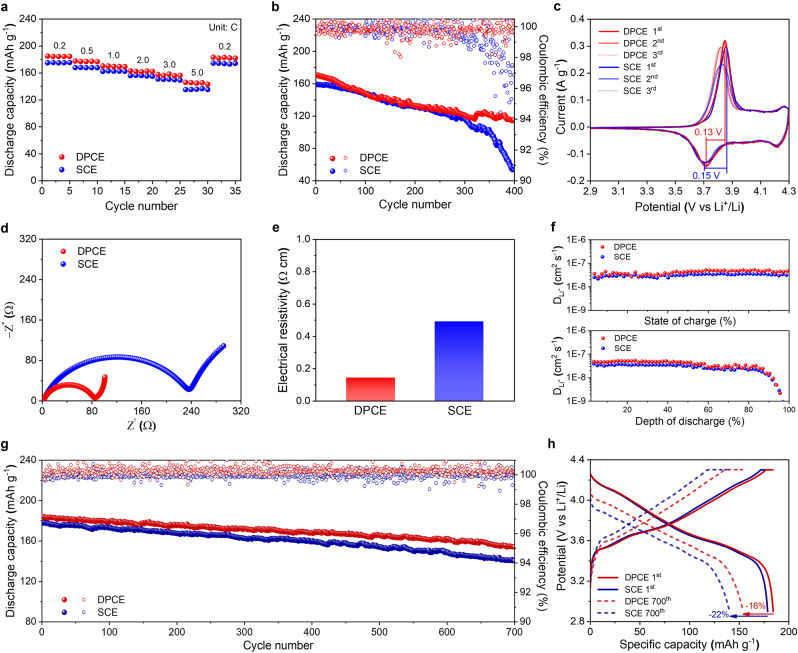
The current lithium-ion battery (LIB) electrode fabrication process relies heavily on the wet coating process, which uses the environmentally harmful and toxic N-methyl-2-pyrrolidone (NMP) solvent. In addition to being unsustainable, the use of this expensive organic solvent substantially increases the cost of battery production, as it needs to be dried and recycled throughout the manufacturing process. Herein, we report an industrially viable and sustainable dry press-coating process that uses the combination of multiwalled carbon nanotubes (MWNTs) and polyvinylidene fluoride (PVDF) as a dry powder composite and etched Al foil as a current collector. Notably, the mechanical strength and performance of the fabricated LiNi0.7Co0.1Mn0.2O2 (NCM712) dry press-coated electrodes (DPCEs) far exceed those of conventional slurry-coated electrodes (SCEs) and give rise to high loading (100 mg cm-2, 17.6 mAh cm-2) with impressive specific energy and volumetric energy density of 360 Wh kg-1 and 701 Wh L-1, respectively.
© 2023. The Author(s).
Conflict of interest statement
The authors declare no competing interests.
Figures



References
-
- Zhang T, Ran F. Design strategies of 3D carbon-based electrodes for charge/ion transport in lithium ion battery and sodium ion battery. Adv. Func. Mater. 2021;31:2010041. doi: 10.1002/adfm.202010041. - DOI
-
- Goodenough JB, Kim Y. Challenges for rechargeable Li batteries. Chem. Mater. 2010;22:587–603. doi: 10.1021/cm901452z. - DOI
Grants and funding
LinkOut - more resources
Full Text Sources
