. 2023 Aug;94(2):826-836.
doi: 10.1038/s41390-023-02476-7. Epub 2023 Mar 10.

Neighborhood disparities and the burden of lead poisoning

Affiliations

Neighborhood disparities and the burden of lead poisoning

Marissa Hauptman et al. Pediatr Res. 2023 Aug.

Abstract

Background: To assess the persistence of neighborhood-level lead poisoning disparities in Rhode Island.

Methods: Rhode Island Department of Health blood lead levels (BLL) collected from 2006-2019 were linked to census block group rates of poverty and housing built pre-1950. We computed multivariate logistic regression models of elevated BLLs (≥5 µg/dL and ≥10 µg/dL).

Results: Of the 197,384 study children, 12.9% had BLLs ≥5 µg/dL and 2.3% had BLLs ≥10 µg/dL. The proportion of children with BLL ≥ 5 µg/dL increased across quintiles of poverty and old housing. The odds ratio for highest quintiles was 1.44 (95% CI: 1.29, 1.60) and 1.92 (95% CI: 1.70, 2.17) for poverty and pre-1950 housing, respectively. A significant temporal decline was observed for BLL ≥ 5 µg/dL (2006: 20.5%, 2019: 3.6%). Disparities narrowed over the study period across quintiles of poverty and old housing with a similar trend appearing in the proportion of children with BLL ≥ 10 µg/dL.

Conclusion: Despite tremendous progress in reducing lead exposure, substantial neighborhood disparities in lead poisoning persist. These findings provide valuable considerations for primary childhood lead exposure prevention.

Impact: Through linkage of Rhode Island Department of Health childhood lead poisoning and census data, this study captures neighborhood-level disparities in lead poisoning from 2006-2019. This study demonstrates that the odds of lead poisoning increased in a stepwise fashion for neighborhood quintiles of poverty and housing built pre-1950. While the magnitude of lead poisoning disparities narrowed across quintiles of poverty and old housing, disparities persist. Children's exposure to sources of lead contamination continues to be an important public health concern. The burden of lead poisoning is not equally distributed among all children or communities.


Conflict of interest statement

The authors declare no competing interests.

Figures
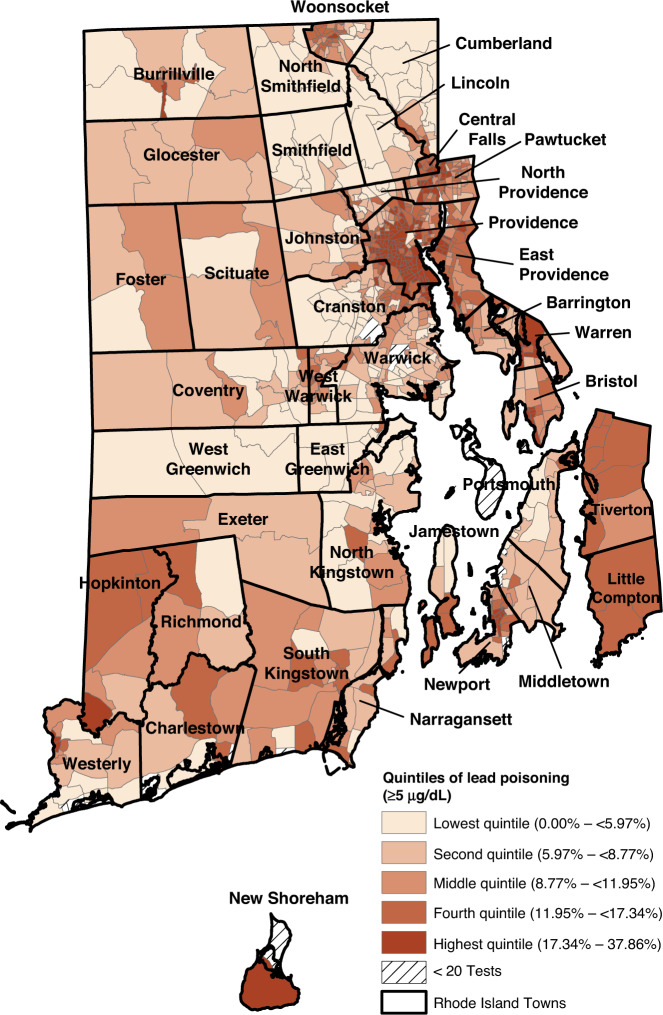
Fig. 1
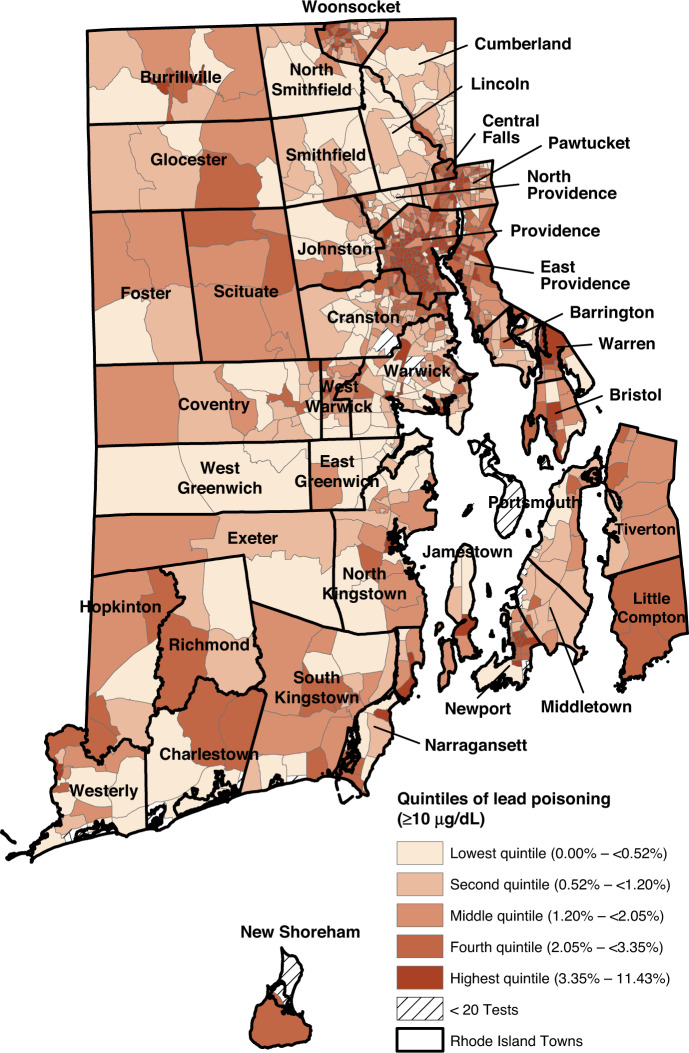
Fig. 1. Quintiles of percent of children with elevated blood lead levels >5 µg/dL.
Block group proportions of Rhode Island children aged 0–6 years with elevated lead levels (>5 µg/dL) ranged from 0 to 38%. Darker colors reflect higher proportions of children with elevated lead levels.
Fig. 2
Fig. 2. Quintiles of percent of children with elevated blood lead levels >10 µg/dL.
Block group proportions of Rhode Island children aged 0–6 years with elevated lead levels (>10 µg/dL) ranged from 0 to 38%. Darker colors reflect higher proportions of children with elevated lead levels.
Fig. 3
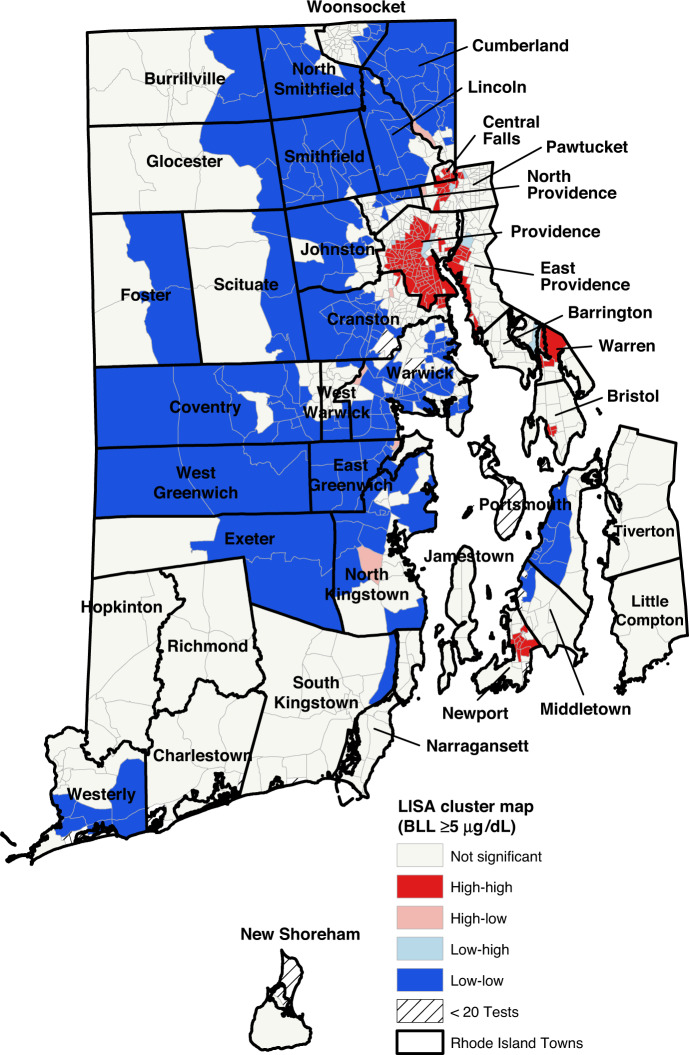
Fig. 3. LISA cluster maps for block group proportions of children with elevated lead levels (BLL ≥ 5 µg/dL).
Block groups designated as high-high or low-low mean that the block group has high (or low) BLL and is neighbored by other block groups with high (or low) BLL. A high-low or low-high designation means that, respectively, a high BLL group is neighbored by low BLL block groups or a low BLL group is neighbored by high BLL block groups. High-high (hot-spotting) and low-low (cool-spotting) zones show areas of clustering, while high-low and low-high zones highlight outliers in the data.
Fig. 4
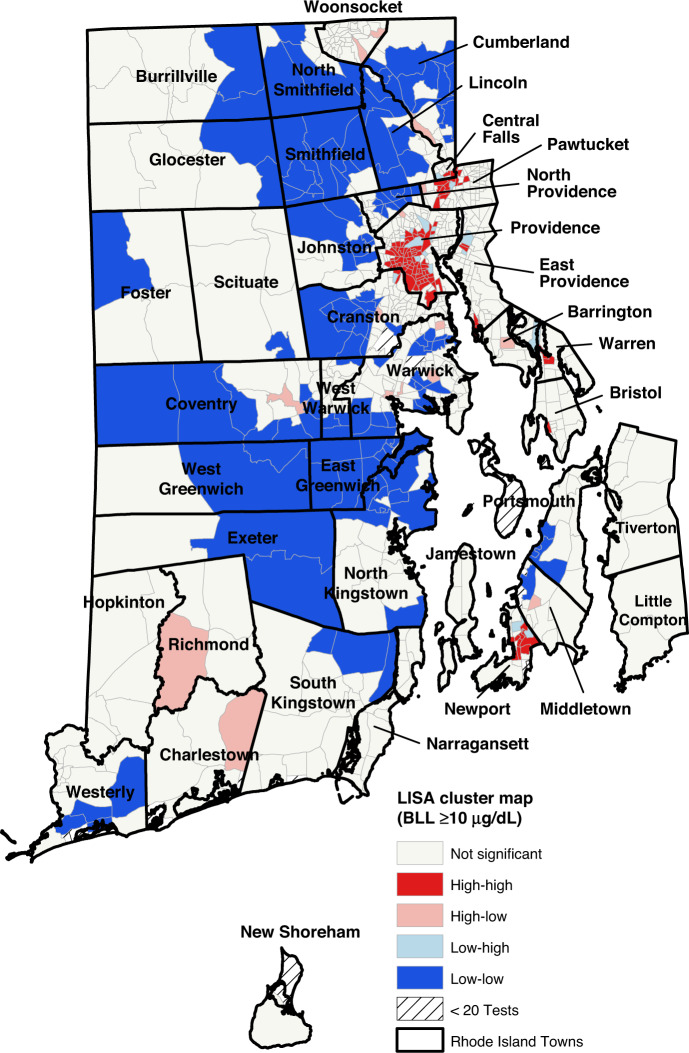
Fig. 4. LISA cluster maps for block group proportions of children with elevated lead levels (BLL ≥ 10 µg/dL).
Block groups designated as high-high or low-low mean that the block group has high (or low) BLL and is neighbored by other block groups with high (or low) BLL. A high-low or low-high designation means that, respectively, a high BLL group is neighbored by low BLL block groups or a low BLL group is neighbored by high BLL block groups. High-high (hot-spotting) and low-low (cool-spotting) zones show areas of clustering, while high-low and low-high zones highlight outliers in the data.
Fig. 5
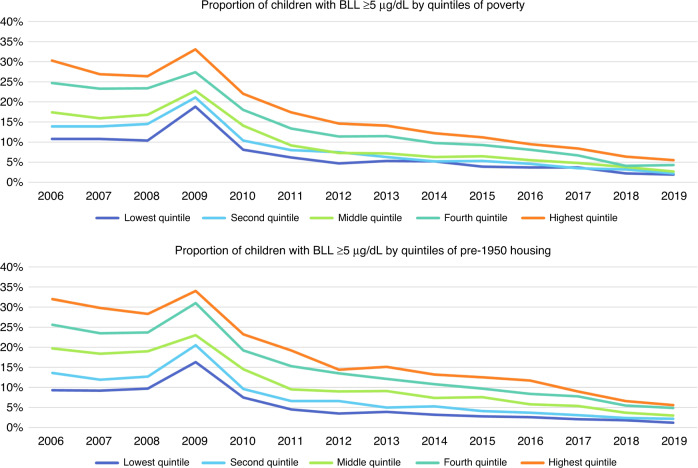
Fig. 5. Longitudinal trends of the proportion of children with elevated blood lead levels ≥5 µg/dL by quintiles of poverty and pre-1950 housing, respectively, 2006 through 2019.
The first panel represents the proportion of children with elevated blood lead levels ≥5 µg/dL by quintiles of poverty, where dark blue represents those block groups in the lowest quintile of proportion of population in poverty and orange represents those block groups in the highest quintile of proportion of population in poverty. The second panel represents the proportion of children with elevated blood lead levels ≥5 µg/dL by quintiles of pre-1950 housing, where dark blue represents those block groups in the lowest quintile of proportion of housing units built pre-1950 and orange represents those block groups in the highest quintile of proportion of housing units built pre-1950.
Fig. 6
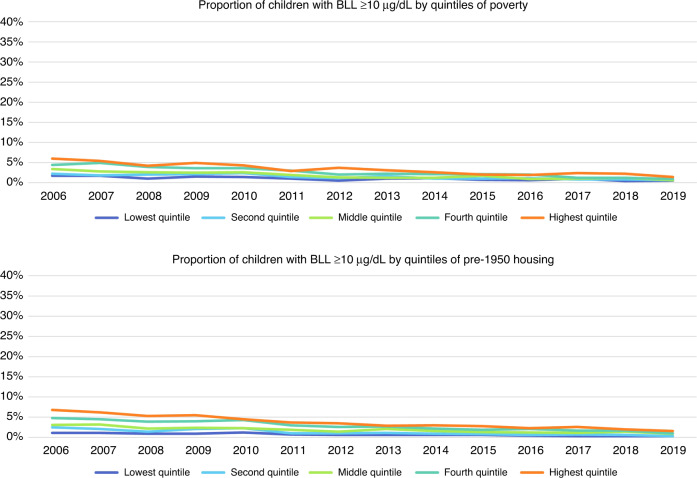
Fig. 6. Longitudinal trends of the proportion of children with elevated blood lead levels ≥10 µg/dL by quintiles of poverty and pre-1950 housing, respectively, 2006 through 2019.
The first panel represents the proportion of children with elevated blood lead levels ≥10 µg/dL by quintiles of poverty, where dark blue represents those block groups in the lowest quintile of proportion of population in poverty and orange represents those block groups in the highest quintile of proportion of population in poverty. The second panel represents the proportion of children with elevated blood lead levels ≥10 µg/dL by quintiles of pre-1950 housing, where dark blue represents those block groups in the lowest quintile of proportion of housing units built pre-1950 and orange represents those block groups in the highest quintile of proportion of housing units built pre-1950.

References

    1. Lanphear BP, et al. Low-level environmental lead exposure and children’s intellectual function: an international pooled analysis. Environ. Health Perspect. 2005;113:894–899. doi: 10.1289/ehp.7688. - DOI - PMC - PubMed
    1. Canfield RL, et al. Intellectual impairment in children with blood lead concentrations below 10 microg per deciliter. N. Engl. J. Med. 2003;348:1517–1526. doi: 10.1056/NEJMoa022848. - DOI - PMC - PubMed
    1. Nigg JT, Nikolas M, Mark Knottnerus G, Cavanagh K, Friderici K. Confirmation and extension of association of blood lead with attention-deficit/hyperactivity disorder (ADHD) and ADHD symptom domains at population-typical exposure levels. J. Child Psychol. Psychiatry, Allied Discip. 2010;51:58–65. doi: 10.1111/j.1469-7610.2009.02135.x. - DOI - PMC - PubMed
    1. Hauptman M, Bruccoleri R, Woolf AD. An update on childhood lead poisoning. Clin. Pediatr. Emerg. Med. 2017;18:181–192. doi: 10.1016/j.cpem.2017.07.010. - DOI - PMC - PubMed
    1. Weitzman M, et al. Housing and child health. Curr. Probl. Pediatr. Adolesc. Health Care. 2013;43:187–224. doi: 10.1016/j.cppeds.2013.06.001. - DOI - PubMed

Publication types