


The Role of Human-Animal Bonds for People Experiencing Crisis Situations
- PMID: 36899798
- PMCID: PMC10000229
- DOI: 10.3390/ani13050941
The Role of Human-Animal Bonds for People Experiencing Crisis Situations
Abstract
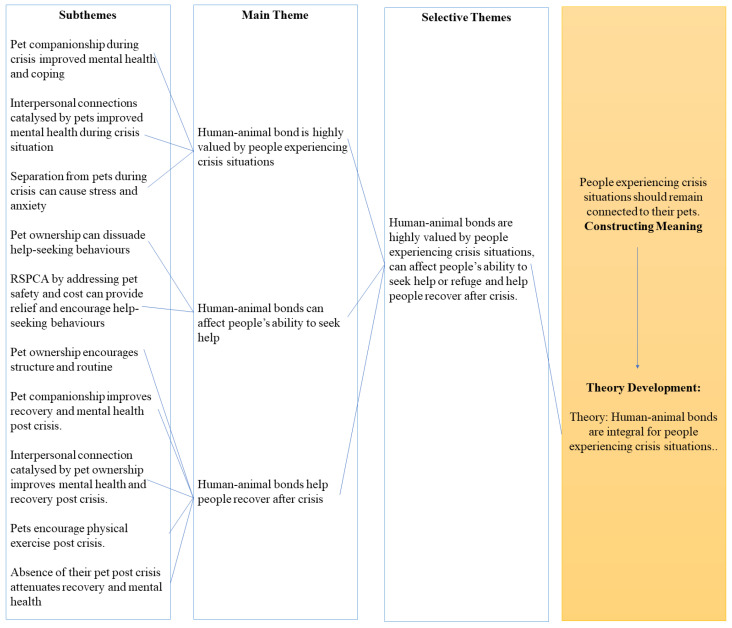
Human-animal bonds, by providing social support, have been shown to improve the health and wellbeing of pet owners, especially those experiencing a crisis situation. The human-animal bond for people in crisis situations is complex and multifaceted, as it has shown to improve health, whilst it can also discourage people from seeking help, due to fears of leaving their pet behind. The purpose of the study is to capture and to assess the role of the human-animal bond for people in crisis situations. Semi-structured interviews were conducted with pet owners involved in the RSPCA NSW Community Programs (n = 13) in 2021 and 2022. The findings of the study indicate that the human-animal bond is highly valued by people experiencing crisis situations, that the human-animal bonds can affect people's ability to seek help or refuge, and that the human-animal bond helps people to recover after a crisis. The findings suggest that community crisis support services, prison systems, hospital systems, emergency housing, and government legislation should recognize and aim to preserve this bond to provide the best help for people experiencing crisis situations.
Keywords: companion animal; coping; crisis situations; human–animal bonds; mental health; multifaceted; pet; social support.
Conflict of interest statement
The authors declare no conflict of interest.
Figures
References
-
- Friedmann E., Son H., Saleem M. Chapter 7—The Animal–Human Bond: Health and Wellness. In: Fine A.H., editor. Handbook on Animal-Assisted Therapy. 4th ed. Academic Press; San Diego, CA, USA: 2015. pp. 73–88. - DOI
LinkOut - more resources
Full Text Sources
