


Artificial Intelligence, Augmented Reality, and Virtual Reality Advances and Applications in Interventional Radiology
- PMID: 36900036
- PMCID: PMC10000832
- DOI: 10.3390/diagnostics13050892
Artificial Intelligence, Augmented Reality, and Virtual Reality Advances and Applications in Interventional Radiology
Abstract
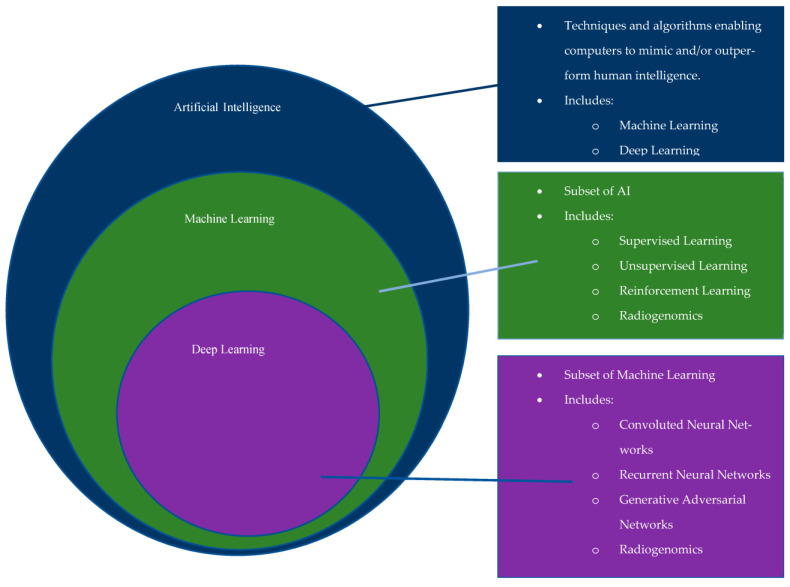
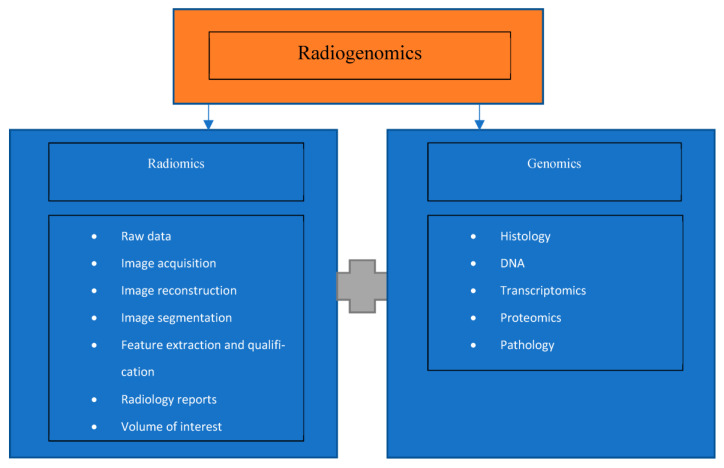
Artificial intelligence (AI) uses computer algorithms to process and interpret data as well as perform tasks, while continuously redefining itself. Machine learning, a subset of AI, is based on reverse training in which evaluation and extraction of data occur from exposure to labeled examples. AI is capable of using neural networks to extract more complex, high-level data, even from unlabeled data sets, and better emulate, or even exceed, the human brain. Advances in AI have and will continue to revolutionize medicine, especially the field of radiology. Compared to the field of interventional radiology, AI innovations in the field of diagnostic radiology are more widely understood and used, although still with significant potential and growth on the horizon. Additionally, AI is closely related and often incorporated into the technology and programming of augmented reality, virtual reality, and radiogenomic innovations which have the potential to enhance the efficiency and accuracy of radiological diagnoses and treatment planning. There are many barriers that limit the applications of artificial intelligence applications into the clinical practice and dynamic procedures of interventional radiology. Despite these barriers to implementation, artificial intelligence in IR continues to advance and the continued development of machine learning and deep learning places interventional radiology in a unique position for exponential growth. This review describes the current and possible future applications of artificial intelligence, radiogenomics, and augmented and virtual reality in interventional radiology while also describing the challenges and limitations that must be addressed before these applications can be fully implemented into common clinical practice.
Keywords: artificial intelligence; deep learning; interventional radiology; machine learning; radiogenomics.
Conflict of interest statement
The authors declare no conflict of interest.
Figures
References
-
- Morshid A., Elsayes K.M., Khalaf A.M., Elmohr M.M., Yu J., Kaseb A.O., Hassan M., Mahvash A., Wang Z., Hazle J.D., et al. A machine learning model to predict hepatocellular carcinoma response to transcatheter arterial chemoembolization. Radiol. Artif. Intell. 2019;1:e180021. doi: 10.1148/ryai.2019180021. - DOI - PMC - PubMed
Publication types
LinkOut - more resources
Full Text Sources
