Case Reports
. 2023 Feb 27;13(5):895.
doi: 10.3390/diagnostics13050895.

A Mutation in CACNA1S Is Associated with Multiple Supernumerary Cusps and Root Maldevelopment

Affiliations
Case Reports

A Mutation in CACNA1S Is Associated with Multiple Supernumerary Cusps and Root Maldevelopment

Piranit Kantaputra et al. Diagnostics (Basel). .

Abstract

Background: Enamel knots and Hertwig epithelial root sheath (HERS) regulate the growth and folding of the dental epithelium, which subsequently determines the final form of tooth crown and roots. We would like to investigate the genetic etiology of seven patients affected with unique clinical manifestations, including multiple supernumerary cusps, single prominent premolars, and single-rooted molars.

Methods: Oral and radiographic examination and whole-exome or Sanger sequencing were performed in seven patients. Immunohistochemical study during early tooth development in mice was performed.

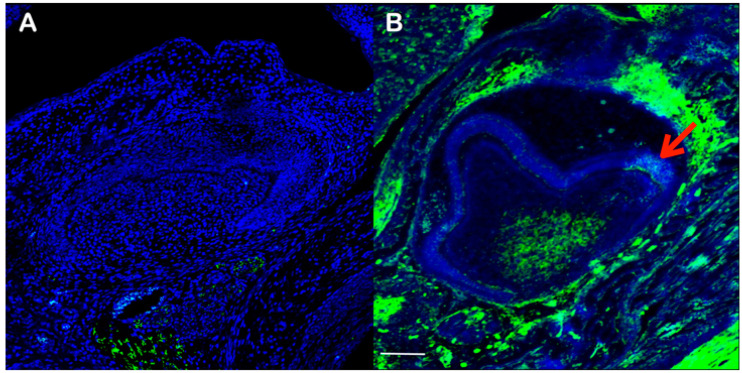
Results: A heterozygous variant (c. 865A>G; p.Ile289Val) in CACNA1S was identified in all the patients, but not in an unaffected family member and control. Immunohistochemical study showed high expression of Cacna1s in the secondary enamel knot.

Conclusions: This CACNA1S variant seemed to cause impaired dental epithelial folding; too much folding in the molars and less folding in the premolars; and delayed folding (invagination) of HERS, which resulted in single-rooted molars or taurodontism. Our observation suggests that the mutation in CACNA1S might disrupt calcium influx, resulting in impaired dental epithelium folding, and subsequent abnormal crown and root morphology.

Keywords: calcium homeostasis; calcium influx; enamel knot; root maldevelopment; single-rooted molars; supernumerary cusps; taurodontism; terotogenic effect.


Conflict of interest statement

The authors declare no conflict of interest.

Figures
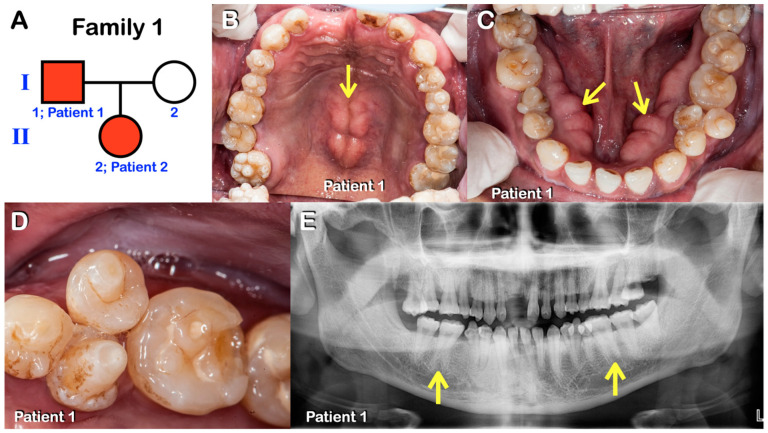
Figure 1
Figure 1
(AE) Family 1. (A) Pedigree of family 1. Patients 1 and 2. (BD) Patient 1. Permanent dentition. Round-shaped permanent molars, molars with multiple supernumerary cusps, premolars with single prominent cusps, torus palatinus (arrow in B), and torus mandibularis (arrows in C). Close-up view of mandibular premolars with single prominent cusps. (E) Panoramic radiograph showing agenesis of the right permanent mandibular third molar, single-rooted permanent molars, and taurodontism (arrows).
Figure 2
Figure 2
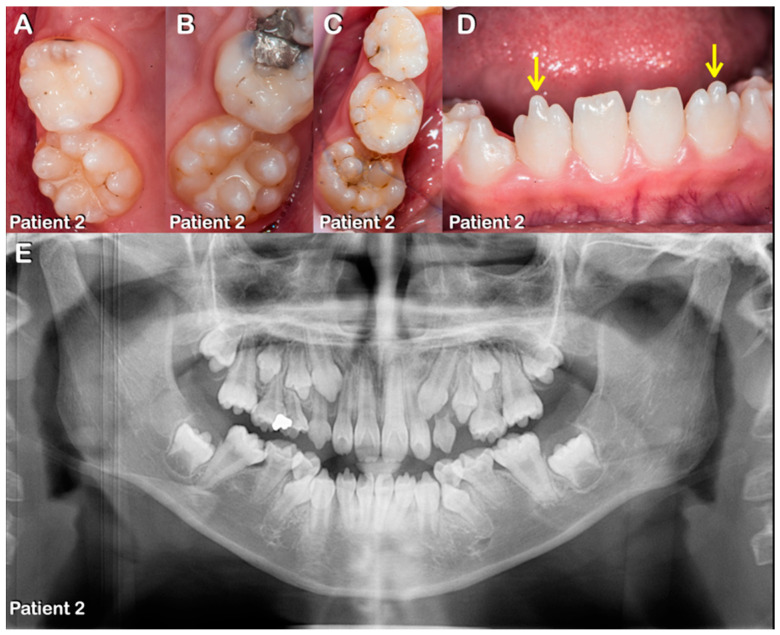
Patient 2. (AE) Mixed dentition. (AC) Round-shaped primary and permanent molars with multiple supernumerary cusps. (D) Prominent medial mamelon of the mandibular lateral permanent incisors (arrows). (E) Panoramic radiograph showing agenesis of all third permanent molars, single-rooted primary and permanent molars, and taurodontism.
Figure 3
Figure 3
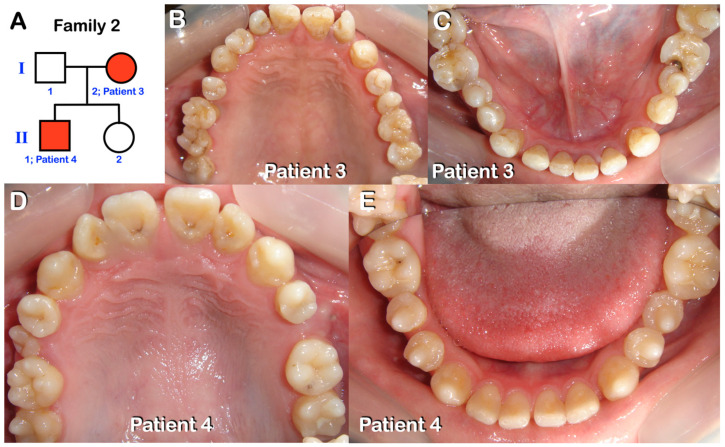
Family 2. (A) Pedigree of family 2. Patients 3 and 4. (B,C) Patient 3 and (D,E) Patient 4. Both are in permanent dentition. Round-shaped permanent molars, molars with multiple supernumerary cusps, and premolars with single prominent cusps.
Figure 4
Figure 4
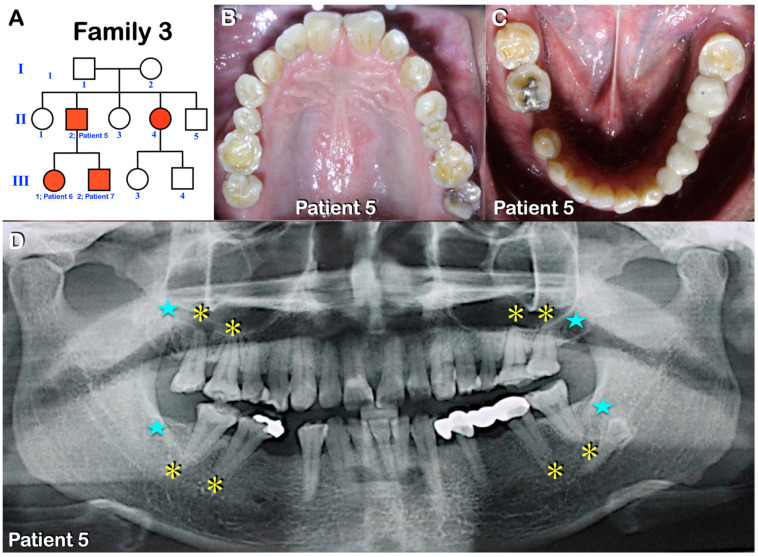
Family 3. (A) Pedigree of family 3. Patients 5–7. (B,C) Patient 5. Permanent dentition. Round-shaped permanent molars, molars with multiple supernumerary cusps, and premolars with single prominent cusps. (D) Patient 5. Panoramic radiograph showing agenesis of all third permanent molars (blue stars), single-rooted permanent molars, and taurodontism (yellow asterisks).
Figure 5
Figure 5
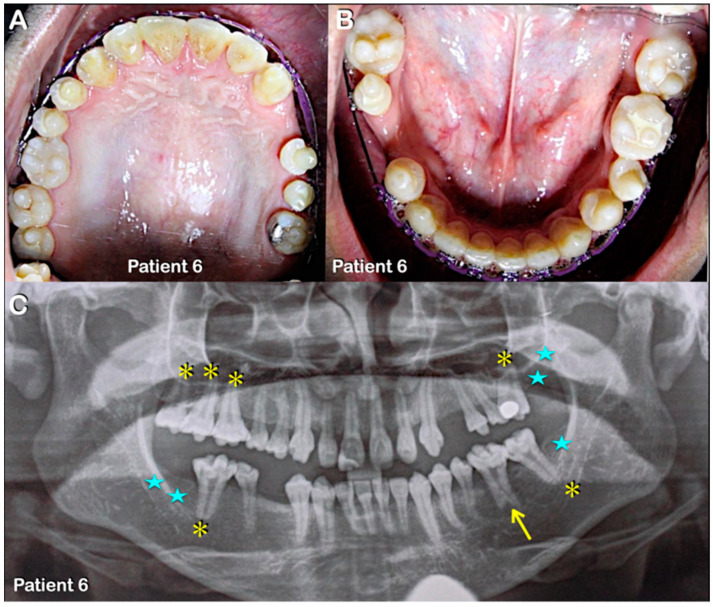
Patient 6. (AC) Patient 6. (A,B) Permanent dentition. Round-shaped permanent molars, molars with multiple supernumerary cusps, and premolars with single prominent cusps. (C) Panoramic radiograph showing agenesis of second and third permanent molars (blue stars) and single-rooted permanent molars (yellow asterisks). Note severe taurodontism (yellow arrow).
Figure 6
Figure 6
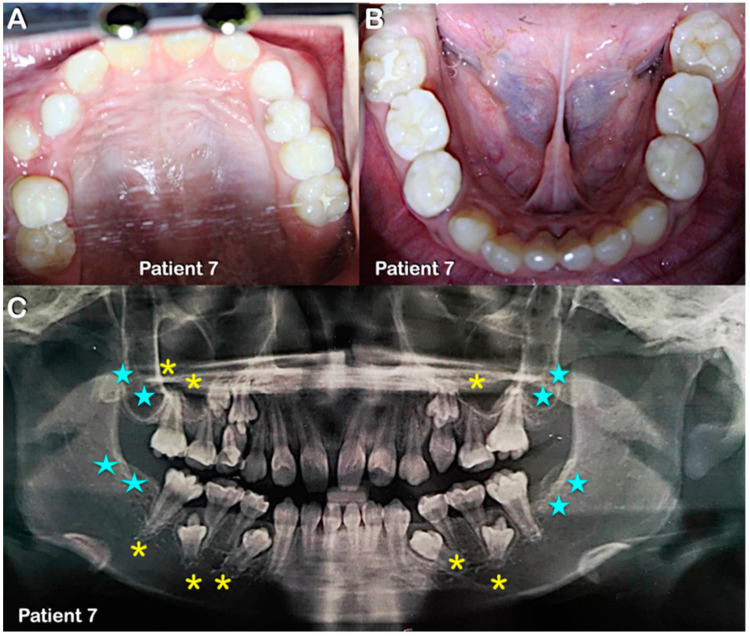
Patient 7 in mixed dentition. (A,B) Round-shaped permanent molars and molars with multiple supernumerary cusps. (C) Panoramic radiograph showing agenesis of second and third permanent molars (blue stars) and single-rooted primary and permanent molars (yellow asterisks).
Figure 7
Figure 7
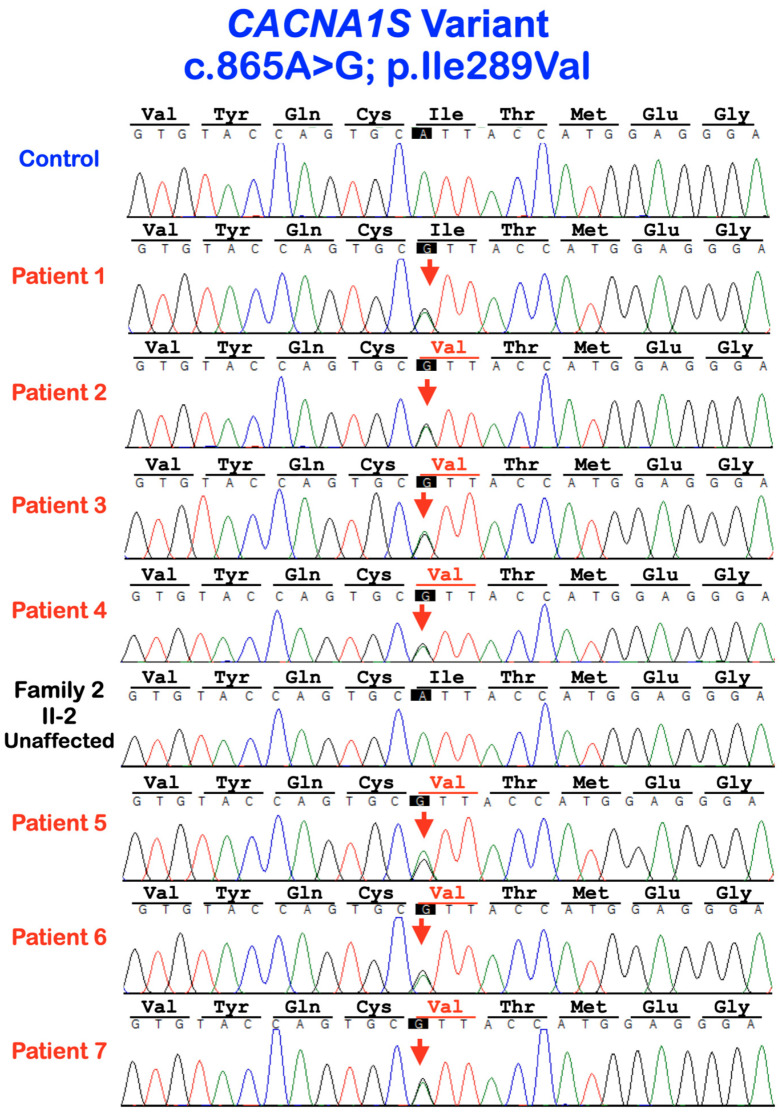
Sequence chromatograms of patients 1–7, the unaffected II-2 of family 2, and a control. The single base substitution from A to G at nucleotide 865 in CACNA1S gene is predicted to cause a change in amino acid isoleucine (Ile) to valine (Val) at amino acid residue 289 (c.865A>G; p.Ile289Val).
Figure 8
Figure 8
Frontal section showing immunohistochemistry of Cacna1S in wild-type mouse at embry- onic day 17.5 (B). Negative control (A). Arrow in B indicates Cacna1s expression at the secondary enamel knot. Scale bar: 100 μm.

References

    1. Zhang H., Gong X., Xu X., Wang X., Sun Y. Tooth number abnormality: From bench to bedside. Int. J. Oral Sci. 2023;15:5. doi: 10.1038/s41368-022-00208-x. - DOI - PMC - PubMed
    1. Hovorakova M., Zahradnicek O., Bartos M., Hurnik P., Stransky J., Stembirek J., Tucker A.S. Reawakening of Ancestral Dental Potential as a Mechanism to Explain Dental Pathologies. Integr. Comp. Biol. 2020;60:619–629. doi: 10.1093/icb/icaa053. - DOI - PubMed
    1. Juuri E., Balic A. The Biology Underlying Abnormalities of Tooth Number in Humans. J. Dent. Res. 2017;96:1248–1256. doi: 10.1177/0022034517720158. - DOI - PubMed
    1. Jernvall J., Thesleff I. Reiterative signaling and patterning during mammalian tooth morphogenesis. Mech. Dev. 2000;92:19–29. doi: 10.1016/S0925-4773(99)00322-6. - DOI - PubMed
    1. Horakova L., Dalecka L., Zahradnicek O., Lochovska K., Lesot H., Peterkova R., Tucker A.S., Hovorakova M. Eda controls the size of the enamel knot during incisor development. Front. Physiol. 2023;13:1033130. doi: 10.3389/fphys.2022.1033130. - DOI - PMC - PubMed

Publication types

LinkOut - more resources