


Molecular Mechanisms of the Protective Effects of Olive Leaf Polyphenols against Alzheimer's Disease
- PMID: 36901783
- PMCID: PMC10001635
- DOI: 10.3390/ijms24054353
Molecular Mechanisms of the Protective Effects of Olive Leaf Polyphenols against Alzheimer's Disease
Abstract
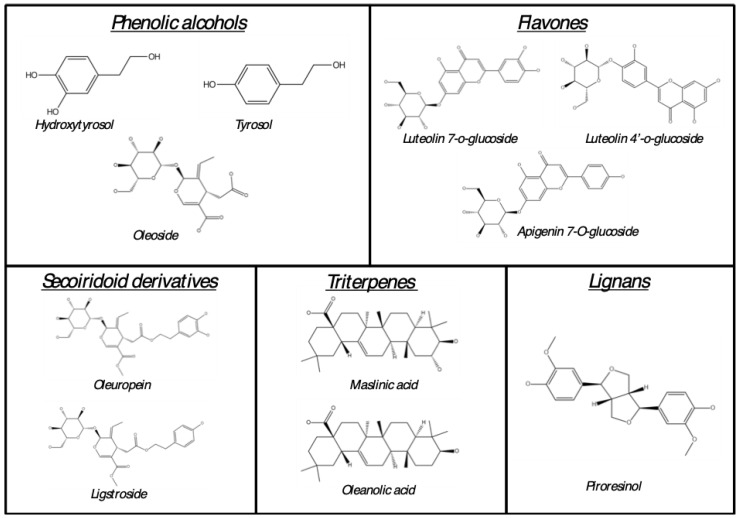
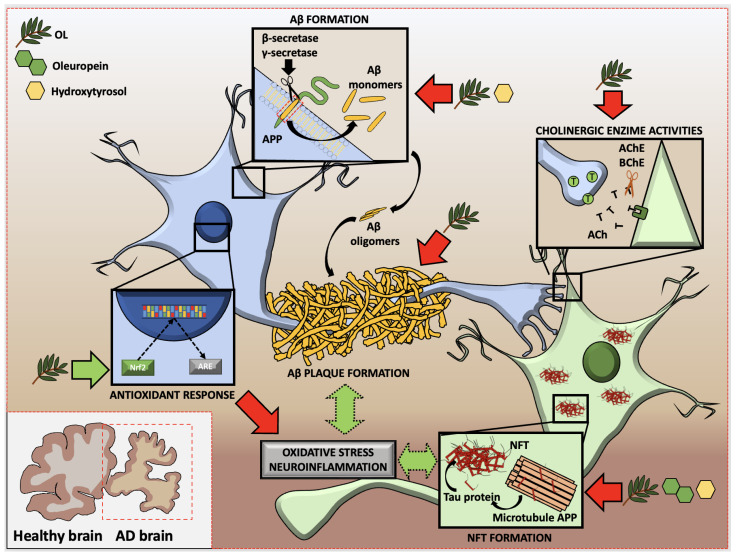
Alzheimer's Disease (AD) is the cause of around 60-70% of global cases of dementia and approximately 50 million people have been reported to suffer this disease worldwide. The leaves of olive trees (Olea europaea) are the most abundant by-products of the olive grove industry. These by-products have been highlighted due to the wide variety of bioactive compounds such as oleuropein (OLE) and hydroxytyrosol (HT) with demonstrated medicinal properties to fight AD. In particular, the olive leaf (OL), OLE, and HT reduced not only amyloid-β formation but also neurofibrillary tangles formation through amyloid protein precursor processing modulation. Although the isolated olive phytochemicals exerted lower cholinesterase inhibitory activity, OL demonstrated high inhibitory activity in the cholinergic tests evaluated. The mechanisms underlying these protective effects may be associated with decreased neuroinflammation and oxidative stress via NF-κB and Nrf2 modulation, respectively. Despite the limited research, evidence indicates that OL consumption promotes autophagy and restores loss of proteostasis, which was reflected in lower toxic protein aggregation in AD models. Therefore, olive phytochemicals may be a promising tool as an adjuvant in the treatment of AD.
Keywords: Alzheimer’s Disease; bioactive compounds; hydroxytyrosol; oleuropein; olive leaves.
Conflict of interest statement
The authors declare no conflict of interest.
Figures
References
-
- Chu L.W. Alzheimer’s Disease: Early Diagnosis and Treatment. Hong Kong Med. J. 2012;18:228–237. - PubMed
Publication types
MeSH terms
Substances
Grants and funding
LinkOut - more resources
Full Text Sources
Medical
