Review
. 2023 Feb 22;24(5):4367.
doi: 10.3390/ijms24054367.

Aducanumab-Hope or Disappointment for Alzheimer's Disease

Affiliations
Review

Aducanumab-Hope or Disappointment for Alzheimer's Disease

Karolina Wojtunik-Kulesza et al. Int J Mol Sci. .

Abstract

In June 2021, the world was informed about a new drug for Alzheimer's disease approved by the FDA. Aducanumab (BIIB037, ADU), being a monoclonal antibody IgG1, is the newest AD treatment. The activity of the drug is targeted towards amyloid β, which is considered one of the main causes of Alzheimer's disease. Clinical trials have revealed time- and dose-dependent activity towards Aβ reduction, as well as cognition improvement. Biogen, the company responsible for conducting research and introducing the drug to the market, presents the drug as a solution to cognitive impairment, but its limitations, costs, and side effects are controversial. The framework of the paper focuses on the mechanism of aducanumab's action along with the positive and negative sides of the therapy. The review presents the basis of the amyloid hypothesis that is the cornerstone of therapy, as well as the latest information about aducanumab, its mechanism of action, and the possibility of the use of the drug.

Keywords: Alzheimer’s disease; aducanumab; amyloid; monoclonal antibodies; senile plaques.


Conflict of interest statement

The authors declare no conflict of interest.

Figures
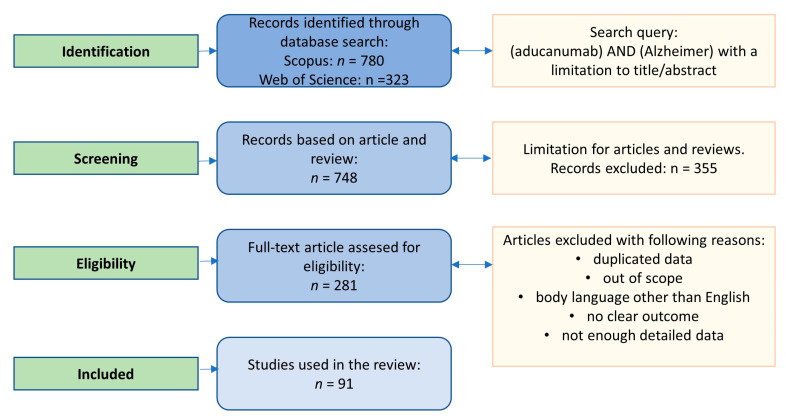
Figure 1
Figure 1
Search strategy for the review paper.
Figure 2
Figure 2
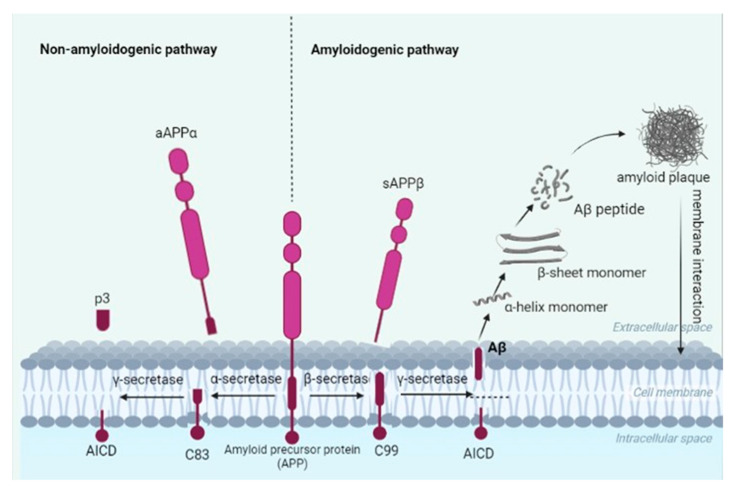
Non-amyloidogenic and amyloidogenic pathways of amyloid precursor protein (APP) cleavage. The non-amyloidogenic pathway leads to the formation of an 83-amino acid fragment (a CTFα), which, when treated with γ-secretase, forms a two-fragment p3 and AICD, being an APP intracellular domain. These forms are not toxic and are not able to form senile plaques. The amyloidogenic pathway, however, is a toxic form of APP cleavage and leads to the formation of a soluble aAPPβ fragment and a C-terminal part composed of 99 amino acids. The latter, under γ-secretase activity, creates Aβ, which is able to aggregate towards senile plaques.
Figure 3
Figure 3
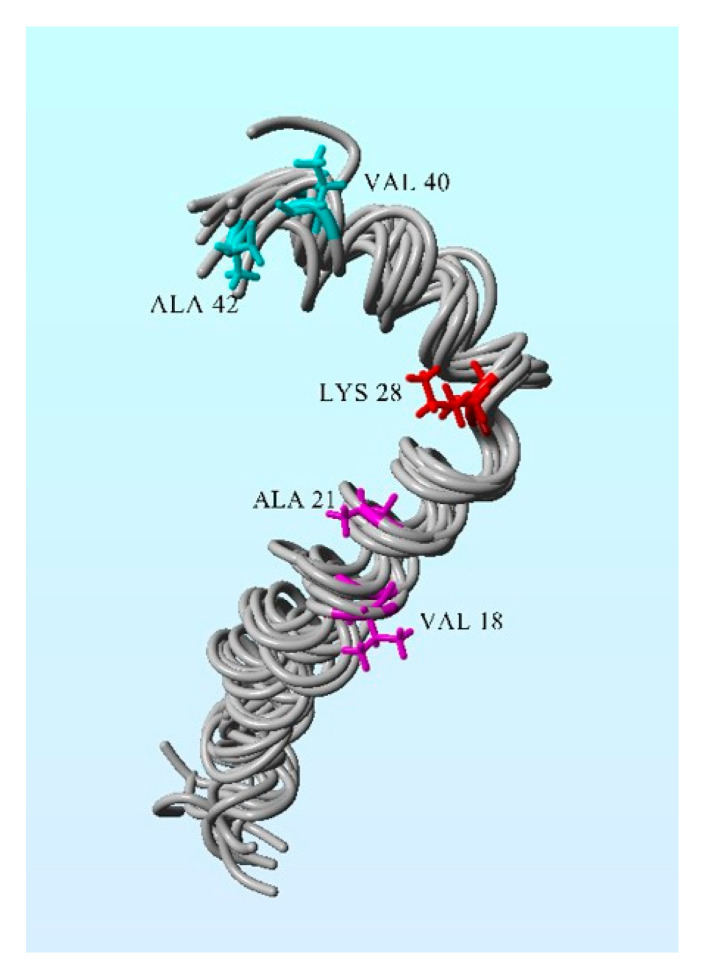
Solution structure of the Alzheimer’s disease Aβ (1–42). The following hydrophobic groups of amino acid residues are engaged in Aβ toxicity: Ala21–Val18, Val40-Ala42, and Lys28. Figure preparation: PDB ID: 1IYT, Yasara 11.2.15 package (Yasara Bioscience, Graz, Austria).
Figure 4
Figure 4
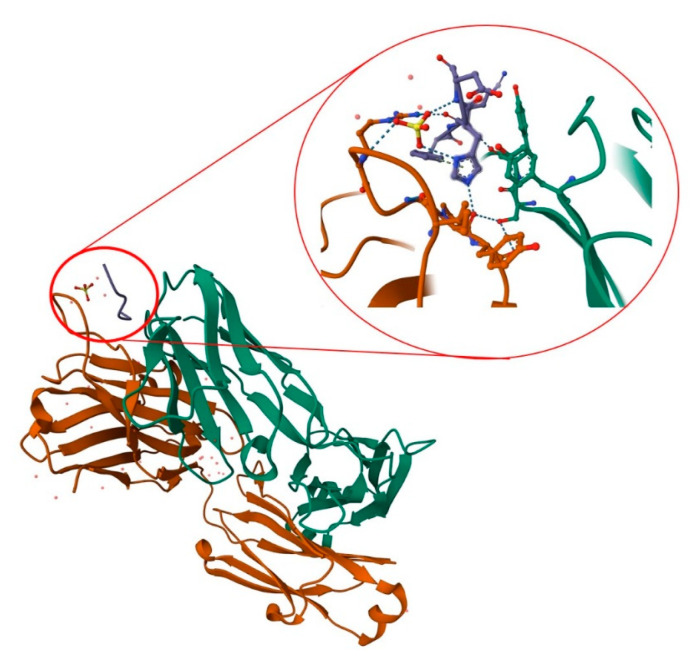
Structure of AduFab with bound Aβ (1–11) peptide. The figure shows Fab light chain in green, Fab heavy chain in brown, and amyloid β in blue, along with hydrogen interactions between AduFab and amyloid. Prepared with the use of Protein Data Bank.

References

    1. Iqbal K., Grundke-Iqbal I. Alzheimer Disease, a Multifactorial Disorder Seeking Multi-Therapies. Alzheimer’s Dement. 2010;6:420–424. doi: 10.1016/j.jalz.2010.04.006. - DOI - PMC - PubMed
    1. Tarawneh R., Holtzman D.M. The Clinical Problem of Symptomatic Alzheimer Disease and Mild Cognitive Impairment. Cold Spring Harb. Perspect. Med. 2012;2:a006148. doi: 10.1101/cshperspect.a006148. - DOI - PMC - PubMed
    1. EClinicalMedicine Alzheimer’s Disease: Still in Need of a Cure! eClinicalMedicine. 2021;39 doi: 10.1016/j.eclinm.2021.101146. - DOI - PMC - PubMed
    1. Delbreil P., Rabanel J.-M., Banquy X., Brambilla D. Therapeutic Nanotechnologies for Alzheimer’s Disease: A Critical Analysis of Recent Trends and Findings. Adv. Drug Deliv. Rev. 2022;187:114397. doi: 10.1016/j.addr.2022.114397. - DOI - PubMed
    1. Wang X., Wang W., Li L., Perry G., Lee H., Zhu X. Oxidative Stress and Mitochondrial Dysfunction in Alzheimer’s Disease. Biochim. Biophys. Acta (BBA)-Mol. Basis Dis. 2014;1842:1240–1247. doi: 10.1016/j.bbadis.2013.10.015. - DOI - PMC - PubMed