


Adherence to Oral Antidiabetic Drugs in Patients with Type 2 Diabetes: Systematic Review and Meta-Analysis
- PMID: 36902770
- PMCID: PMC10004070
- DOI: 10.3390/jcm12051981
Adherence to Oral Antidiabetic Drugs in Patients with Type 2 Diabetes: Systematic Review and Meta-Analysis
Abstract
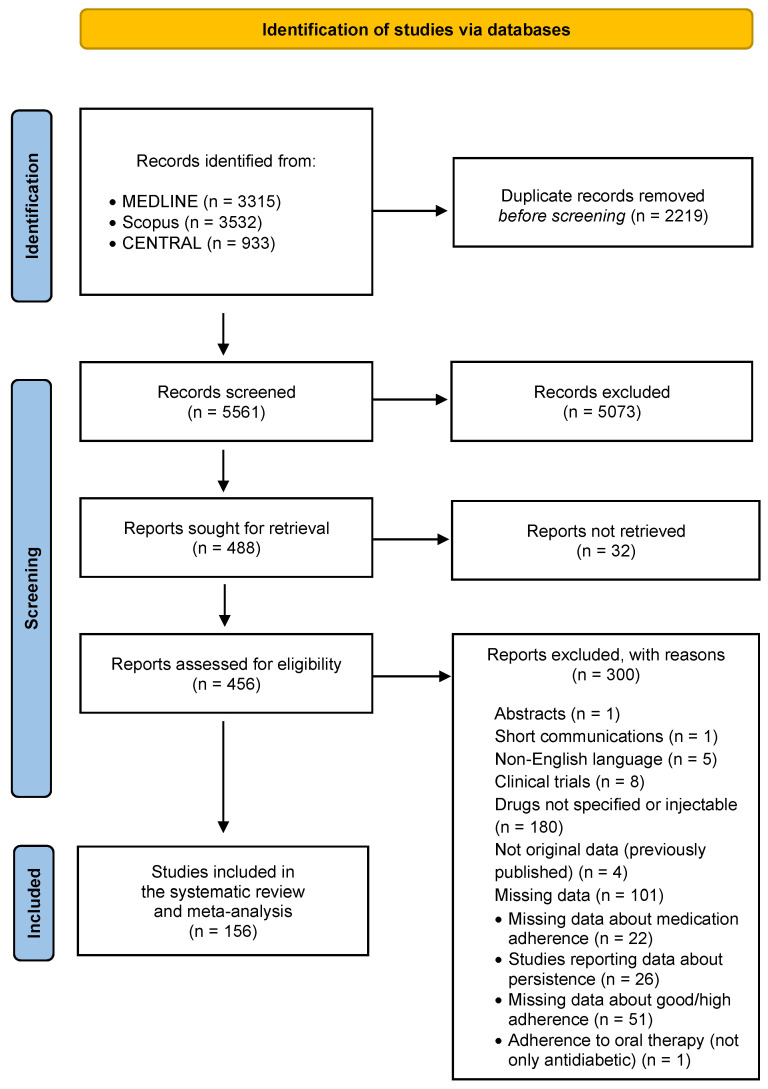
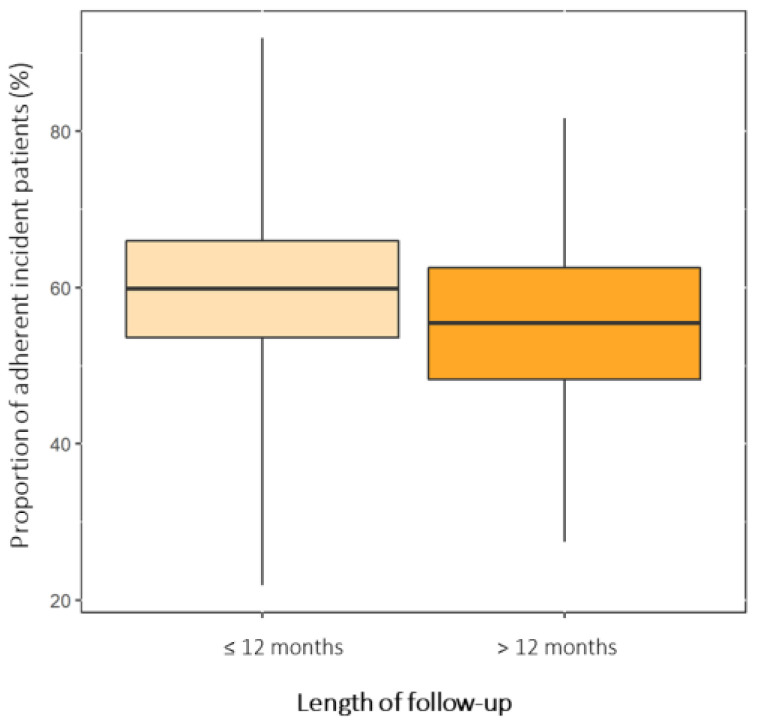
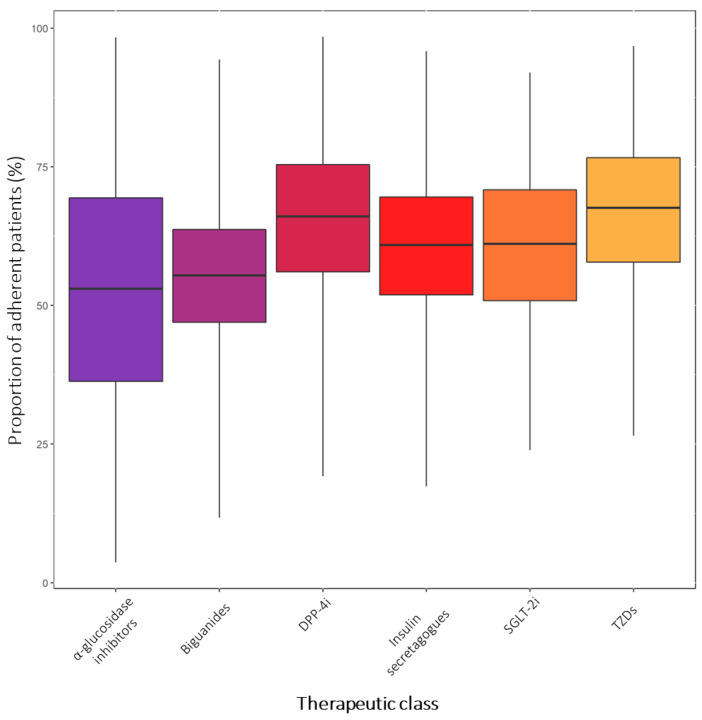
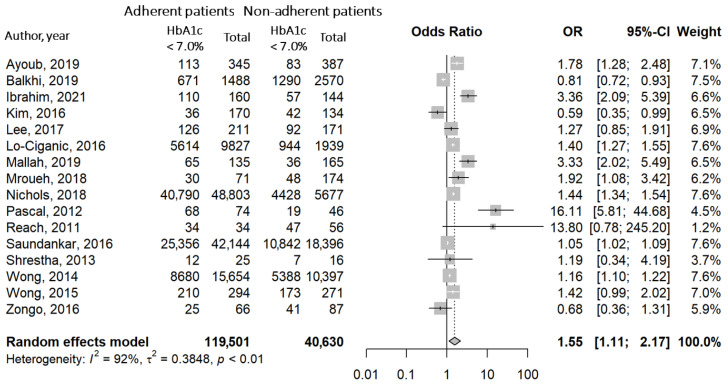
Poor adherence to oral antidiabetic drugs (OADs) in patients with type 2 diabetes (T2D) can lead to therapy failure and risk of complications. The aim of this study was to produce an adherence proportion to OADs and estimate the association between good adherence and good glycemic control in patients with T2D. We searched in MEDLINE, Scopus, and CENTRAL databases to find observational studies on therapeutic adherence in OAD users. We calculated the proportion of adherent patients to the total number of participants for each study and pooled study-specific adherence proportions using random effect models with Freeman-Tukey transformation. We also calculated the odds ratio (OR) of having good glycemic control and good adherence and pooled study-specific OR with the generic inverse variance method. A total of 156 studies (10,041,928 patients) were included in the systematic review and meta-analysis. The pooled proportion of adherent patients was 54% (95% confidence interval, CI: 51-58%). We observed a significant association between good glycemic control and good adherence (OR: 1.33; 95% CI: 1.17-1.51). This study demonstrated that adherence to OADs in patients with T2D is sub-optimal. Improving therapeutic adherence through health-promoting programs and prescription of personalized therapies could be an effective strategy to reduce the risk of complications.
Keywords: T2D; compliance; meta-analysis; oral antidiabetic drugs; systematic review; therapeutic adherence; type 2 diabetes.
Conflict of interest statement
The authors declare no conflict of interest.
Figures
References
-
- Saeedi P., Petersohn I., Salpea P., Malanda B., Karuranga S., Unwin N., Colagiuri S., Guariguata L., Motala A.A., Ogurtsova K., et al. Global and regional diabetes prevalence estimates for 2019 and projections for 2030 and 2045: Results from the International Diabetes Federation Diabetes Atlas, 9th edition. Diabetes Res. Clin. Pract. 2019;157:107843. doi: 10.1016/j.diabres.2019.107843. - DOI - PubMed
Publication types
LinkOut - more resources
Full Text Sources
