


Macrophage Polarization: An Important Candidate Regulator for Lung Diseases
- PMID: 36903624
- PMCID: PMC10005642
- DOI: 10.3390/molecules28052379
Macrophage Polarization: An Important Candidate Regulator for Lung Diseases
Abstract
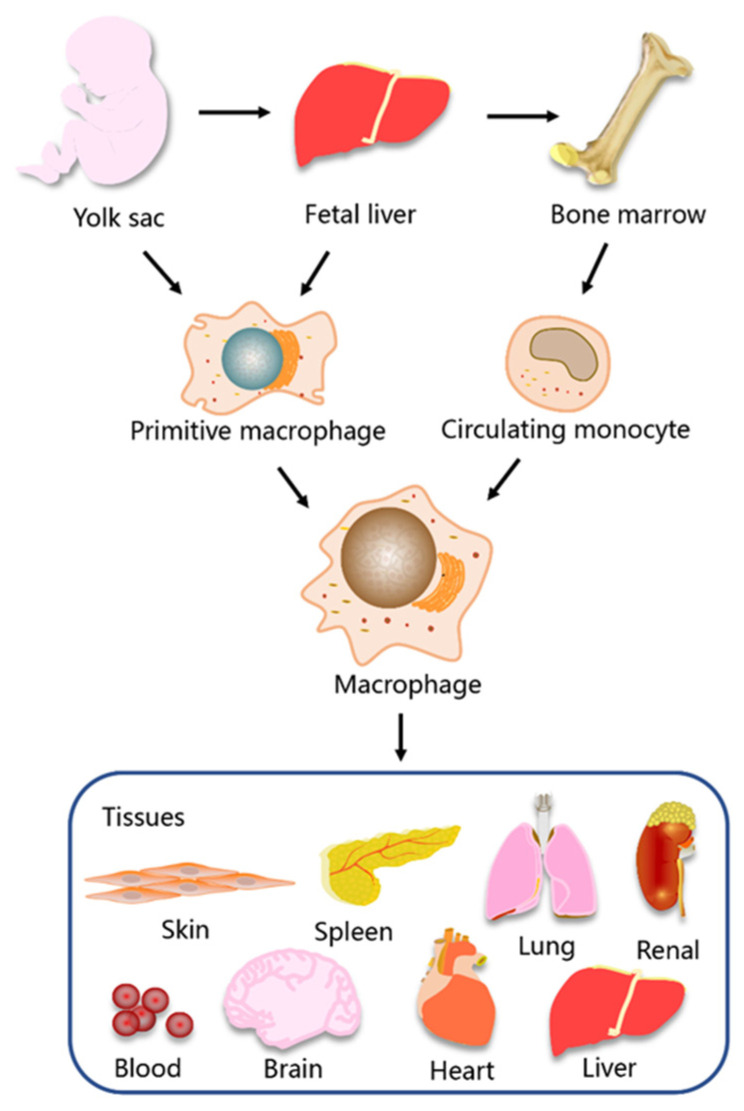
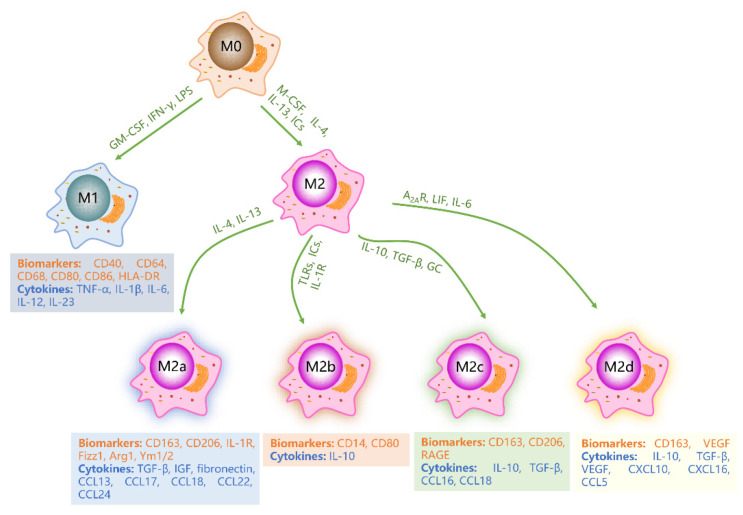
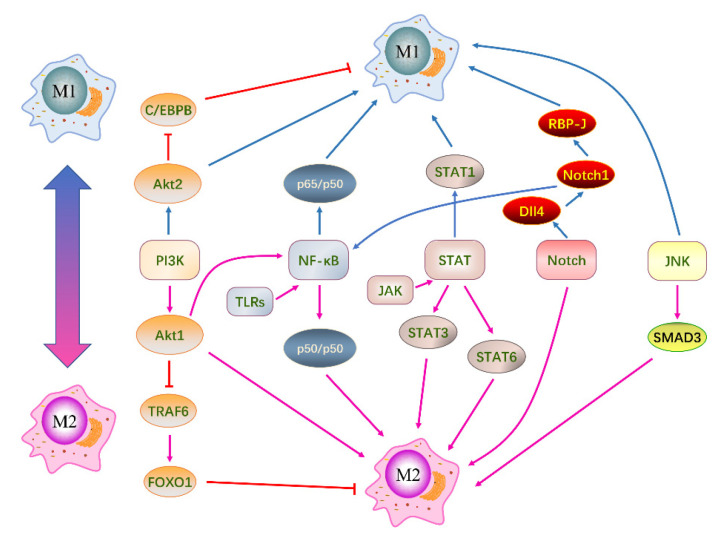
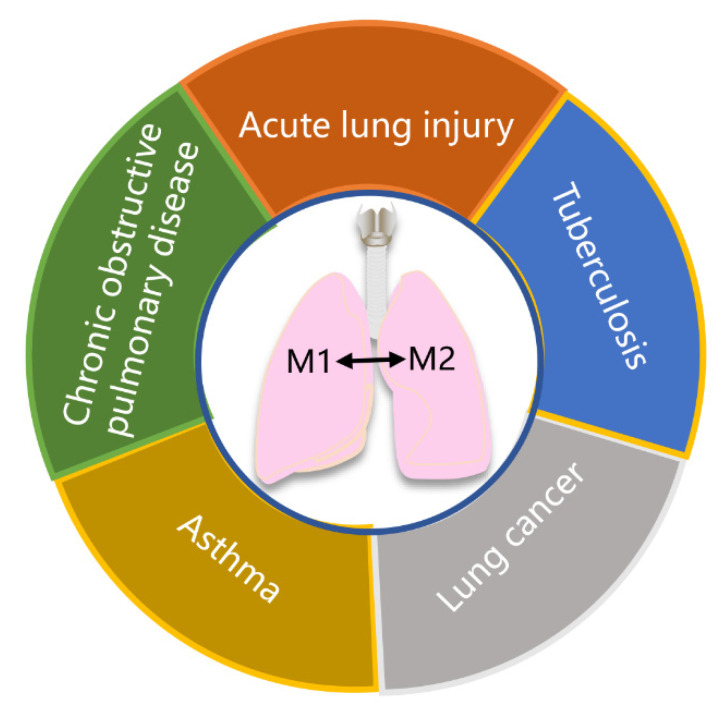
Macrophages are crucial components of the immune system and play a critical role in the initial defense against pathogens. They are highly heterogeneous and plastic and can be polarized into classically activated macrophages (M1) or selectively activated macrophages (M2) in response to local microenvironments. Macrophage polarization involves the regulation of multiple signaling pathways and transcription factors. Here, we focused on the origin of macrophages, the phenotype and polarization of macrophages, as well as the signaling pathways associated with macrophage polarization. We also highlighted the role of macrophage polarization in lung diseases. We intend to enhance the understanding of the functions and immunomodulatory features of macrophages. Based on our review, we believe that targeting macrophage phenotypes is a viable and promising strategy for treating lung diseases.
Keywords: M1/M2; lung disease; macrophage; polarization; signaling pathway.
Conflict of interest statement
The authors declare that they have no conflicts of interest.
Figures
References
-
- Li H., Ciric B., Yang J., Xu H., Fitzgerald D., Elbehi M., Fonseca-Kelly Z., Yu S., Zhang G., Rostami A. Intravenous tolerance modulates macrophage classical activation and antigen presentation in experimental autoimmune encephalomyelitis. J. Neuroimmunol. 2009;208:54–60. doi: 10.1016/j.jneuroim.2009.01.002. - DOI - PMC - PubMed
Publication types
MeSH terms
Grants and funding
- 2021ZDZX0010/the Sichuan province's "14th five-year plan" Sichuan pig major science and technology project
- No. cstc2021jscx-dxwt BX0007/the Chongqing municipal technology innovation and application development project
- No. 2020YFN0147/the research and integration demonstration of key technologies for improving quality and efficiency of Sichuan pig industry chain
- No. CARS-SVDIP/the agricultural industry technology system of Sichuan provincial department of agriculture
LinkOut - more resources
Full Text Sources
Medical
