Review
. 2023 Nov;478(11):2581-2606.
doi: 10.1007/s11010-023-04686-3. Epub 2023 Mar 11.

Multidimensional outlook on the pathophysiology of cervical cancer invasion and metastasis

Affiliations
Review

Multidimensional outlook on the pathophysiology of cervical cancer invasion and metastasis

Neena George et al. Mol Cell Biochem. 2023 Nov.

Abstract

Cervical cancer being one of the primary causes of high mortality rates among women is an area of concern, especially with ineffective treatment strategies. Extensive studies are carried out to understand various aspects of cervical cancer initiation, development and progression; however, invasive cervical squamous cell carcinoma has poor outcomes. Moreover, the advanced stages of cervical cancer may involve lymphatic circulation with a high risk of tumor recurrence at distant metastatic sites. Dysregulation of the cervical microbiome by human papillomavirus (HPV) together with immune response modulation and the occurrence of novel mutations that trigger genomic instability causes malignant transformation at the cervix. In this review, we focus on the major risk factors as well as the functionally altered signaling pathways promoting the transformation of cervical intraepithelial neoplasia into invasive squamous cell carcinoma. We further elucidate genetic and epigenetic variations to highlight the complexity of causal factors of cervical cancer as well as the metastatic potential due to the changes in immune response, epigenetic regulation, DNA repair capacity, and cell cycle progression. Our bioinformatics analysis on metastatic and non-metastatic cervical cancer datasets identified various significantly and differentially expressed genes as well as the downregulation of potential tumor suppressor microRNA miR-28-5p. Thus, a comprehensive understanding of the genomic landscape in invasive and metastatic cervical cancer will help in stratifying the patient groups and designing potential therapeutic strategies.

Keywords: Cervical squamous cell carcinoma; Genetic and epigenetic profile; Human papillomavirus; Lymph angiogenesis; Metastasis.


Conflict of interest statement

The authors declare no conflict of interest.

Figures
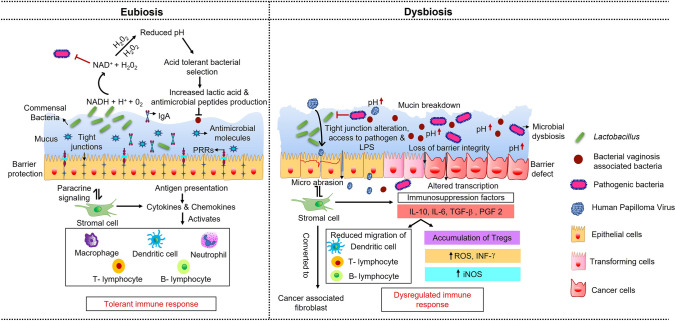
Fig. 1
Fig. 1
The role of cervical epithelial cells in balancing the equilibrium of the local immune system. Cervical microenvironment and the local microbial diversity alter local and systemic immune response, which play an important role in the progression of CIN toward CC. Lactic-acid-producing bacteria acidify the vaginal milieu pH to 4.6 during eubiosis, with lactic acid as the primary metabolite, thereby providing a non-inflammatory environment. The dysbiotic environment would have a lower redox potential during microbial vaginosis, a phenomenon that encourages the growth of a diverse bacterial species, resulting in the increased pH. Virulence factors produced by the diverse bacterial species undermine epithelial barrier integrity, degrade mucin, and create a pro-inflammatory milieu
Fig. 2
Fig. 2
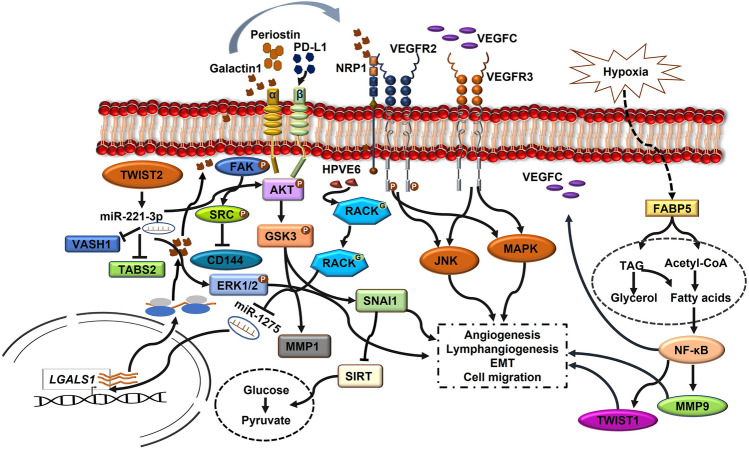
Illustration showing the molecular signaling mechanisms by which CSCC undergoes epithelial–mesenchymal transition, lymph angiogenesis, and metastasis via the lymphatic system
Fig. 3
Fig. 3
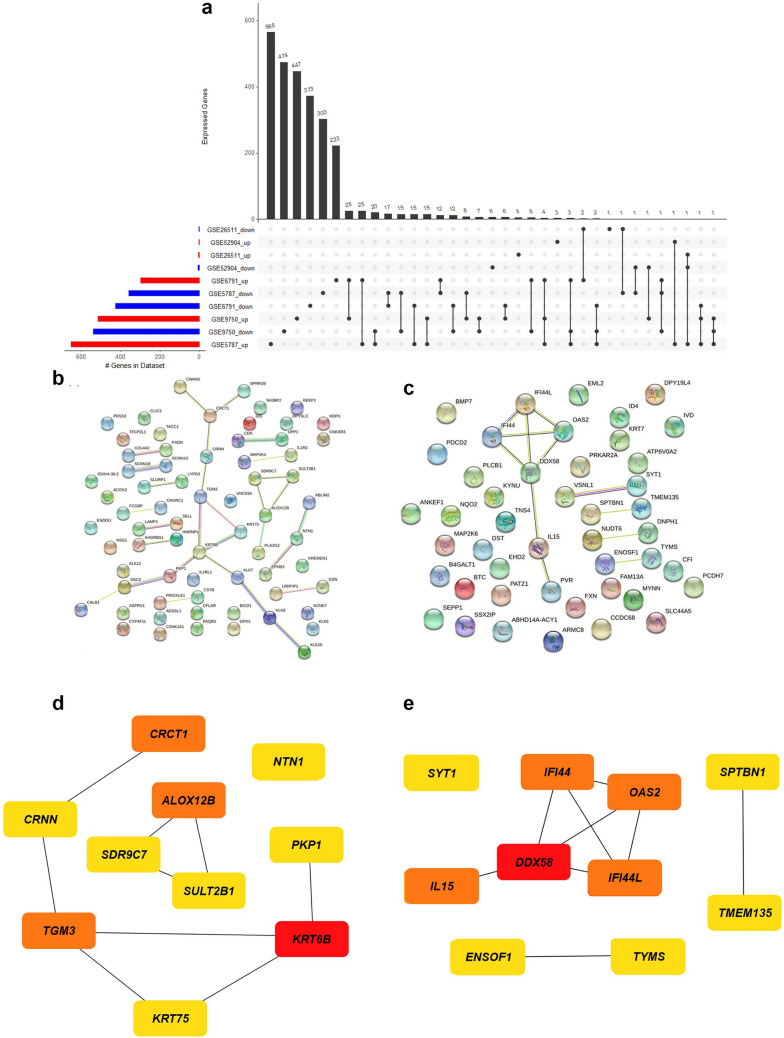
Differential gene expression and pathway analysis a An UpSetR plot of DEGs between metastatic and non-metastatic CC tissues retrieved from GEO database (DEGs; with log-fold change > =|1.5| and p-value <  = 0.05 cut-off) across five CC studies, b Protein–protein interaction network of the upregulated genes, c protein–protein interaction network of the downregulated genes, d top 10 hub genes upregulated in metastatic CC, e top 10 hub genes downregulated in metastatic CC. The hub genes are identified by the highest number of connections in the network. The color scale ranges from yellow (fewer interacting) to red (higher interacting) indicating the relative importance of the hub genes
Fig. 4
Fig. 4
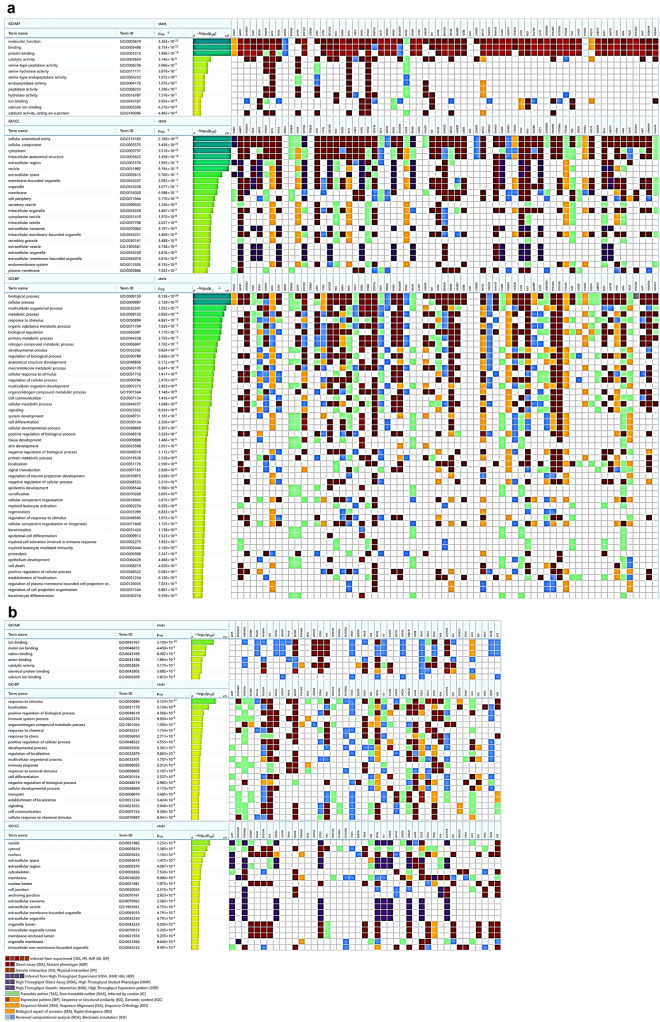
Functional enrichment analysis between metastatic and non-metastatic genes in CC a GO terms identification on the upregulated genes in molecular function, biological process and cellular component, b GO terms identification on the downregulated genes in molecular function, biological process and cellular component
Fig. 5
Fig. 5
Pathway and network analysis a Top ten significant pathways enriched for pathway analysis through WikiPathways in upregulated genes, b host–Microbiome protein–domain interaction on upregulated genes, c mutation frequency of upregulated genes, d mutated genes which are upregulated in metastatic CC, e top ten significant pathways enriched for pathway analysis through WikiPathways in downregulated genes, f host–microbiome protein–domain interaction on downregulated genes, g Mutation frequency of downregulated genes, h mutated genes which are downregulated in metastatic CC i-n Needle plot for the mutations in IDS, MAP4K4, SPTBN1, COL4A2, KHDRBS1 and DST
Fig. 6
Fig. 6
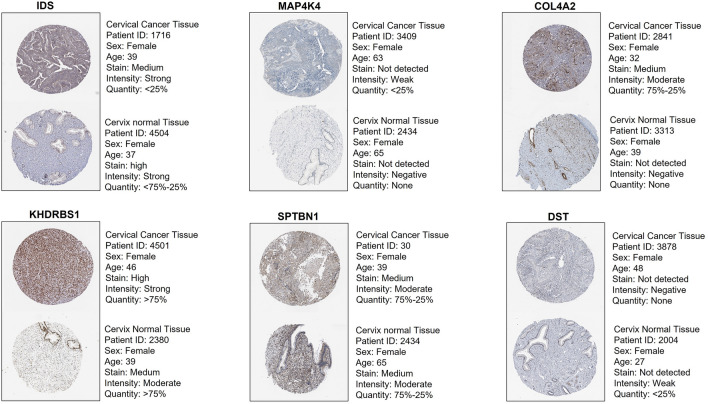
Immunohistochemistry image representation from Human Protein Atlas for IDS, MAP4K4, COL4A2, KHDRBS1, showing significant upregulation in CC and downregulation in normal cervix tissue. SPTBN1 and DST showed downregulation or not detected in CC with concurrent upregulation in normal tissue

References

    1. Zhang T, Zou P, Wang T, et al. Down-regulation of miR-320 associated with cancer progression and cell apoptosis via targeting Mcl-1 in cervical cancer. Tumour Biol. 2016;37:8931–8940. doi: 10.1007/s13277-015-4771-6. - DOI - PubMed
    1. Sung H, Ferlay J, Siegel RL, et al. Global cancer statistics 2020: GLOBOCAN estimates of Incidence and mortality worldwide for 36 cancers in 185 countries. CA Cancer J Clin. 2021;71:209–249. doi: 10.3322/caac.21660. - DOI - PubMed
    1. Guo H, Wang S, Ju M, et al. Identification of stemness-related genes for cervical squamous cell carcinoma and endocervical adenocarcinoma by integrated bioinformatics analysis. Front Cell Dev Biol. 2021 doi: 10.3389/fcell.2021.642724. - DOI - PMC - PubMed
    1. Siegel R, Ward E, Brawley O, Jemal A. Cancer statistics, 2011: the impact of eliminating socioeconomic and racial disparities on premature cancer deaths. CA Cancer J Clin. 2011;61:212–236. doi: 10.3322/caac.20121. - DOI - PubMed
    1. Aziz SW, Aziz MH. Cervical Cancer Metastasis. In: Ahmad A, editor. Introduction to Cancer Metastasis. 1. Cambridge: Academic press; 2017. pp. 77–94.

LinkOut - more resources