


SQSTM1/p62 and Hepatic Mallory-Denk Body Formation in Alcohol-Associated Liver Disease
- PMID: 36906265
- PMCID: PMC10642158
- DOI: 10.1016/j.ajpath.2023.02.015
SQSTM1/p62 and Hepatic Mallory-Denk Body Formation in Alcohol-Associated Liver Disease
Abstract
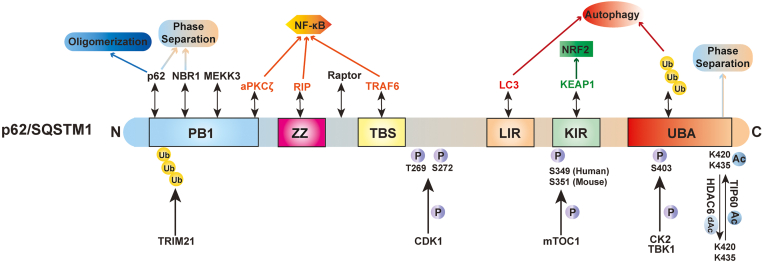
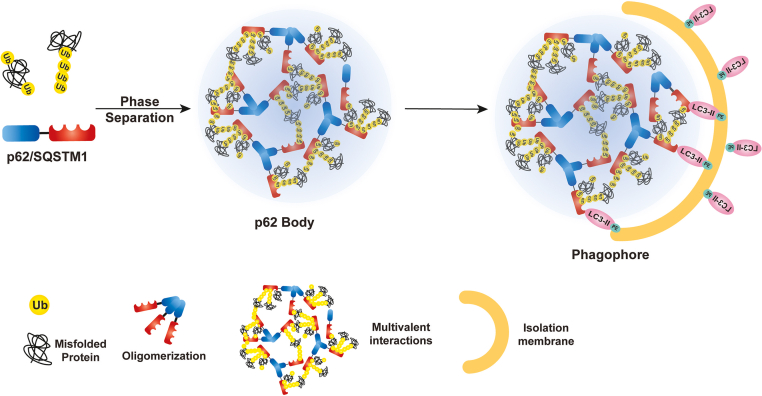
Sequestosome 1 (SQSTM1/p62; hereafter p62) is an autophagy receptor protein for selective autophagy primarily due to its direct interaction with the microtubule light chain 3 protein that specifically localizes on autophagosome membranes. As a result, impaired autophagy leads to the accumulation of p62. p62 is also a common component of many human liver disease-related cellular inclusion bodies, such as Mallory-Denk bodies, intracytoplasmic hyaline bodies, α1-antitrypsin aggregates, as well as p62 bodies and condensates. p62 also acts as an intracellular signaling hub, and it involves multiple signaling pathways, including nuclear factor erythroid 2-related factor 2, NF-κB, and the mechanistic target of rapamycin, which are critical for oxidative stress, inflammation, cell survival, metabolism, and liver tumorigenesis. This review discusses the recent insights of p62 in protein quality control, including the role of p62 in the formation and degradation of p62 stress granules and protein aggregates as well as regulation of multiple signaling pathways in the pathogenesis of alcohol-associated liver disease.
Copyright © 2023 American Society for Investigative Pathology. Published by Elsevier Inc. All rights reserved.
Figures
Comment in
-
The Cellular, Molecular, and Pathologic Consequences of Stress on the Liver.Am J Pathol. 2023 Oct;193(10):1353-1354. doi: 10.1016/j.ajpath.2023.07.003. Epub 2023 Aug 4. Am J Pathol. 2023. PMID: 37544504 Free PMC article. No abstract available.
References
-
- Paik J.M., Golabi P., Younossi Y., Mishra A., Younossi Z.M. Changes in the global burden of chronic liver diseases from 2012 to 2017: the growing impact of NAFLD. Hepatology. 2020;72:1605–1616. - PubMed
-
- World Health Organization . World Health Organization; 2019. Global status report on alcohol and health 2018.
-
- European Association for the Study of Liver EASL clinical practical guidelines: management of alcoholic liver disease. J Hepatol. 2012;57:399–420. - PubMed
Publication types
MeSH terms
Substances
Grants and funding
LinkOut - more resources
Full Text Sources
Medical
Research Materials
