. 2023 Feb 23:4:1075866.
doi: 10.3389/fpain.2023.1075866. eCollection 2023.

Yoga and pain: A mind-body complex system

Affiliations

Yoga and pain: A mind-body complex system

Deepak Chopra et al. Front Pain Res (Lausanne). .

Abstract

Introduction: The human body's response to pain is indicative of a complex adaptive system. Therapeutic yoga potentially represents a similar complex adaptive system that could interact with the pain response system with unique benefits.

Objectives: To determine the viability of yoga as a therapy for pain and whether pain responses and/or yoga practice should be considered complex adaptive systems.

Methods: Examination through 3 different approaches, including a narrative overview of the evidence on pain responses, yoga, and complex system, followed by a network analysis of associated keywords, followed by a mapping of the functional components of complex systems, pain response, and yoga.

Results: The narrative overview provided extensive evidence of the unique efficacy of yoga as a pain therapy, as well as articulating the relevance of applying complex systems perspectives to pain and yoga interventions. The network analysis demonstrated patterns connecting pain and yoga, while complex systems topics were the most extensively connected to the studies as a whole.

Conclusion: All three approaches support considering yoga a complex adaptive system that exhibits unique benefits as a pain management system. These findings have implications for treating chronic, pervasive pain with behavioral medicine as a systemic intervention. Approaching yoga as complex system suggests the need for research of mind-body topics that focuses on long-term systemic changes rather than short-term isolated effects.

Keywords: complex adaptive systems; interoception; mind - body; pain; pain managemant; systems theory; yoga.


Conflict of interest statement

The authors declare that the research was conducted in the absence of any commercial or financial relationships that could be construed as a potential conflict of interest.

Figures
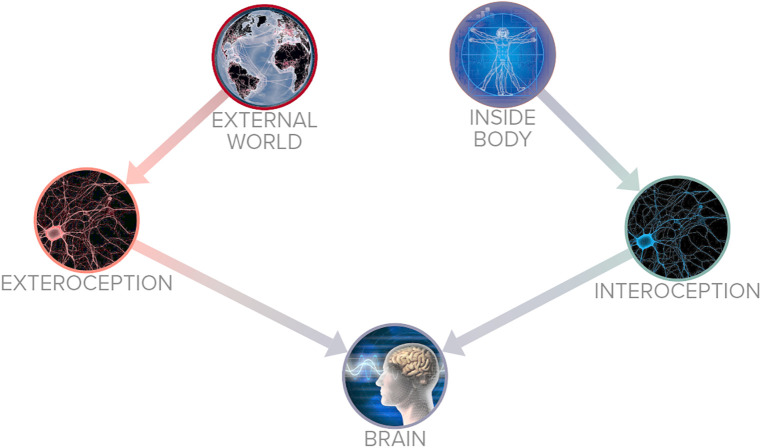
Figure 1
Figure 1
Interoceptive and exteroceptive perception.
Figure 2
Figure 2
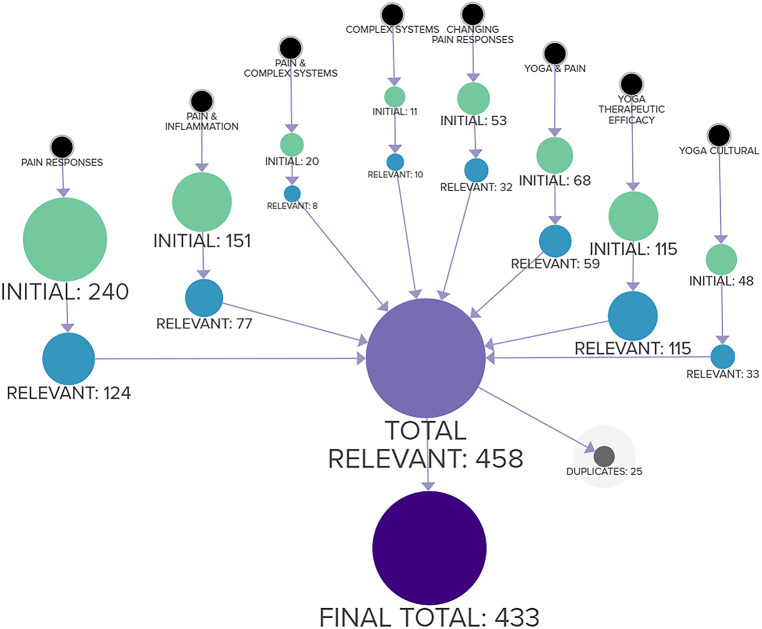
Methodology for selection of literature, beginning with individual topics and ending with final total to be reviewed.
Figure 3
Figure 3
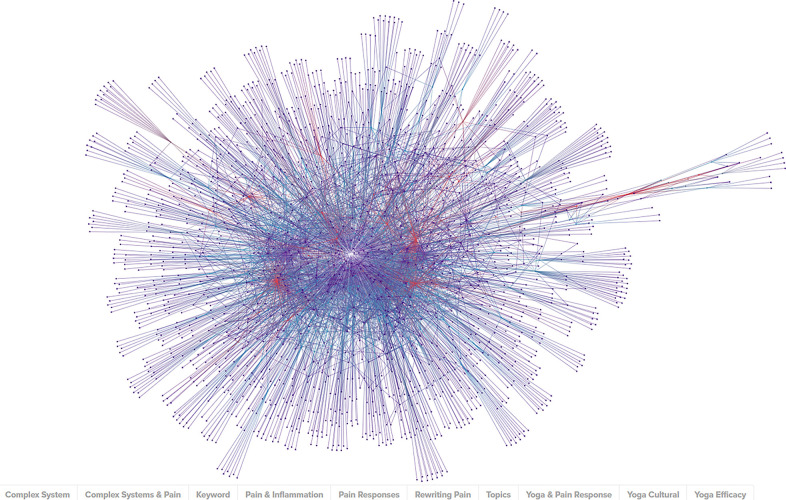
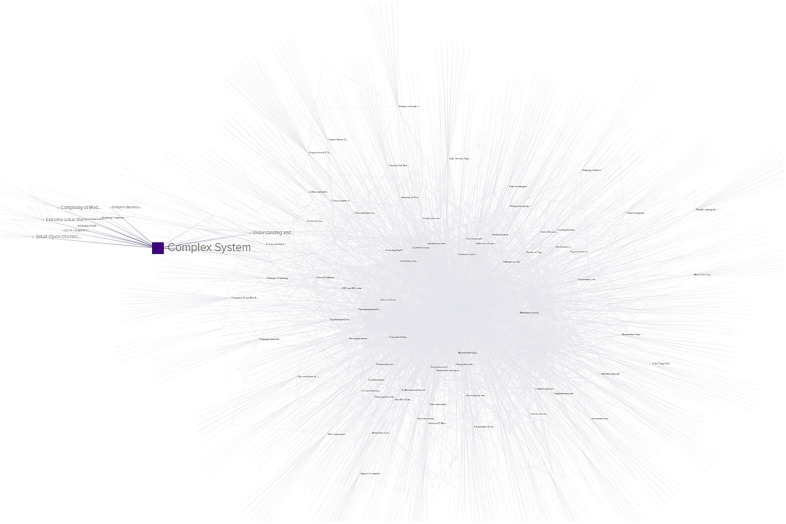
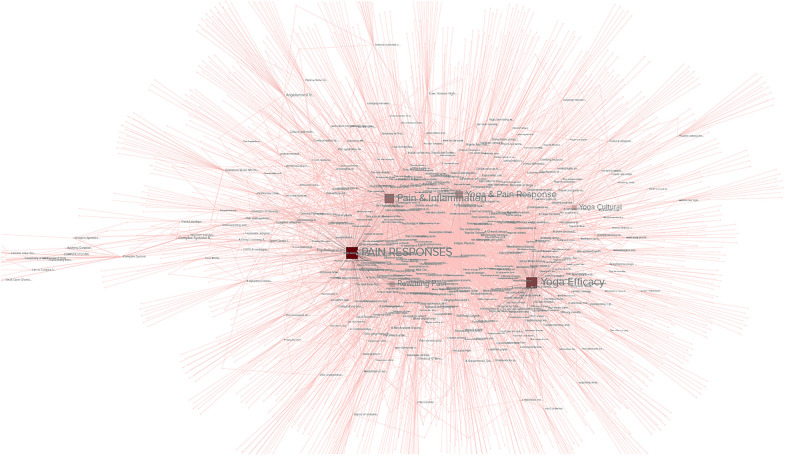
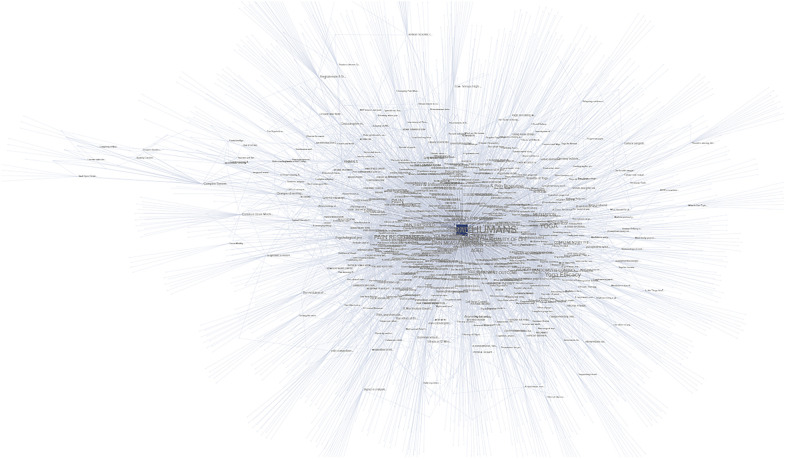
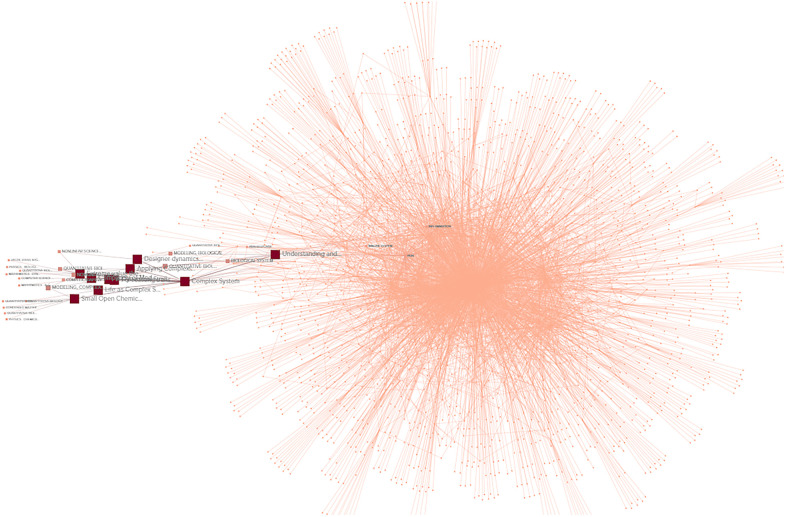
Graphic representation of nodes made up of KEYWORDS (purple), STUDIES (blue), and TOPICS (red) captured in the literature review.
Figure 4
Figure 4
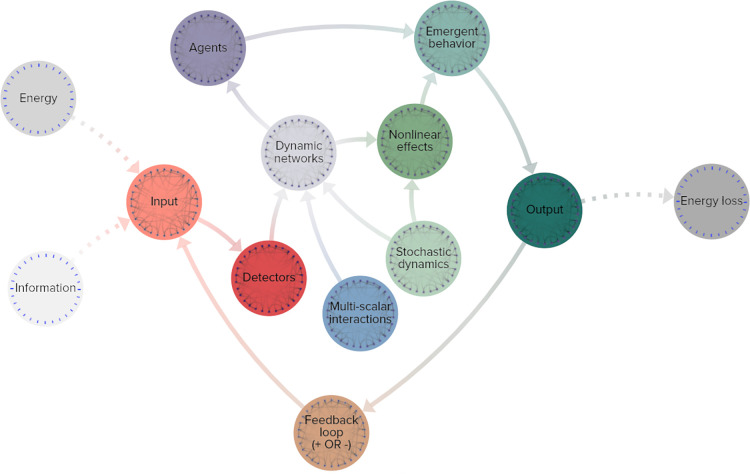
Simplified functional map of a complex adaptive system. Grey-scale nodes: outside the system, orange: input stimuli, red: functional detection, blue: multi-scale networks, light green: unpredictable effects, violet: dynamic networks, purple: active agents of change, dark teal: effects of system change, brown: output leading to input in a feedback loop.
Figure 5
Figure 5
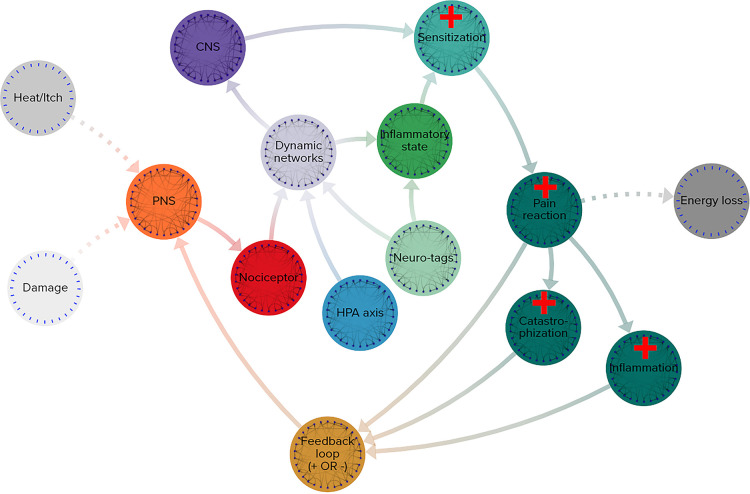
Simplified functional map of pain response system. Grey-scale nodes: outside the system, orange: input stimuli, red: functional detection, blue: multi-scale networks, light green: unpredictable effects, violet: dynamic networks, purple: active agents of change, dark teal: effects of system change, brown: output leading to input in a feedback loop.
Figure 6
Figure 6
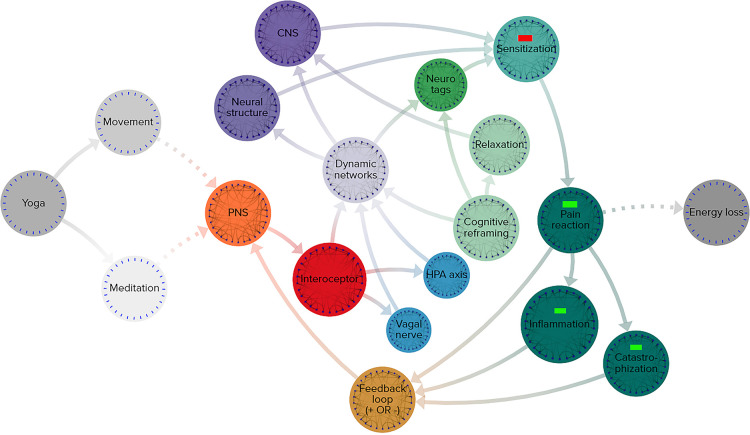
Simplified functional map of neurobiological effects of yoga practice. Grey-scale nodes: outside the system, orange: input stimuli, red: functional detection, blue: multi-scale networks, light green: unpredictable effects, violet: dynamic networks, purple: active agents of change, dark teal: effects of system change, brown: output leading to input in a feedback loop.
Figure 7
Figure 7
Betweenness network analysis visualization, demonstrating nodes and connections between TOPICS, STUDIES, and KEYWORDS. Nodes with higher values are larger and darker in color.
Figure 8
Figure 8
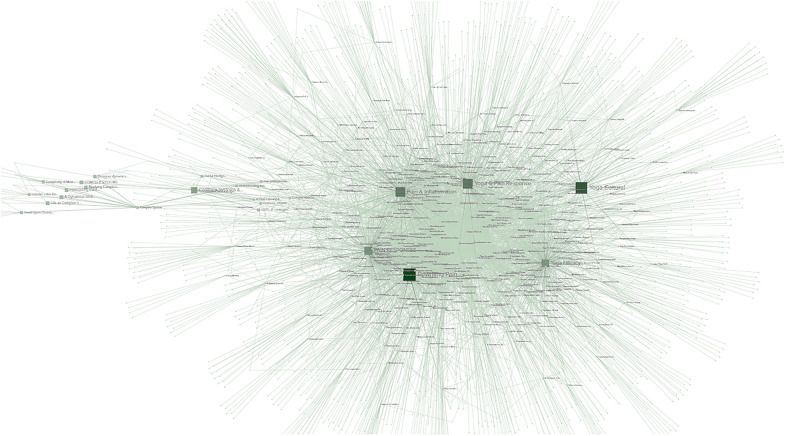
Closeness network analysis visualization, demonstrating nodes and connections between TOPICS, STUDIES, and KEYWORDS. Nodes with higher values are larger and darker in color.
Figure 9
Figure 9
Degree network analysis visualization, demonstrating nodes and connections between TOPICS, STUDIES, and KEYWORDS. Nodes with higher values are larger and darker in color.
Figure 10
Figure 10
Eigenvector network analysis visualization, demonstrating nodes and connections between TOPICS, STUDIES, and KEYWORDS. Nodes with higher values are larger and darker in color.
Figure 11
Figure 11
Reach efficiency network analysis visualization, demonstrating nodes and connections between TOPICS, STUDIES, and KEYWORDS. Nodes with higher values are larger and darker in color.

References

    1. Nachum D, Pain Principles (Section 2, Chapter 6). In: Neuroscience online: An electronic textbook for the neurosciences. Department of Neurobiology and Anatomy. Houston, TX: The University of Texas Medical School at Houston; (2022). Available from: https://nba.uth.tmc.edu/neuroscience/m/s2/chapter06.html.
    1. Gupta S, Gautam S, Kumar U, Arora T, Dada R. Potential role of yoga intervention in the management of chronic non-malignant pain. Evid Based Complement Alternat Med. (2022) 2022:5448671. 10.1155/2022/5448671 - DOI - PMC - PubMed
    1. Yam MF, Loh YC, Tan CS, Khadijah Adam S, Abdul Manan N, Basir R. General pathways of pain sensation and the major neurotransmitters involved in pain regulation. Int J Mol Sci. (2018) 19(8):2164. 10.3390/ijms19082164 - DOI - PMC - PubMed
    1. Motilal AJ. Self: realization through vedanta and yoga. Anc Sci Life. (1983) 3(1):31–6. PMID: . - PMC - PubMed
    1. Lokeswarananda S. Katha Upanishad. The Ramakrishna Mission of Culture, India (1993).

LinkOut - more resources