


Update on the management of benign prostatic hyperplasia and the role of minimally invasive procedures
- PMID: 36910900
- PMCID: PMC9995694
- DOI: 10.1016/j.prnil.2023.01.002
Update on the management of benign prostatic hyperplasia and the role of minimally invasive procedures
Abstract
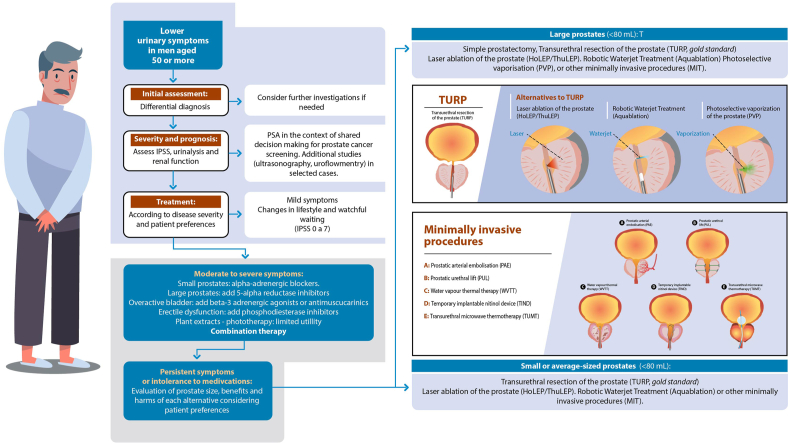
Lower urinary tract symptoms due to benign prostatic hyperplasia constitute a substantial burden, affecting the quality of life of those affected by this condition. While watchful waiting and medical management using a wide array of pharmaceuticals can be effective, surgery has been one of the most definite solutions for those highly affected by this condition. Transurethral resection of the prostate (TURP) is the gold standard surgical procedure, but other alternatives using laser (HoLEP and ThuLEP) and robotic water jets (Aquablation) are emerging treatments aimed at reducing postoperative morbidity. Minimally invasive procedures conducted in outpatient settings and under local anesthesia or sedation are increasingly being used, especially in those patients with high surgical risk due to comorbidities. These procedures include prostatic arterial embolization, water vapor thermal therapy (Rezum), prostatic urethral lift (Urolift), temporary implantable nitinol device (TIND/iTIND), and transurethral microwave thermotherapy (TUMT). The evidence supporting these treatments is growing, but some uncertainties remain as to what is the magnitude of their advantages and disadvantages compared to TURP. Innovations in the technologies involved in these new procedures may improve their profile for effectiveness and safety. Moreover, new devices are being investigated for marketing approval. Issues around costs and patients' preferences are also yet to be elucidated, thus their evolving role needs to be weighed against the aforementioned considerations.
Keywords: Benign prostatic hyperplasia; Evidence-based practice; Minimally invasive surgical procedures.
© 2023 Asian Pacific Prostate Society. Publishing services by Elsevier B.V.
Figures
References
-
- Partin A.W., Peters C.A., Kavoussi L.R., Dmochowski R.R., Wein A.J. Elsevier; 2020. Campbell Walsh Wein Urology: 4-Volume Set.
-
- Ng M., Baradhi K.M. StatPearls. StatPearls Publishing; 2022. Benign Prostatic Hyperplasia. - PubMed
Publication types
LinkOut - more resources
Full Text Sources