


Aging and the rehabilitation of homonymous hemianopia: The efficacy of compensatory eye-movement training techniques and a five-year follow up
- PMID: 36911515
- PMCID: PMC9997164
- DOI: 10.1016/j.nbas.2021.100012
Aging and the rehabilitation of homonymous hemianopia: The efficacy of compensatory eye-movement training techniques and a five-year follow up
Abstract
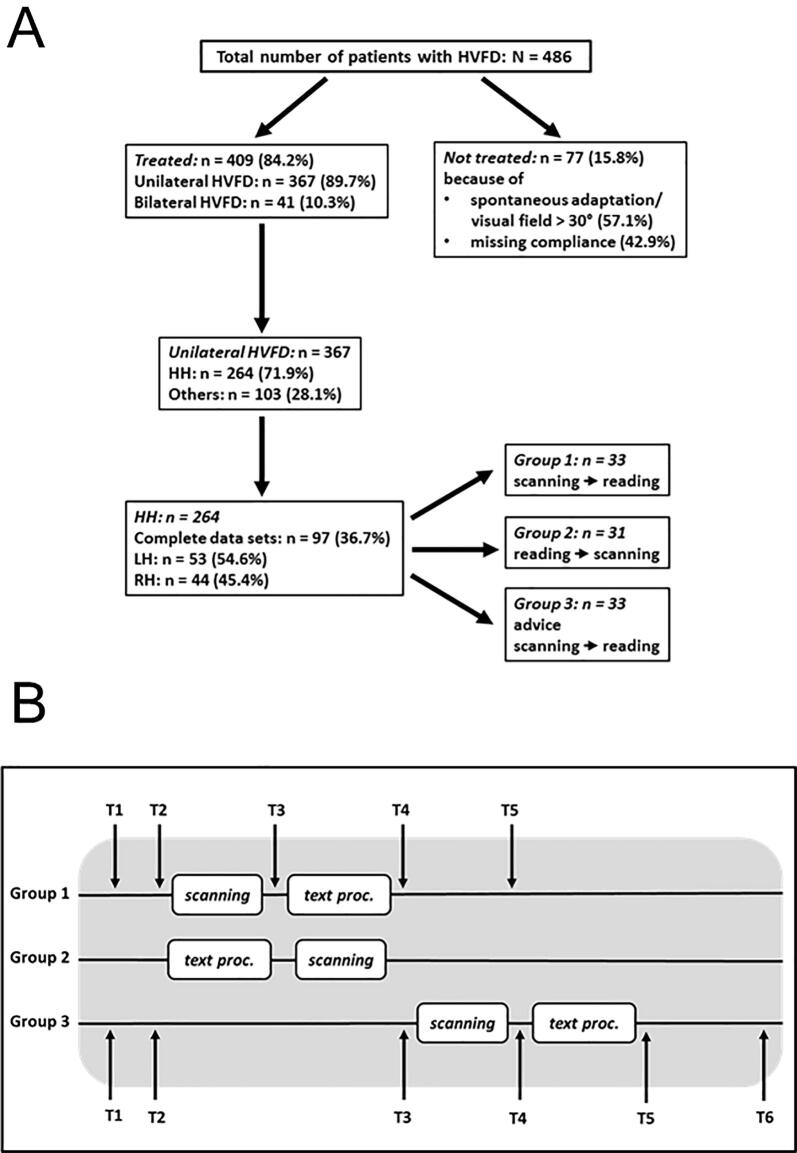
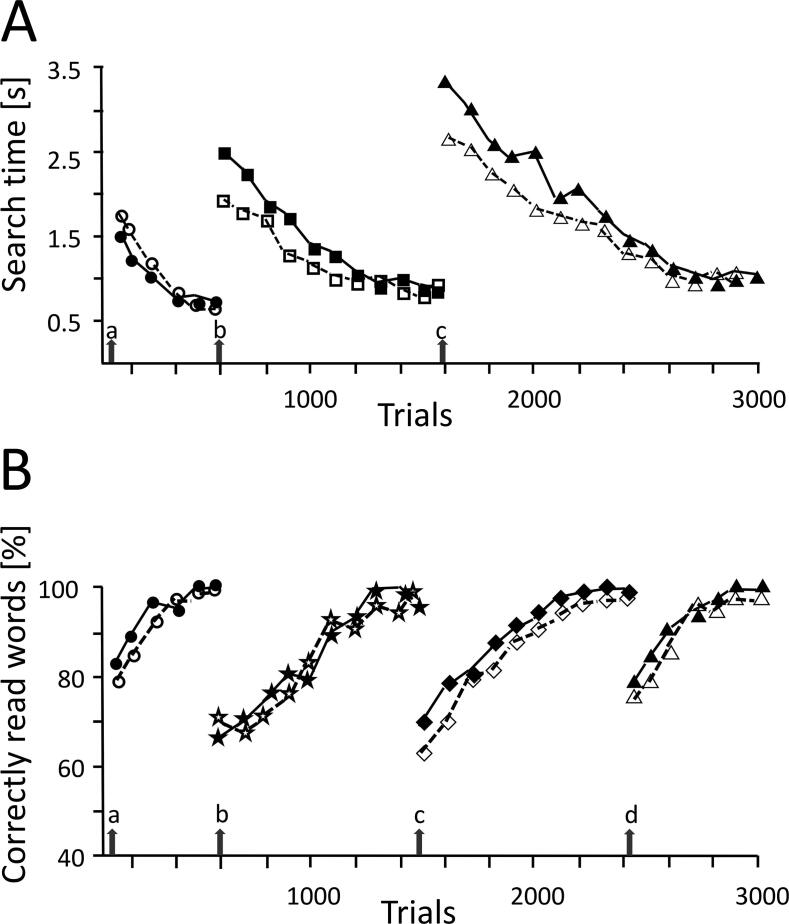
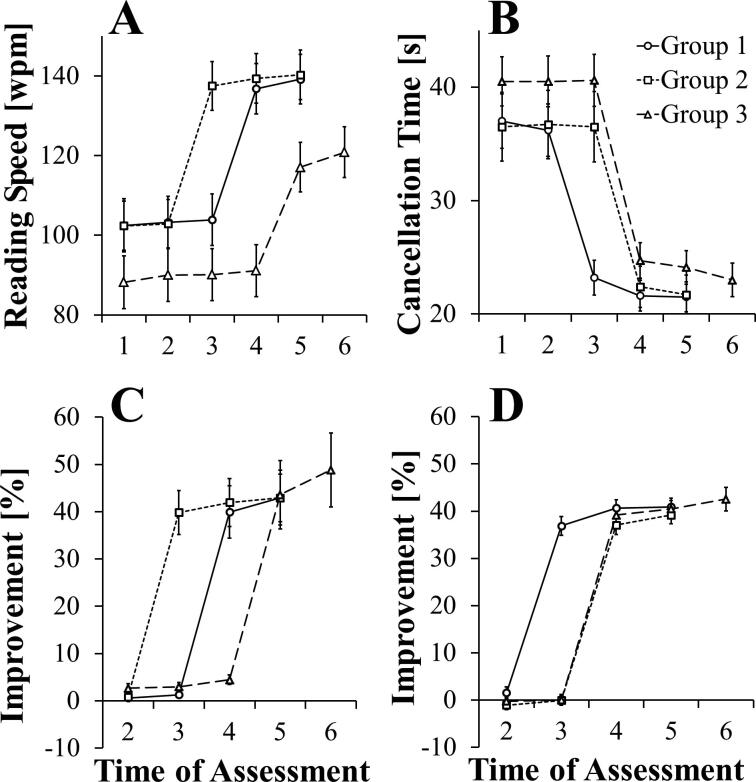
The specificity and effectiveness of eye-movement training to remedy impaired visual exploration and reading with particular consideration of age and co-morbidity was tested in a group of 97 patients with unilateral homonymous hemianopia using a single subject /n-of-1 design. Two groups received either scanning training followed by reading training, or vice versa. The third group acted as a control group and received non-specific detailed advice, followed by training of scanning and reading. Scanning and reading performance was assessed before and after the waiting period, before and after scanning and reading training, and at short-term (11 weeks on average) and long-term follow-up (5 years on average). Improvements after training were practice-dependent and task-specific. Scanning performance improved by ∼40%, reading by ∼45%, and was paralleled by a reduction of subjective complaints. The advice (=control) condition was without effect. All improvements occurred selectively in the training period, not in treatment-free intervals, and persisted in the short- and long-term follow-up over several years. Age had only a minor, although significant effect on improvement in reading after training; co-morbidity had no significant impact on the outcome of training. In conclusion, visual impairments associated with homonymous hemianopia can be successfully and durably reduced by systematic and specific training of compensatory eye-movement strategies. The improvements in compensation strategies were independent of subjects' age and of co-morbidity.
Keywords: Ageing; Homonymous hemianopia; Reading; Rehabilitation; Scanning; Short- and long-term follow up; Subjective midline; Visual search.
Crown Copyright © 2021 Published by Elsevier Inc.
Conflict of interest statement
The authors declare that they have no known competing financial interests or personal relationships that could have appeared to influence the work reported in this paper.
Figures
References
-
- Aulhorn E, Harms H. Visual perimetry. In: Jameson, D Hurvich LM, editors. Handbook of sensory physiology: visual psychophysics Vol II/4. Berlin: Springer. 1972; p. 102-44. doi.org/10.1007/978-3-642-88658-4_5
LinkOut - more resources
Full Text Sources
