


Botulinum toxin for the treatment of strabismus
- PMID: 36916692
- PMCID: PMC10012406
- DOI: 10.1002/14651858.CD006499.pub5
Botulinum toxin for the treatment of strabismus
Abstract
Background: The use of botulinum toxin as an investigative and treatment modality for strabismus is well reported in the medical literature. However, it is unclear how effective it is in comparison with other treatment options for strabismus.
Objectives: The primary objective was to examine the efficacy of botulinum toxin therapy in the treatment of strabismus compared with alternative conservative or surgical treatment options. This review sought to ascertain those types of strabismus that particularly benefit from the use of botulinum toxin as a treatment option (such as small angle strabismus or strabismus with binocular potential, i.e. the potential to use both eyes together as a pair). The secondary objectives were to investigate the dose effect and complication rates associated with botulinum toxin.
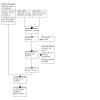
Search methods: We searched CENTRAL, MEDLINE, Embase, LILACS and three trials registers on 6 July 2022, together with reference checking to identify additional studies. We did not use any date or language restrictions in the electronic searches for trials.
Selection criteria: We planned to include randomized controlled trials (RCTs) comparing botulinum toxin with strabismus surgery, botulinum toxin alternatives (i.e. bupivacaine) and conservative therapy such as orthoptic exercises, prisms, or lens therapy for people of any age with strabismus. All relevant RCTs identified in this update compared botulinum toxin with strabismus surgery.
Data collection and analysis: We used standard methods expected by Cochrane and assessed the certainty of the body of evidence using GRADE.
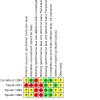
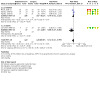
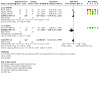
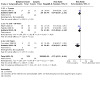
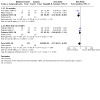
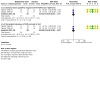
Main results: We included four RCTs with 242 participants that enrolled adults with esotropia or exotropia, children with acquired esotropia, and children with infantile esotropia. The follow-up period ranged from six to 36 months. Two studies were conducted in Spain, and one each in Canada and South Africa. We judged the included studies to have a mixture of low, unclear and high risk of bias. We did not consider any of the included studies to be at low risk of bias for all domains. All four studies reported the proportion of participants who improved or corrected strabismus, defined as ≤ 10 prism diopters (PD) at six months (two studies) or ≤ 8 PD at one year (two studies). Low-certainty evidence suggested that participants treated with the surgery may be more likely to improve or correct strabismus compared with those who treated with botulinum toxin (risk ratio (RR) 0.72, 95% confidence interval (CI) 0.53 to 0.99; I² = 50%; 4 studies, 242 participants; low-certainty evidence). One study, which enrolled 110 children with infantile esotropia, suggested that surgery may reduce the incidence of additional surgical intervention required, but the evidence was very uncertain (RR 3.05, 95% CI 1.34 to 6.91; 1 study, 101 participants; very low-certainty evidence). Two studies conducted in Spain compared botulinum toxin with surgery in children who required retreatment for acquired or infantile esotropia. These two studies provided low-certainty evidence that botulinum toxin may have little to no effect on achieving sensory fusion (RR 0.88, 95% CI 0.63 to 1.23; I² = 0%; 2 studies, 102 participants) and stereopsis (RR 0.86, 95% CI 0.59 to 1.25; I² = 0%; 2 studies, 102 participants) compared with surgery. Three studies reported non-serious adverse events. Partial transient ptosis (range 16.7% to 37.0%) and transient vertical deviation (range 5.6% to 18.5%) were observed among participants treated with botulinum toxin in three studies. In one study, 44.7% participants in the surgery group experienced discomfort. No studies reported serious adverse events or postintervention quality of life.
Authors' conclusions: It remains unclear whether botulinum toxin may be an alternative to strabismus surgery as an independent treatment modality among certain types of strabismus because we found only low and very low-certainty evidence in this review update. Low-certainty evidence suggests that strabismus surgery may be preferable to botulinum toxin injection to improve or correct strabismus when types of strabismus and different age groups are combined. We found low-certainty evidence suggesting botulinum toxin may have little to no effect on achievement of binocular single vision compared with surgery in children with acquired or infantile esotropia. We did not find sufficient evidence to draw any meaningful conclusions with respect to need for additional surgery, quality of life, and serious adverse events. We identified three ongoing trials comparing botulinum toxin with conventional surgeries in the varying types of strabismus, whose results will provide relevant evidence for our stated objectives. Future trials should be rigorously designed, and investigators should analyze outcome data appropriately and report adequate information to provide evidence of high certainty. Quality of life and cost-effectiveness should be examined in addition to clinical and safety outcomes.
Copyright © 2023 The Cochrane Collaboration. Published by John Wiley & Sons, Ltd.
Conflict of interest statement
AB: None
FR: FR holds grant funding from the UK Stroke Association and Fight for Sight. However, none of these are relevant to this BTX review. FR has no declarations specific to this review.
LRS: None
SMN: SMN reports a grant from the National Eye Institute, National Institutes of Health, USA; payment to institution.
SB: None
VRG: None
Figures

Update of
-
Botulinum toxin for the treatment of strabismus.Cochrane Database Syst Rev. 2017 Mar 2;3(3):CD006499. doi: 10.1002/14651858.CD006499.pub4. Cochrane Database Syst Rev. 2017. Update in: Cochrane Database Syst Rev. 2023 Mar 14;3:CD006499. doi: 10.1002/14651858.CD006499.pub5. PMID: 28253424 Free PMC article. Updated.
References
References to studies included in this review
Carruthers 1990 {published data only}
-
- Carruthers JD, Kennedy RA, Bagaric D. Botulinum versus adjustable suture surgery in the treatment of horizontal misalignment in adult patients lacking fusion. Archives of Ophthalmology 1990;108(10):1432-5. - PubMed
Mayet 2021 {published data only}
Tejedor 1998 {published data only}
References to studies excluded from this review
Chen 2013 {published data only}
Cooper 1991 {published data only}
-
- Cooper K, Lee JP, MacEwen C, Jones S. Botulinum toxin A injection for acute sixth nerve palsy. In: Transactions of the 8th International Orthoptic Congress. Vol. VIII. 1991:336-40.
de Alba Campomanes 2010 {published data only}
-
- Alba Campomanes AG, Binenbaum G, Campomanes Eguiarte G. Comparison of botulinum toxin with surgery as primary treatment for infantile esotropia. Journal of AAPOS 2010;14(2):111-6. - PubMed
-
- Alba Campomanes AG, Binenbaum G, Eguiarte GC. Comparison of botulinum toxin to surgery as primary treatment for infantile esotropia. Journal of AAPOS 2009;13(1):e4. - PubMed
Doshi 2021 {published data only}
Etezad Razavi 2014 {published data only}
-
- Etezad Razavi M, Sharifi M, Armanfar F. Efficacy of botulinum toxin in the treatment of intermittent exotropia. Strabismus 2014;22(4):176-81. - PubMed
Gursoy 2012 {published data only}
-
- Gursoy H, Basmak H, Sahin A, Yildirim N, Aydin Y, Colak E. Long-term follow-up of bilateral botulinum toxin injections versus bilateral recessions of the medial rectus muscles for treatment of infantile esotropia. Journal of AAPOS 2012;16(3):269-73. - PubMed
Jain 2015 {published and unpublished data}
-
- Jain S, Anand S, Jones A. Intraoperative botulinum toxin in large angle strabismus. Journal of AAPOS 2015;19(4):e12.
Lee 1994 {published data only}
-
- Lee J, Harris S, Cohen J, Cooper K, MacEwen C, Jones S. Results of a prospective randomized trial of botulinum toxin therapy in acute unilateral sixth nerve palsy. Journal of Pediatric Ophthalmology & Strabismus 1994;31(5):283-6. - PubMed
Li 2008 {published data only}
-
- Li Y, Wu X. [Observation of botulinum toxin A management in childhood with intermittent exotropia]. Zhonghua Yan Ke Za Zhi [Chinese Journal of Ophthalmology] 2008;44(11):967-71. - PubMed
Mills 2004 {published data only}
-
- Mills MD, Coats DK, Donahue SP, Wheeler DT, American Academy of Ophthamology. Strabismus surgery for adults. Ophthalmology 2004;111(6):1255-62. - PubMed
Minguini 2012 {published data only}
NCT03266549 {published data only}
-
- NCT03266549. Botulinum Toxin Augmented Surgery vs Conventional Surgery in the Management of Large Angle Infantile Esotropia. clinicaltrials.gov/ct2/show/NCT03266549 (first received 30 August 2017).
Pandey 2021 {published data only}
-
- Pandey N, Agrawal S, Srivastava RM, Singh V. Response to comments on: Short-term outcome of botulinum neurotoxin A injection with or without sodium hyaluronate in the treatment of infantile esotropia - A prospective interventional study. Indian Journal of Ophthalmology 2021;69(2):474. - PMC - PubMed
Sanjari 2008 {published data only}
-
- Sanjari MS, Falavarjani KG, Kashkouli MB, Aghai GH, Nojomi M, Rostami H. Botulinum toxin injection with and without electromyographic assistance for treatment of abducens nerve palsy: a pilot study. Journal of AAPOS 2008;12(3):259-62. - PubMed
Shallo‐Hoffman 2006 {published data only}
-
- Shallo-Hoffman J, Acheson J, Bentley C, Bronstein AM. The influence of adaptation of visual motion detection in chronic sixth nerve palsy after treatment with botulinum toxin. Strabismus 2006;14(3):129-35. - PubMed
References to studies awaiting assessment
Méndez Sánchez 2017 {published data only}
-
- Méndez Sánchez TJ, Soto Mejías MI, Pons Castro L, Naranjo Fernández RM, Casanueva CH, López FD. Botulinum toxin versus conventional surgery in residual esotropia YZ [Toxina botulínica versus cirugía convencional en esotropía residual YZ]. Cuban Journal of Ophthalmology 2017;30(3):1-11.
References to ongoing studies
ChiCTR‐INR‐17013777 {published data only}
-
- ChiCTR-INR-17013777. Clinical study of extraocular muscle injection of botulinum toxin A in children with concomitant strabismus. trialsearch.who.int/Trial2.aspx?TrialID=ChiCTR-INR-17013777 (first received 8 December 2017).
CTRI/2021/11/038205 {published data only}
-
- CTRI/2021/11/038205. Injection versus Surgery for esotropia in infants. trialsearch.who.int/Trial2.aspx?TrialID=CTRI/2021/11/038205 (first received 23 November 2021).
NCT03459092 {published data only}
-
- NCT03459092. Botox Instead of Strabismus Surgery (BISS). clinicaltrials.gov/ct2/show/NCT03459092 (first received 8 March 2018).
Additional references
AAO 2022
-
- American Academy of Ophthalmology. Botulinum toxin use In strabismus. available at eyewiki.aao.org/Botulinum_Toxin_Use_In_Strabismus (accessed 11 September 2022).
Adams 2005
-
- Adams RJ, Hall HL, Courage ML. Long-term visual pathology in children with significant perinatal complications. Developmental Medicine and Child Neurology 2005;47(9):598-602. - PubMed
Benabent 2002
-
- Benabent EC, García Hermosa P, Arrazola MT, Alió y Sanz JL. Botulinum toxin injection without electromyographic assistance. Journal of Pediatric Ophthalmology & Strabismus 2002;39:231-4. - PubMed
Binenbaum 2021
-
- Binenbaum G, Chang MY, Heidary G, Morrison DG, Trivedi RH, Galvin JA, et al. Botulinum toxin injection for the treatment of strabismus: a report by the American Academy of Ophthalmology. Ophthalmology 2021;128(12):1766-76. - PubMed
Bunting 2013
-
- Bunting HJ, Dawson EL, Lee JP, Adams GG. Role of inferior rectus botulinum toxin injection in vertical strabismus resulting from orbital pathology. Strabismus 2013;21(3):165-8. - PubMed
Campos 2000
-
- Campos EC, Schiavi C, Bellusci C. Critical age of botulinum toxin treatment in essential infantile esotropia. Journal of Pediatric Ophthalmology and Strabismus 2000;37(6):328-32. - PubMed
Covidence [Computer program]
-
- Covidence. Melbourne, Australia: Veritas Health Innovation, (accessed 02 June 2022). Available at covidence.org.
Crouch 2006
-
- Crouch ER. Use of botulinum toxin in strabismus. Current Opinion in Ophthalmology 2006;17(5):435-40. - PubMed
Dawson 1999
-
- Dawson EL, Marshman WE, Adams GG. The role of botulinum toxin A in acute-onset esotropia. Ophthalmology 1999;106(9):1727-30. - PubMed
Dawson 2004
-
- Dawson EL, Sainari A, Lee JP. Does botulinum toxin have a role in the treatment of secondary strabismus? In: Transactions of the 29th European Strabismological Association; 2004 June 1-4; Izmir, Turkey. 2004:53-4.
Dawson 2005
-
- Dawson EL, Sainani A, Lee JP. Does botulinum toxin have a role in the treatment of secondary strabismus? Strabismus 2005;13(2):71-3. - PubMed
Dawson 2012
-
- Dawson E, Ali N, Lee JP. Botulinum toxin injection into the superior rectus for treatment of strabismus. Strabismus 2012;20(1):24-5. - PubMed
Deeks 2022
-
- Deeks JJ, Higgins JP, Altman DG. Chapter 10: Analysing data and undertaking meta-analyses. In: Higgins JPT, Thomas J, Chandler J, Cumpston M, Li T, Page MJ, Welch VA (editors). Cochrane Handbook for Systematic Reviews of Interventions version 6.3 (updated February 2022). Cochrane, 2022. Available from www.training.cochrane.org/handbook.
Donnelly 2005
-
- Donnelly UM, Stewart NM, Hollinger M. Prevalence and outcomes of childhood visual disorders. Ophthalmic Epidemiology 2005;12(4):243-50. - PubMed
FDA
-
- US Food and Drug Administration. What is a Serious Adverse Event? www.fda.gov/safety/reporting-serious-problems-fda/what-serious-adverse-e... (accessed 02 June 2022).
Gardner 2013
-
- Gardner R, Dawson EL, Adams GG, Lee JP. The use of botulinum toxin to treat strabismus following retinal detachment surgery. Strabismus 2013;21(1):8-12. - PubMed
Glanville 2006
Higgins 2011
-
- Higgins JP, Altman DG, Sterne JA. Chapter 8: Assessing risk of bias in included studies. In: Higgins JP, Green S, editor(s). Cochrane Handbook for Systematic Reviews of Interventions version 5.1.0 (updated March 2011). Cochrane, 2011. Available from training.cochrane.org/handbook/archive/v5.1/.
Holmes 2001
-
- Holmes JM, Leske DA, Christiansen SP. Initial treatment outcomes in chronic sixth nerve palsy. Journal of AAPOS 2001;5(6):370-6. - PubMed
Issaho 2017
-
- Issaho DC, Carvalho FRS, Tabuse MKU, Carrijo-Carvalho LC, Freitas D. The use of botulinum toxin to treat infantile esotropia: a systematic review with meta-analysis. Investigative Ophthalmology & Visual Science 2017;58(12):5468-76. - PubMed
Kerr 2001
-
- Kerr NC, Hoehn MB. Botulinum toxin for sixth nerve palsies in children with brain tumors. Journal of AAPOS 2001;5(1):21-5. - PubMed
Li 2022
-
- Li T, Higgins JP, Deeks JJ. Chapter 5: Collecting data. In: Higgins JP, Thomas J, Chandler J, Cumpston M, Li T, Page MJ, Welch VA, editor(s). Cochrane Handbook for Systematic Reviews of Interventions version 6.3 (updated February 2022). Cochrane, 2022. Available from www.training.cochrane.org/handbook.
Marsh 2003
-
- Marsh IB. Botulinum toxin and the eye. Hospital Medicine 2003;64(8):464-7. - PubMed
McKenzie 2022
-
- McKenzie JE, Brennan SE, Ryan RE, Thomson HJ, Johnston RV. Chapter 9: Summarizing study characteristics and preparing for synthesis. In: Higgins JP, Thomas J, Chandler J, Cumpston M, Li T, Page MJ, Welch VA, editor(s). Cochrane Handbook for Systematic Reviews of Interventions version 6.3 (updated February 2022). Cochrane, 2022. Available from www.training.cochrane.org/handbook.
McNeer 2003
-
- McNeer KW, Tucker MG, Guerry CH, Spencer RF. Incidence of stereopsis after treatment of infantile esotropia with botulinum toxin A. Journal of Pediatric Ophthalmology and Strabismus 2003;40(5):288-92. - PubMed
MECIR
-
- Chandler J, Lasserson T, Higgins JP, Tovey D, Thomas J, Flemyng E, et al. Standards for the planning, conduct and reporting of updates of Cochrane Intervention Reviews. In: Higgins JP, Lasserson T, Chandler J, Tovey D, Thomas J, Flemyng E, et al. Methodological Expectations of Cochrane Intervention Reviews. London: Cochrane, February 2022.
Mehner 2023
Noval 2017
-
- Noval Martín S, Cabrejas Martínez L, Jarrín Hernández E, Pérez Flores I. Practical-clinical guideline on the indication and administration of botulinum toxin injection in the treatment of strabismus [Guía práctico-clínica sobre la indicación y administración de la inyección de toxina botulínica en el tratamiento de los estrabismos]. Available at www.researchgate.net/publication/317105997 (accessed 30 October 2022). [ISBN: 978-84-947085-0-3]
Ozkan 2006
-
- Ozkan SB, Topaloǧlu A, Aydin S. The role of botulinum toxin A in augmentation of the effect of recession and/or resection surgery. Journal of AAPOS 2006;10(2):124-7. - PubMed
Rayner 1999
-
- Rayner SA, Hollick EJ, Lee JP. Botulinum toxin in childhood strabismus. Strabismus 1999;7(2):103-11. - PubMed
RevMan Web [Computer program]
-
- Review Manager Web (RevMan Web). Version 4.2.1. The Cochrane Collaboration, 2022. Available at revman.cochrane.org.
Rowe 2004
-
- Rowe F, Noonan C, Nayak H. Use of botulinum toxin in pre-adolescent children. In: Transactions of the 10th International Orthoptic Congress; 2004 Nov 14-17; Melbourne. 2004; CD-ROM 187704024x.
Rowe 2005
-
- Rowe FJ, Noonan CP, Nayak H. Botulinum toxin as a treatment option for decompensating intermittent strabismus in children. In: Transactions of the 30th European Strabismological Association; 2005 June 8-11; Killarney, Ireland. 2005:101-4.
Sabetti 2003
-
- Sabetti L, D'Alessandri L, Salvatori K, Balestrazzi E. The use of botulinum toxin type A in the treatment of chronic sixth ocular nerve palsy. In: Transactions of the 28th European Strabismological Association; 2003 June 19-21; Bergen. 2003:191-2.
Schünemann 2022
-
- Schünemann HJ, Higgins JP, Vist GE, Glasziou P, Akl EA, Skoetz N, et al. Chapter 14: Completing ‘Summary of findings’ tables and grading the certainty of the evidence. In: Higgins JP, Thomas J, Chandler J, Cumpston M, Li T, Page MJ, Welch VA, editor(s). Cochrane Handbook for Systematic Reviews of Interventions version 6.3 (updated February 2022). Cochrane, 2022. Available from www.training.cochrane.org/handbook.
Scott 1980
-
- Scott AB. Botulinum toxin injection into extraocular musclesas an alternative to strabismus surgery. Ophthalmology 1980;87(10):1044-9. - PubMed
Spencer 1997
-
- Spencer RF, Tucker MG, Choi RY, McNeer KW. Botulinum toxin management of childhood intermittent exotropia. Ophthalmology 1997;104(11):1762-7. - PubMed
Strömland 1993
-
- Strömland K, Miller MT. Thalidomide embryopathy: revisited 27 years later. Acta Ophthalmologica 1993;71(2):238-45. - PubMed
Tejedor 2001
-
- Tejedor J, Rodríguez JM. Long-term outcome and predictor variables in the treatment of acquired esotropia with botulinum toxin. Investigative Ophthalmology and Visual Science 2001;42(11):2542-6. - PubMed
References to other published versions of this review
Rowe 2009
Rowe 2012
Publication types
MeSH terms
Substances
Grants and funding
LinkOut - more resources
Full Text Sources
Medical
