


Prevalence and morphometry of sternal and xiphoid foramen: a meta-analysis on 16,666 subjects
- PMID: 36918418
- PMCID: PMC10129975
- DOI: 10.1007/s00276-023-03116-9
Prevalence and morphometry of sternal and xiphoid foramen: a meta-analysis on 16,666 subjects
Abstract
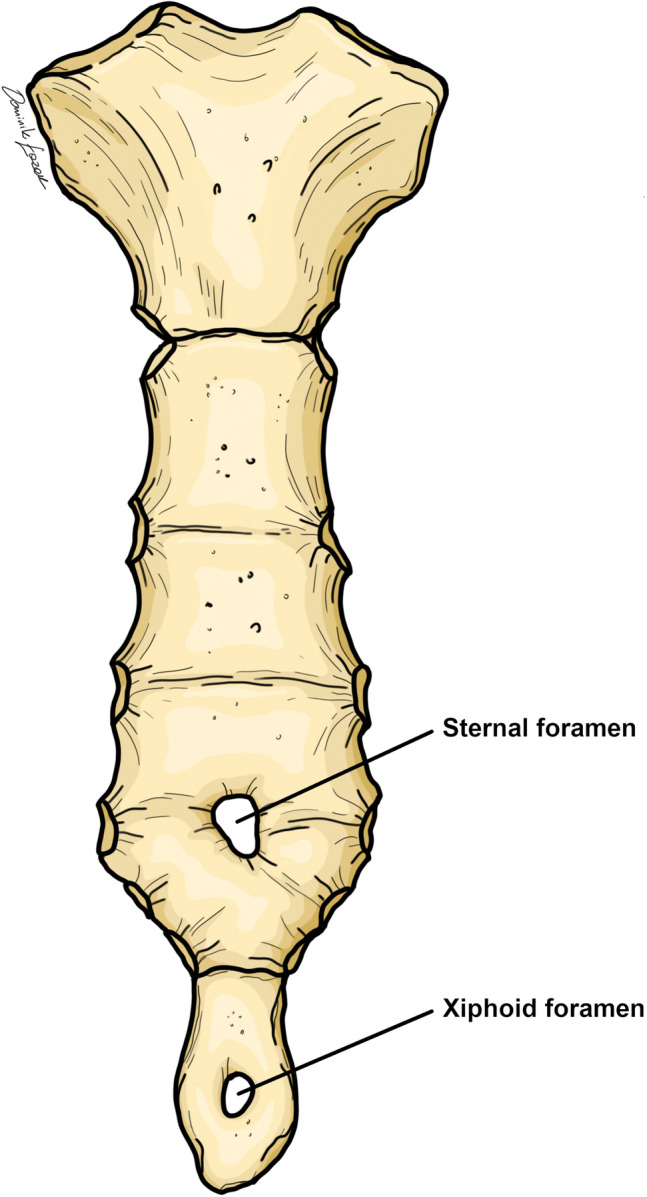
Purpose: Sternal foramen is a perforation of the sternum that can be a source of misdiagnosis during radiographic imaging or life-threatening perforations during bone marrow sampling. The aim of this study was to conduct a meta-analysis on the prevalence, morphometrics, and location of foramen in the sternal body and xiphoid process, describe morphometric features of this phenomenon, and thus verify its clinical importance. Moreover, our secondary outcome was to compare effectiveness of various imaging methods in diagnosis of the sternal or xiphoid foramen.
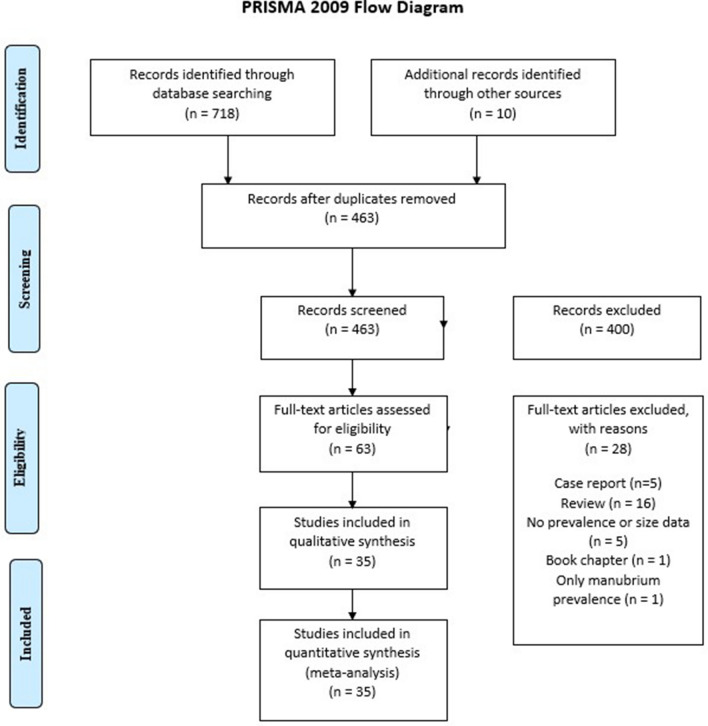
Methods: A comprehensive search was conducted on major scientific databases to identify studies containing relevant information. Data on foramen's prevalence, location, morphometrics, and accompanying findings were extracted and pooled into a meta-analysis using MetaXL 5.0.
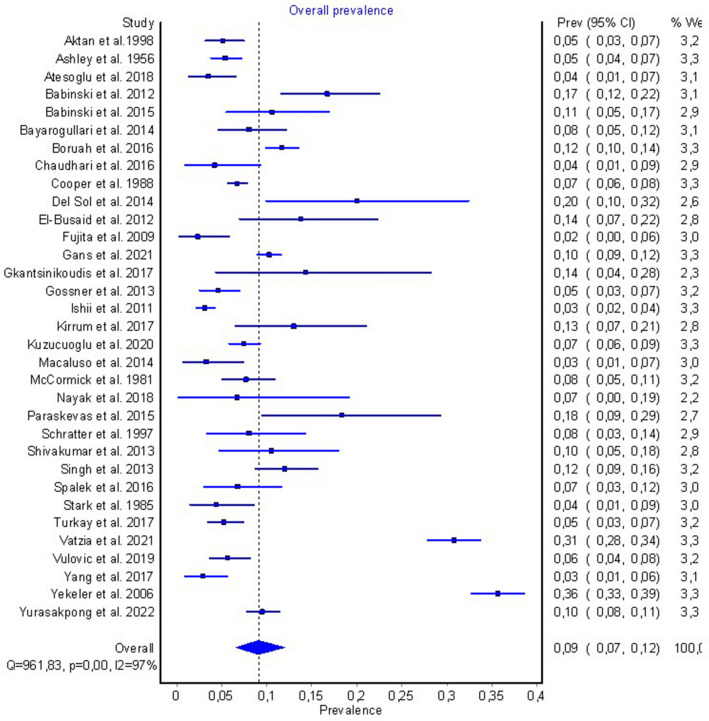
Results: Thirty-five studies (n = 16,666 subjects) were included. The overall pooled prevalence of a foramen in the sternal body and/or a xiphoid process was 8.9% (95% CI 6.5-11.7) and it equaled 6.5% (95% CI 5.6-7.6) for sternal body alone and 2.9% (95% CI 0.5-6.9) for the xiphoid process. The foramen was more prevalent in males than in females (12.2% vs. 6.8%). The prevalence of sternal foramen was higher in South American [13.9% (95% CI 11.2-16.9)] and African [13.6% (95% CI 9.7-18.0)] studies compared to North American [6.2% (95% CI 5.0-7.5)] and European populations [8.6% (95% CI 3.1-16.3)]. Mean transverse and vertical diameter of foramen equaled 4.7 mm (95% CI 3.8-5.5), and 5.6 mm (95% CI 4.2-6.9), respectively.
Conclusion: Our analysis proves that the sternal foramina are structures of significant prevalence and size. Any physician should keep them in mind when performing punctures in this area.
Keywords: Perforated sternum; Sternal biopsy; Sternal body; Thoracic anatomy; Xiphoid process.
© 2023. The Author(s).
Conflict of interest statement
The authors have no competing interests to declare.
Figures
References
-
- Aktan ZA (1998) Anatomic and HRCT demonstration of midline sternal foramina. Tr J Med Sci 28:511–514. https://journals.tubitak.gov.tr/medical/vol28/iss5/9/
-
- Anderson BW, Holme MR, Burns B (2020) Anatomy, thorax, xiphoid process (Updated 2020 May 22). In: StatPearls [Internet]. StatPearls Publishing, Treasure Island (FL). https://www.ncbi.nlm.nih.gov/books/NBK526082/ - PubMed
Publication types
MeSH terms
LinkOut - more resources
Full Text Sources
