


Improvement in clinical outcome and quality of life after arthroscopic ankle arthrodesis in paralytic foot drop
- PMID: 36918915
- PMCID: PMC10015676
- DOI: 10.1186/s13018-023-03691-y
Improvement in clinical outcome and quality of life after arthroscopic ankle arthrodesis in paralytic foot drop
Abstract
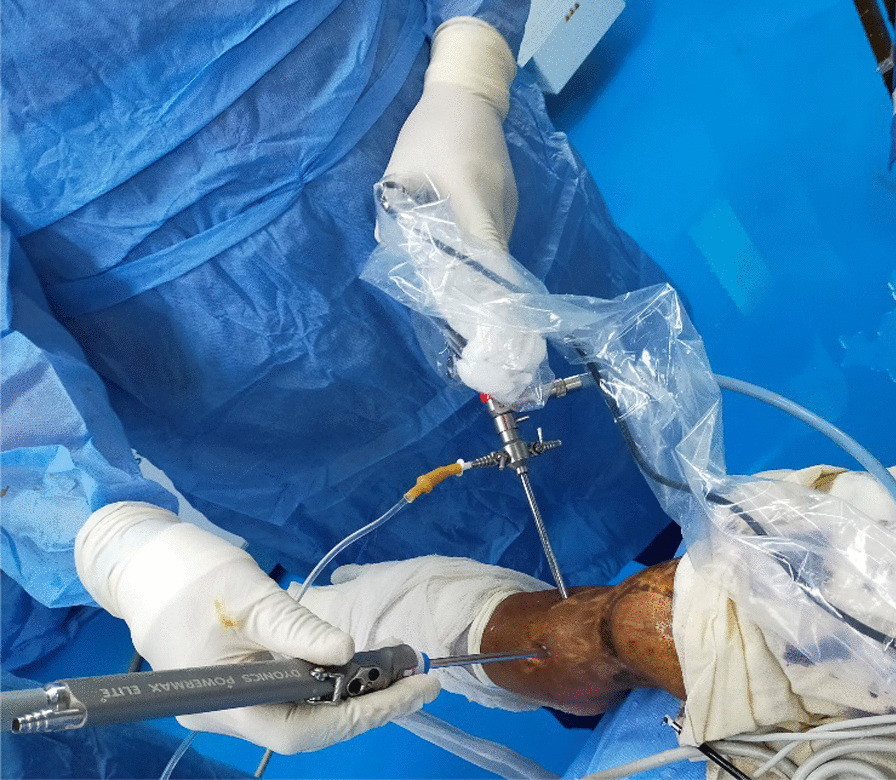
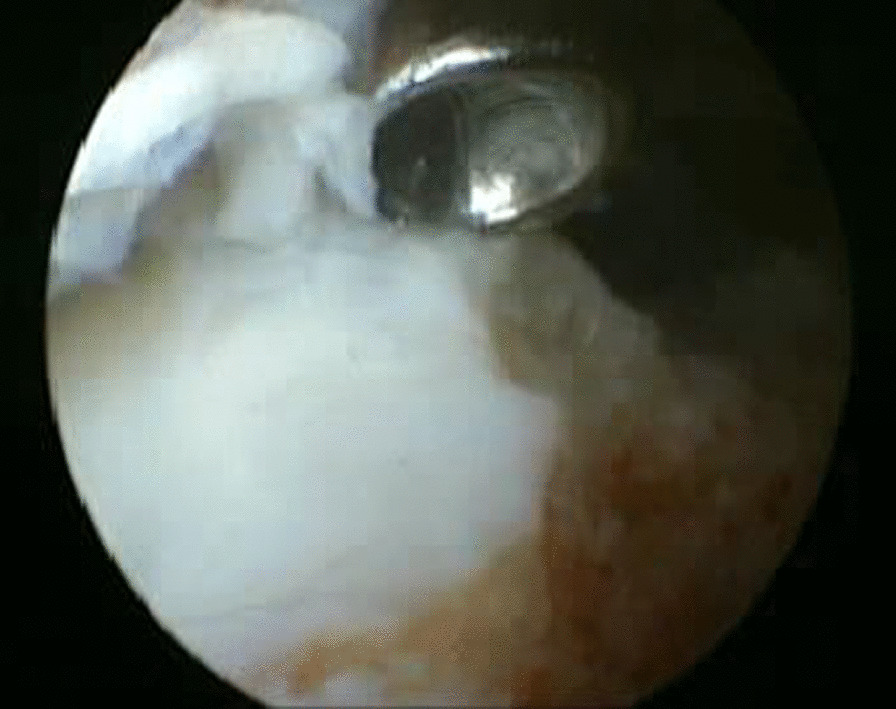
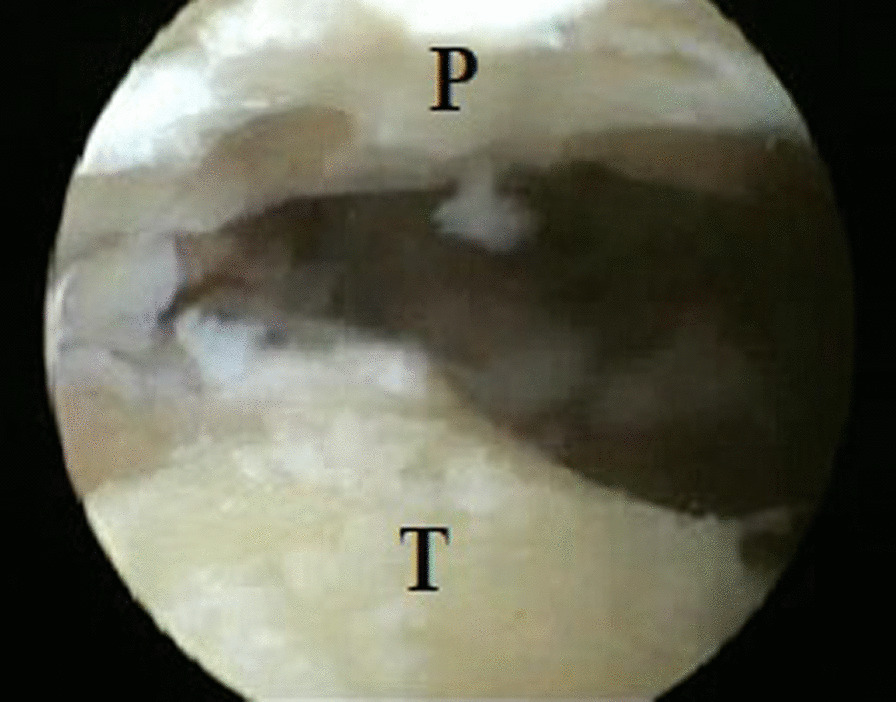
Background: Paralytic foot-drop is a disabling deformity that results from nerve or direct muscle injuries. Palliative surgeries such as tendon transfer and ankle arthrodesis are reserved for permanent deformity, with the arthroscopic technique had not been widely studied before. This study aims to evaluate the clinical outcome and quality of life after arthroscopic ankle fusion of paralytic foot-drop deformity.
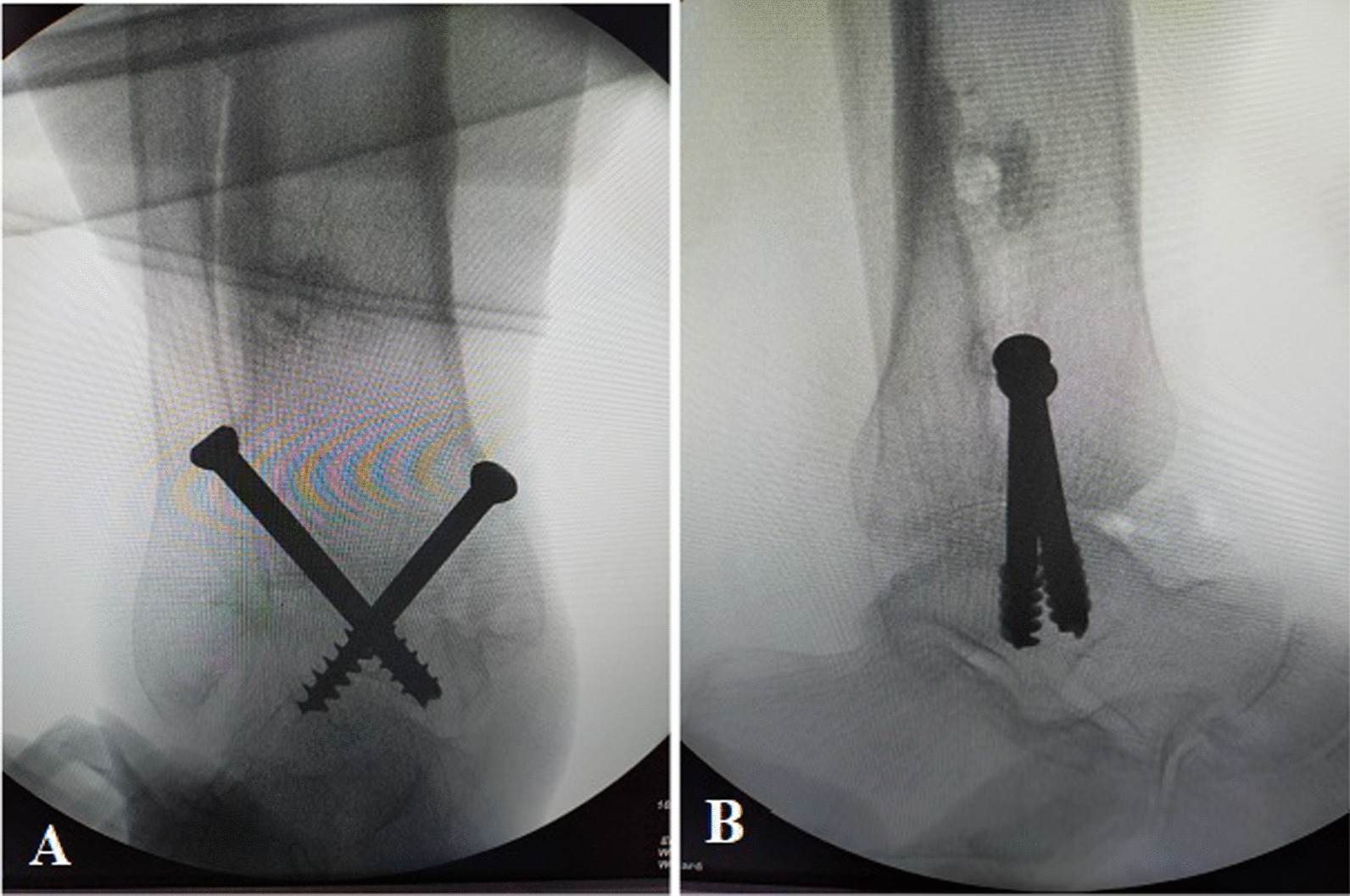
Materials and methods: The patients who were retrospectively enrolled in this study underwent arthroscopic ankle fusion for paralytic foot-drop deformity between March 2017 and December 2021. The American Orthopedic Foot and Ankle Society (AOFAS) ankle-hindfoot score and Cumberland Ankle Instability Tool (CAIT) were the measures used for clinical assessment. To judge the union, serial plain radiographs of the ankle were obtained. The preoperative and postoperative means were analyzed utilizing a two-tailed paired t-test, with a p value of less than 0.05 indicating statistical significance.
Results: This study included 21 consecutive patients with a mean follow-up of 35.09 ± 4.5 months and a mean age of 41.5 ± 6.1 years. Highly significant improvements were observed between the preoperative and final follow-up means of the AOFAS score (from 57.6 ± 4.6 to 88.3 ± 2.7) and CAIT (from 12.1 ± 2.2 to 28.9 ± 1.01; p ˂ 0.00001 for both). All patients attained radiographic union and resumed their previous occupations without reporting serious adverse effects.
Conclusions: Arthroscopic ankle fusion is an effective, minimally invasive palliative surgery for patients suffering from permanent paralytic foot-drop deformity. This technique was shown to provide good functional and radiologic outcomes without significant complications.
Level of evidence: Retrospective cohort; level of evidence (IV).
Keywords: Ankle; Arthroscopic arthrodesis; Foot-drop; Paralytic.
© 2023. The Author(s).
Conflict of interest statement
The authors declared no competing interest related to this study.
Figures
References
MeSH terms
LinkOut - more resources
Full Text Sources
Research Materials
