


Comparison of growth in neutered Domestic Shorthair kittens with growth in sexually-intact cats
- PMID: 36920976
- PMCID: PMC10016642
- DOI: 10.1371/journal.pone.0283016
Comparison of growth in neutered Domestic Shorthair kittens with growth in sexually-intact cats
Abstract
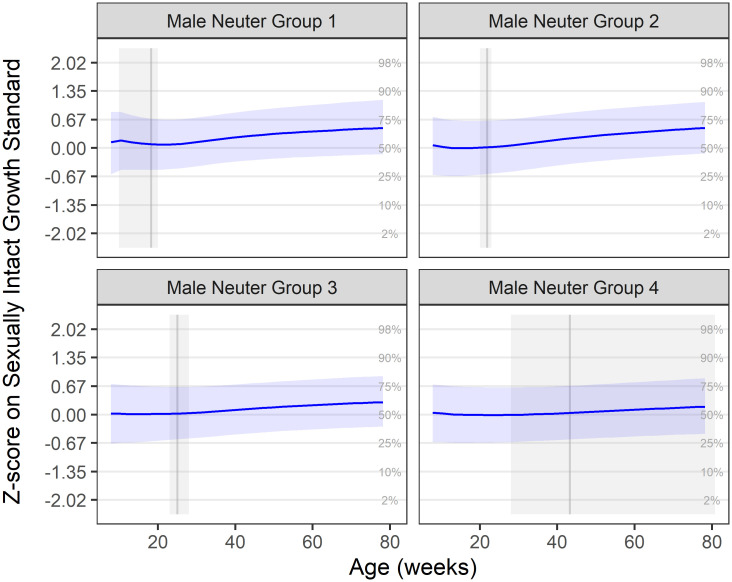
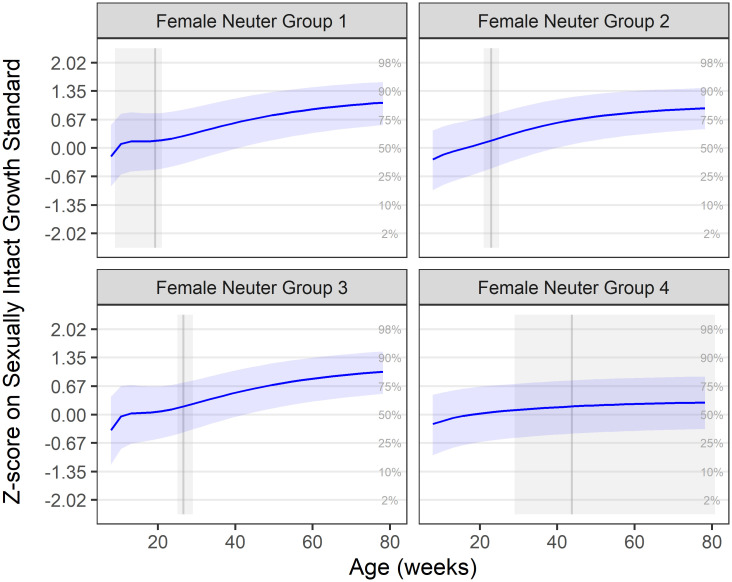
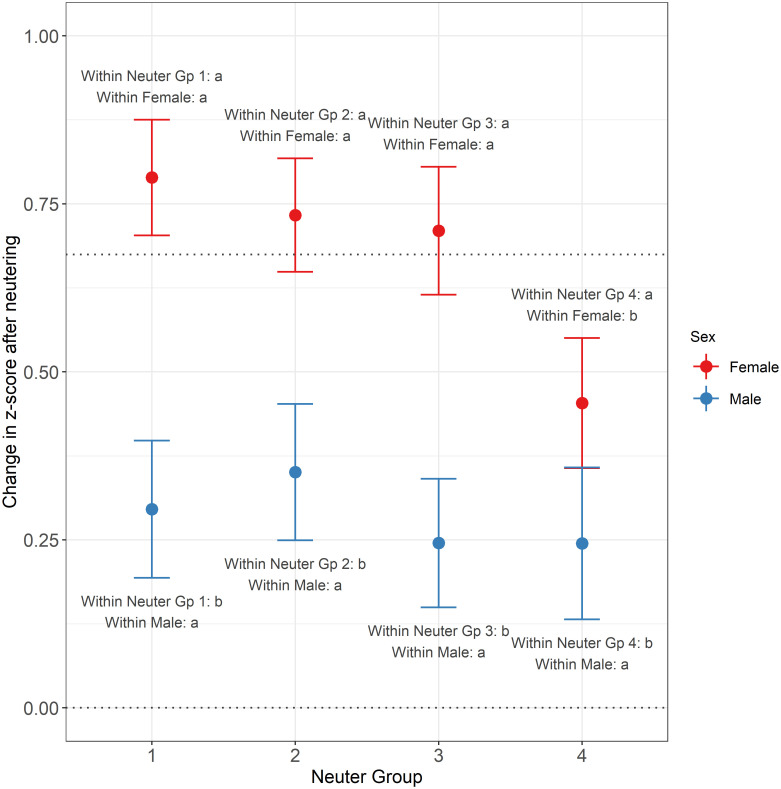
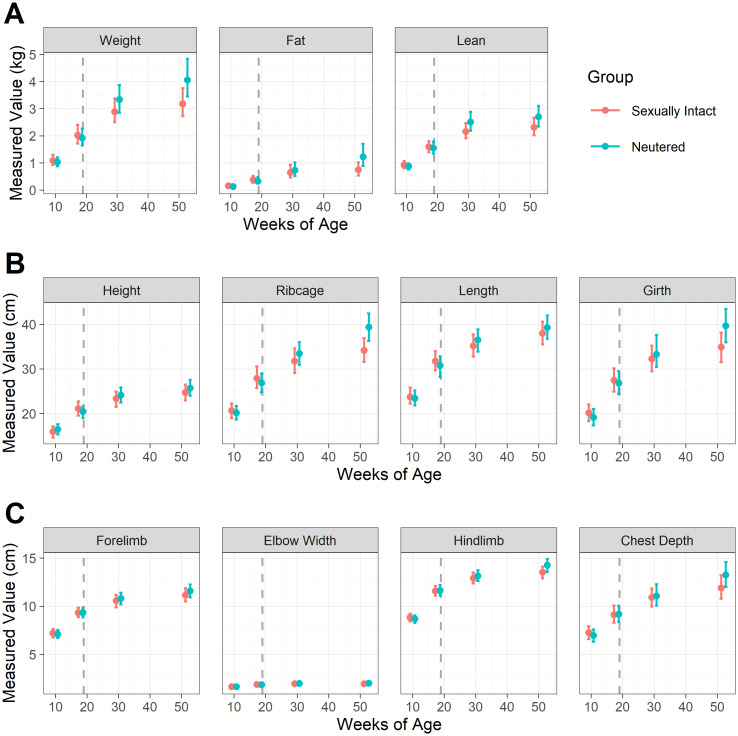
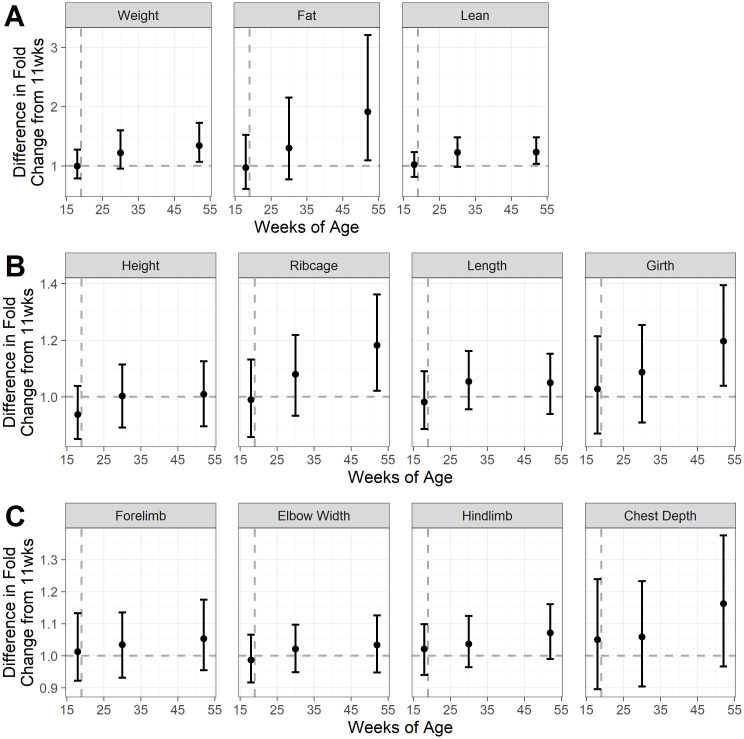
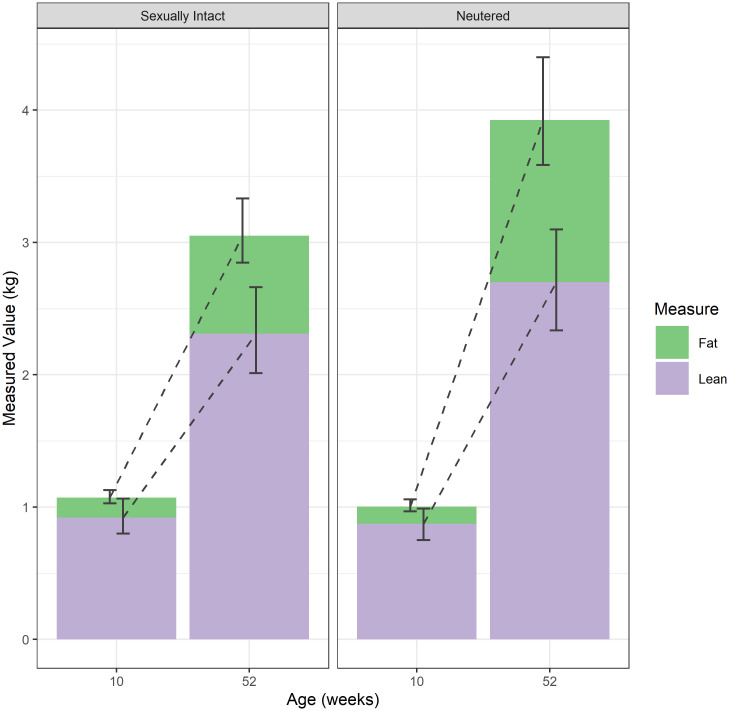
The first aim of these studies was to compare growth patterns of healthy kittens neutered during growth with growth standards created for sexually-intact kittens. A second aim was to clarify the impact of neutering in kittens on body composition and body shape. Study 1 was a retrospective observational study comparing median growth trajectories of healthy, client-owned domestic shorthair (DSH) kittens in optimal body condition and neutered at different ages, with previously-created growth standards from a similar, sexually-intact, population. The neuter groups contained between 3.0k and 9.3k cats. For all neuter groups in both sexes, the median growth trajectory inclined upwards after the procedure, with this being more marked in female than in male kittens. This upwards inclination was less marked for kittens neutered later during growth in both sexes, with the effect being least in kittens neutered after 28-29 weeks. Study 2 was an analysis of new body composition and zoometric data from a previously-published randomised study, comparing growth-related measures between 11 pairs of sexually-intact and neutered (at 19 weeks age) female DSH cats in a research population. Before neutering, the growth pattern in neutered kittens and sexually-intact kittens was similar, but neutered kittens were heavier by 52 weeks (mean difference in fold change vs. 10 weeks 1.34, 95-CI: 1.07-1.72), had a greater fat mass (mean difference in fold change vs. 10 weeks 1.91, 95-CI 1.09-3.21) and greater lean mass (mean difference in fold change vs. 10 weeks 1.23, 95-CI: 1.03-1.48). Abdominal girth (mean difference in fold change vs. 10 weeks 1.20, 95-CI: 1.04-1.39) and rib cage length (mean difference in fold change vs. 10 weeks 1.18, 95-CI: 1.02-1.36) were also greater, but there were no differences in other zoometric measurements. Veterinarians should consider the potential impact that neutering has on gain of adipose tissue, especially early neutering in female kittens. Bodyweight should be monitored closely during growth and especially after neutering to prevent inappropriate weight gain.
Copyright: © 2023 Salt et al. This is an open access article distributed under the terms of the Creative Commons Attribution License, which permits unrestricted use, distribution, and reproduction in any medium, provided the original author and source are credited.
Conflict of interest statement
CS and RFB are employees of WALTHAM, KSH is an employee of Royal Canin, and both are owned by Mars Inc. AJG is an employee of the University of Liverpool, but his post is financially supported by Royal Canin. AJG has also received financial remuneration for providing educational material, speaking at conferences, and consultancy work from this company; all such remuneration has been for projects unrelated to the work reported in this manuscript. None of these declarations alter our adherence to PLOS ONE policies on sharing data and materials. Please see accessibility of study data section for details about data accessibility.
Figures
References
-
- Panciera DL, Thomas CB, Eicker SW, Atkins CE. Epizootiologic patterns of diabetes mellitus in cats: 333 cases (1980–1986). J Am Vet Med Assoc. 1990;197(11):1504–1508. - PubMed
Publication types
MeSH terms
LinkOut - more resources
Full Text Sources
Miscellaneous
