


Vitamin D in pregnancy (GRAVITD) - a randomised controlled trial identifying associations and mechanisms linking maternal Vitamin D deficiency to placental dysfunction and adverse pregnancy outcomes - study protocol
- PMID: 36922777
- PMCID: PMC10015530
- DOI: 10.1186/s12884-023-05484-x
Vitamin D in pregnancy (GRAVITD) - a randomised controlled trial identifying associations and mechanisms linking maternal Vitamin D deficiency to placental dysfunction and adverse pregnancy outcomes - study protocol
Abstract
Background: The prevalence of vitamin D deficiency is high among pregnant women. Vitamin D deficiency in pregnancy is associated with increased risk of adverse pregnancy outcomes especially complications related to placental dysfunction and insulin resistance. The objective of this study is to investigate if a higher dose of vitamin D supplementation in pregnancy reduces the prevalence of vitamin D deficiency and prevents adverse pregnancy outcome with special emphasize on preeclampsia, foetal growth restriction and gestational diabetes.
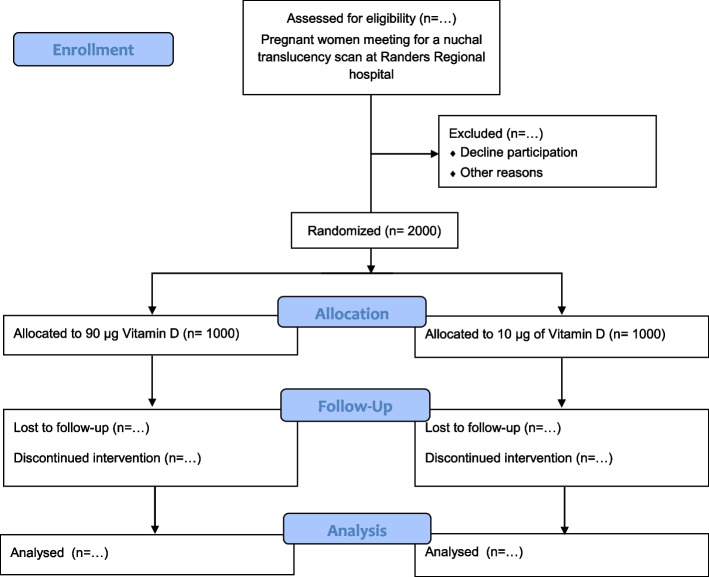
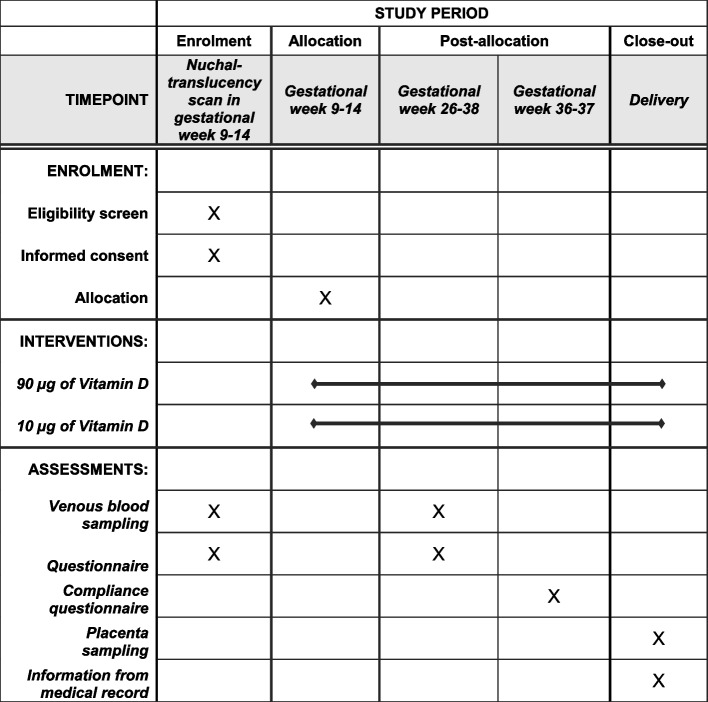
Methods: GRAVITD is a double-blinded randomised trial with parallel groups where all pregnant women attending the free of charge national nuchal translucency scan programme in gestational week 10-14 at Randers Regional Hospital are invited to participate. Enrolment started in June 2020. Participants are randomised in a two armed randomization with a 1:1 allocation ratio into 1) control group - receives 10 µg of vitamin D or 2) intervention group - receives 90 µg of vitamin D. A total of 2000 pregnant women will be included. Maternal blood samples and questionnaires describing life-style habits are collected upon enrolment. For half of the participants blood samples and questionnaires will be repeated again in 3rd trimester. Blood samples will be analysed for 25-hydroxy-vitamin D using high-performance liquid chromatography coupled with tandem mass spectrometry. Upon delivery, placental tissue and umbilicalcord blood will be collected and information on maternal and fetal outcomes will be exstracted from medical records. The primary outcomes are serum levels of 25-hydroxy-vitamin D ≥ 75 nmol/L and the rate of preeclampsia, foetal growth restriction and gestational diabetes. Secondary outcome includes identification and impact on placental functions related to vitamin D. A tertiary outcome is to initiate a cohort of children born from mothers in the trial for future follow-up of the effects of vitamin D on childhood health.
Discussion: Provided that this trial finds beneficial effects of a higher dose of vitamin D supplementation in pregnancies, official recommendations can be adjusted accordingly. This will provide a low-cost and easily implementable adjustment of prenatal care which can improve health for both mother and child during pregnancy and beyond.
Trial registration: ClinicalTrial.gov: NCT04291313 . Registered February 17, 2020.
Keywords: Foetal growth restriction; Gestational diabetes; Placenta; Pre-eclampsia; Pregnancy; Vitamin D.
© 2023. The Author(s).
Conflict of interest statement
Vitamin tablets used in the trial have been donated by Orkla Care Denmark. Orkla Care had no role in the initiation, design of the study and collection, analysis, and interpretation of data and nor in writing this manuscript. The authors declare they have no competing interests.
Figures
References
-
- Lee CL, Ng BK, Wu LL, Cheah FC, Othman H, Ismail NAM. Vitamin D deficiency in pregnancy at term: risk factors and pregnancy outcomes. Horm Mol Biol Clin Investig. 2017;31(3):/j/hmbci.2017.31.issue-3/hmbci-2017-0005/hmbci-2017-0005.xml. 10.1515/hmbci-2017-0005. - PubMed
-
- Karras SN, Anagnostis P, Naughton D, Annweiler C, Petroczi A, Goulis DG. Vitamin D during pregnancy: why observational studies suggest deficiency and interventional studies show no improvement in clinical outcomes? A narrative review. J Endocrinol Invest. 2015;38(12):1265–1275. doi: 10.1007/s40618-015-0363-y. - DOI - PubMed
Publication types
MeSH terms
Substances
Associated data
LinkOut - more resources
Full Text Sources
Medical
