


Artificial Intelligence Applied to clinical trials: opportunities and challenges
- PMID: 36923325
- PMCID: PMC9974218
- DOI: 10.1007/s12553-023-00738-2
Artificial Intelligence Applied to clinical trials: opportunities and challenges
Abstract
Background: Clinical Trials (CTs) remain the foundation of safe and effective drug development. Given the evolving data-driven and personalized medicine approach in healthcare, it is imperative for companies and regulators to utilize tailored Artificial Intelligence (AI) solutions that enable expeditious and streamlined clinical research. In this paper, we identified opportunities, challenges, and potential implications of AI in CTs.
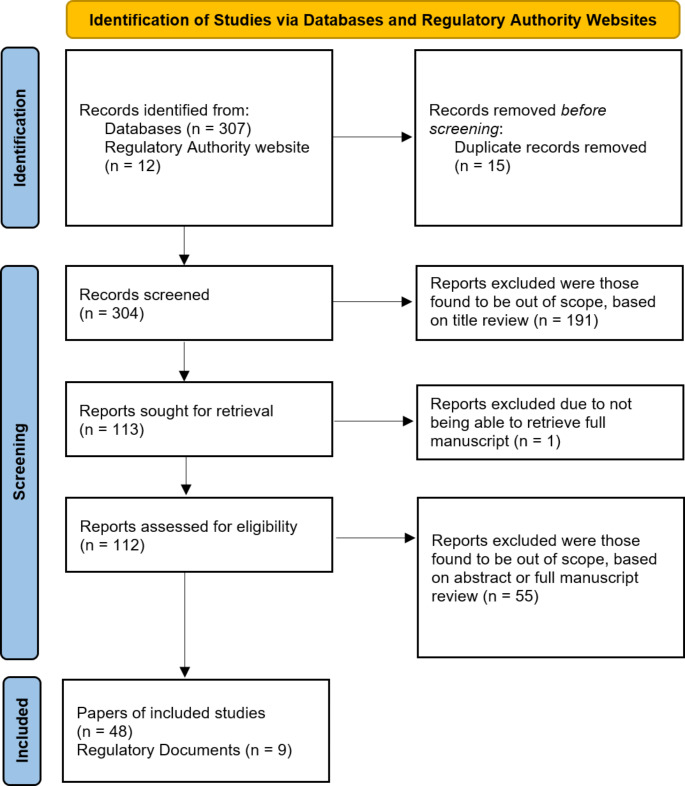
Methods: Following an extensive search in relevant databases and websites, we gathered publications tackling the use of AI and Machine Learning (ML) in CTs from the past 5 years in the US and Europe, including Regulatory Authorities' documents.
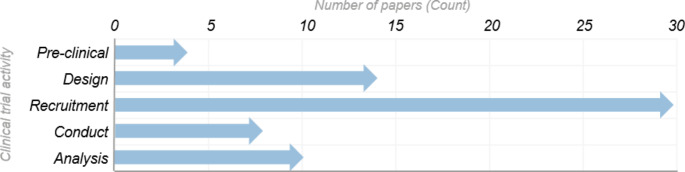
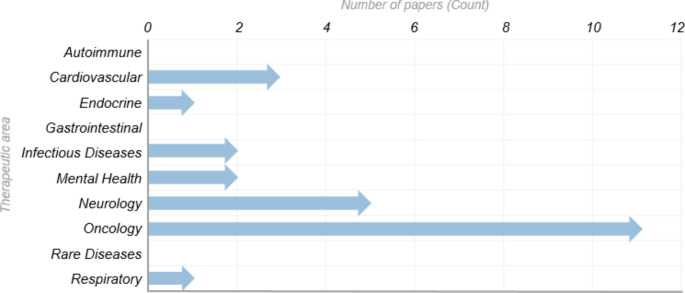
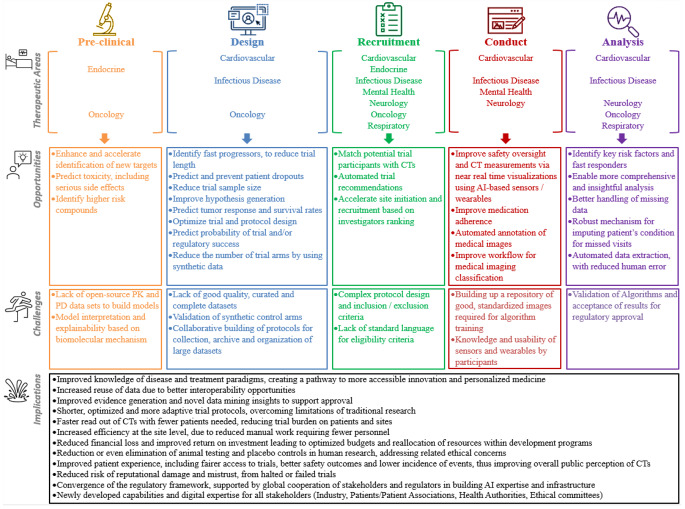
Results: Documented applications of AI commonly concern the oncology field and are mostly being applied in the area of recruitment. Main opportunities discussed aim to create efficiencies across CT activities, including the ability to reduce sample sizes, improve enrollment and conduct faster, more optimized adaptive CTs. While AI is an area of enthusiastic development, the identified challenges are ethical in nature and relate to data availability, standards, and most importantly, lack of regulatory guidance hindering the acceptance of AI tools in drug development. However, future implications are significant and are anticipated to improve the probability of success, reduce trial burden and overall, speed up research and regulatory approval.
Conclusion: The use of AI in CTs is in its relative infancy; however, it is a fast-evolving field. As regulators provide more guidance on the acceptability of AI in specific areas, we anticipate the scope of use to broaden and the volume of implementation to increase rapidly.
Keywords: Artificial Intelligence (AI); Challenges; Clinical trials (CT); Implications; Machine learning (ML); Opportunities.
© The Author(s) under exclusive licence to International Union for Physical and Engineering Sciences in Medicine (IUPESM) 2023, Springer Nature or its licensor (e.g. a society or other partner) holds exclusive rights to this article under a publishing agreement with the author(s) or other rightsholder(s); author self-archiving of the accepted manuscript version of this article is solely governed by the terms of such publishing agreement and applicable law.
Conflict of interest statement
Conflict of InterestThe authors are all employees sponsored by their employer to undertake the Regulatory Affairs and Health Policy Master’s Degree program, for which this paper was developed. Two authors are shareholders of the company for which they are employed.
Figures
References
-
- S H, P S, B A, J H. Artificial Intelligence for Clinical Trial Design.Trends in pharmacological sciences. 2019;40(8):577–591. doi:10.1016/J.TIPS.2019.05.005 - PubMed
Publication types
LinkOut - more resources
Full Text Sources
Other Literature Sources
Research Materials
Miscellaneous