


Sleep apnea in patients with exacerbated heart failure and overweight
- PMID: 36923964
- PMCID: PMC10009711
- DOI: 10.1016/j.sleepx.2023.100065
Sleep apnea in patients with exacerbated heart failure and overweight
Abstract
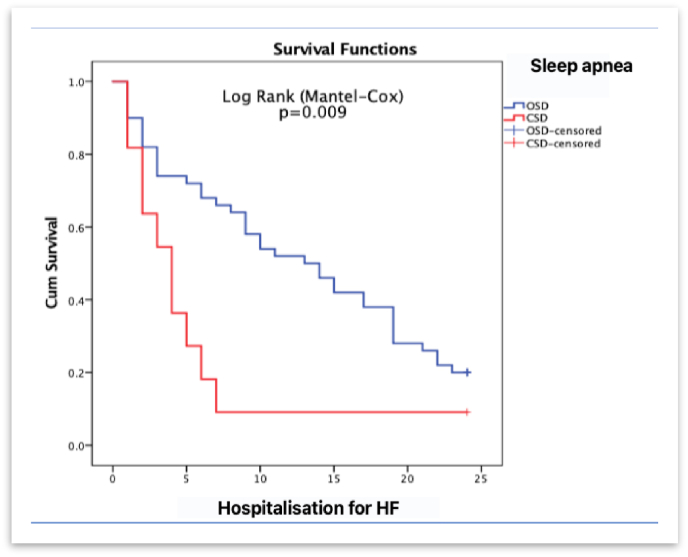
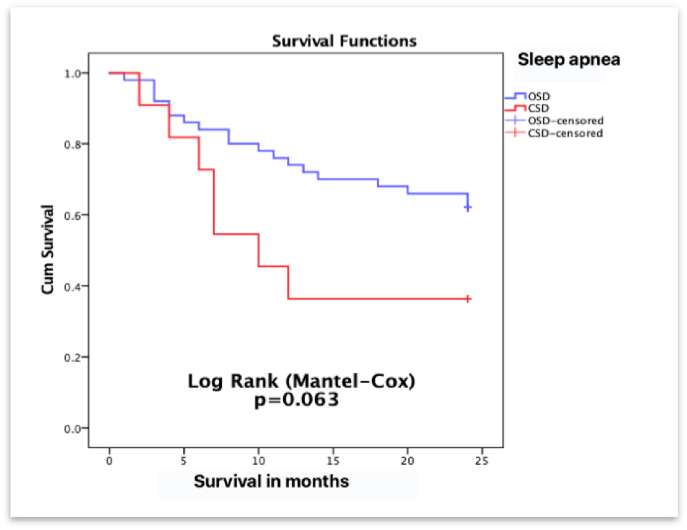
Sleep disorders are a common concomitant comorbidity in patients with heart failure. The aims of our study are to determine the incidence and phenotypic characteristics of sleep apnea in overweight patients with exacerbated heart failure and to assess the degree of involvement of systolic and diastolic function impairment in the individual group. From 100 screened patients with heart failure in our department from 2015 to 2017, 61 met the inclusion criteria and participated in the study. 82% (n = 50) of the patients had obstructive sleep apnea (OSA), and 18% (n = 11) had central sleep apnea (CSA). The CSA group had a significantly lower left ventricular ejection fraction (LVEF) than the OSA group (EF% 49.6 ± 8.5 vs 41.8 ± 11.4; p = 0.013). A negative correlation was found between LVEF and the number of central apnea events (r = -0.52; p < 0.001). More frequent hospitalizations for heart failure (HF) and higher mortality rate were found in the CSA group. Screening for sleep apnea in patients with exacerbated heart failure and obesity is necessary for the complex treatment of these patients.
Keywords: Central sleep apnea; Exacerbated heart failure; Obstructive sleep apnea.
© 2023 The Authors.
Figures

References
-
- Damy T., Margarit L., Noroc A., et al. Prognostic impact of sleep-disordered breathing and its treatment with nocturnal ventilation for chronic heart failure. Eur J Heart Fail. 2012;14:1009–1019. - PubMed
LinkOut - more resources
Full Text Sources
Research Materials
Miscellaneous
