


New Metrics from Polysomnography: Precision Medicine for OSA Interventions
- PMID: 36923968
- PMCID: PMC10010122
- DOI: 10.2147/NSS.S400048
New Metrics from Polysomnography: Precision Medicine for OSA Interventions
Abstract
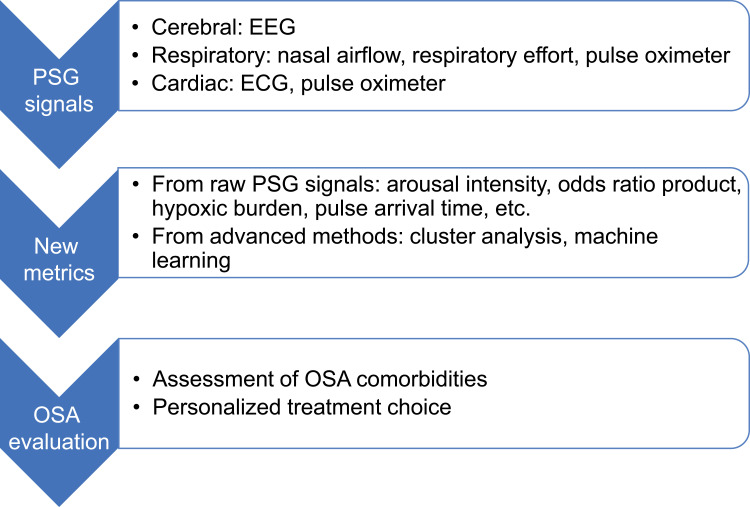
Obstructive sleep apnea (OSA) is a highly preventable disease accompanied by multiple comorbid conditions. Despite the well-established cardiovascular and neurocognitive sequelae with OSA, the optimal metric for assessing the OSA severity and response to therapy remains controversial. Although overnight polysomnography (PSG) is the golden standard for OSA diagnosis, the abundant information is not fully exploited. With the development of deep learning and the era of big data, new metrics derived from PSG have been validated in some OSA consequences and personalized treatment. In this review, these metrics are introduced based on the pathophysiological mechanisms of OSA and new technologies. Emphasis is laid on the advantages and the prognostic value against apnea-hypopnea index. New classification criteria should be established based on these metrics and other clinical characters for precision medicine.
Keywords: metrics; obstructive sleep apnea; polysomnography; precision medicine.
© 2023 Guo and Xiao.
Conflict of interest statement
The authors report no conflicts of interest in this work.
Figures
References
-
- Rha MS, Jeong Y, Alyahya KA, Yoon JH, Kim CH, Cho HJ. Comparison of clinical features and surgical outcomes between hypopnea- and apnea-predominant obstructive sleep apnea. Clin Otolaryngol. 2022;2022:1. - PubMed
Publication types
LinkOut - more resources
Full Text Sources
Medical
