


SARS-CoV-2 coinfection in immunocompromised host leads to the generation of recombinant strain
- PMID: 36924839
- PMCID: PMC10014127
- DOI: 10.1016/j.ijid.2023.03.014
SARS-CoV-2 coinfection in immunocompromised host leads to the generation of recombinant strain
Abstract
Objectives: Recombination related to coinfection is a huge driving force in determining the virus genetic variability, particularly in conditions of partial immune control, leading to prolonged infection. Here, we characterized a distinctive mutational pattern, highly suggestive of Delta-Omicron double infection, in a lymphoma patient.
Methods: The specimen was characterized through a combined approach, analyzing the results of deep sequencing in primary sample, viral culture, and plaque assay.
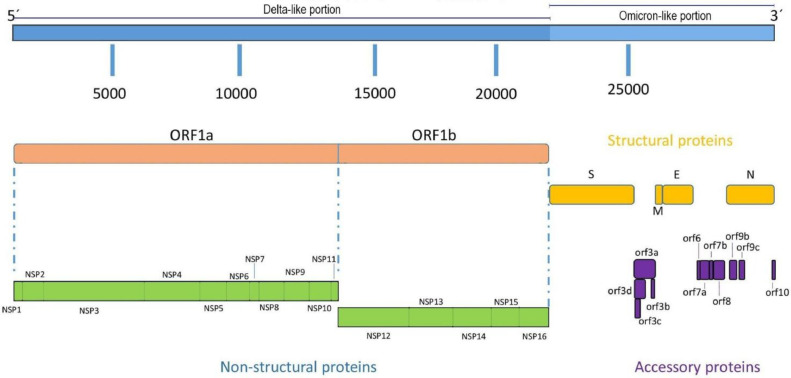
Results: Bioinformatic analysis on the sequences deriving from the primary sample supports the hypothesis of a double viral population within the host. Plaque assay on viral culture led to the isolation of a recombinant strain deriving from Delta and Omicron lineages, named XS, which virtually replaced its parent lineages within a single viral propagation.
Conclusion: It is impossible to establish whether the recombination event happened within the host or in vitro; however, it is important to monitor co-infections, especially in the exceptional intrahost environment of patients who are immunocompromised, as strong driving forces of viral evolution.
Keywords: Co-infection; Plaque assay; Recombinant XS; SARS-CoV-2 variants; Whole genome sequencing.
Copyright © 2023 The Author(s). Published by Elsevier Ltd.. All rights reserved.
Conflict of interest statement
Declaration of competing interest The authors have no competing interests to declare.
Figures
References
Publication types
MeSH terms
LinkOut - more resources
Full Text Sources
Medical
Miscellaneous
