Review
. 2023 Feb 28;29(8):1261-1288.
doi: 10.3748/wjg.v29.i8.1261.

Functional constipation in children: What physicians should know

Affiliations
Review

Functional constipation in children: What physicians should know

Duc Long Tran et al. World J Gastroenterol. .

Abstract

Functional constipation (FC) is considered the most common functional gastrointestinal disorder in children with a pooled global prevalence of 14.4% (95% confidence interval: 11.2-17.6) when diagnosed based on the Rome IV criteria. Its pathophysiological mechanisms are thought be multifactorial and complicated, resulting in difficult management. Currently, the most effective medication, when used in parallel with toilet training, is osmotic laxatives. Children's adherence to medication and parental concern regarding long-term laxative use are the main contributors to treatment failure. Recently, novel therapies with a high safety profile have been developed, such as probiotics, synbiotics, serotonin 5-hydroxytryptamine 4 receptor agonists, chloride channel activators, and herbal and transitional medicines; nonetheless, well-designed research to support the use of these therapies is needed. This review aims to focus on multiple aspects of FC in children, including global prevalence, pathogenesis, diagnostic criteria, tools, as well as conventional and novel treatment options, such as non-pharmacological management, including adequate fiber and fluid intake, physiotherapy, or neuromodulators. We also report that in very difficult cases, surgical intervention may be required.

Keywords: Children; Constipation; Herbal; Laxative; Toilet training; Treatment.


Conflict of interest statement

Conflict-of-interest statement: All the authors report no relevant conflicts of interest for this article.

Figures
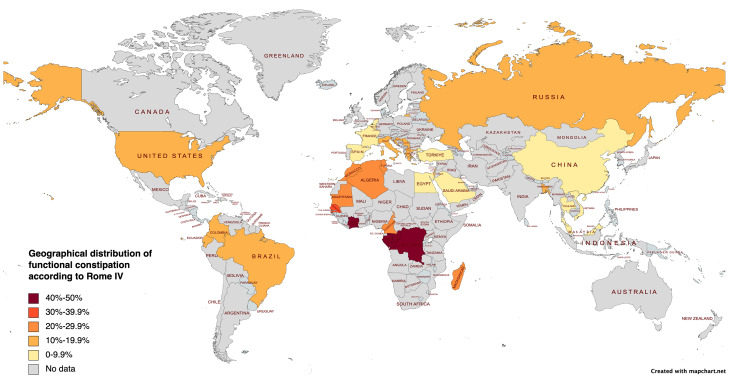
Figure 1
Figure 1
Geographical distribution of functional constipation in children worldwide, according to Rome IV.
Figure 2
Figure 2
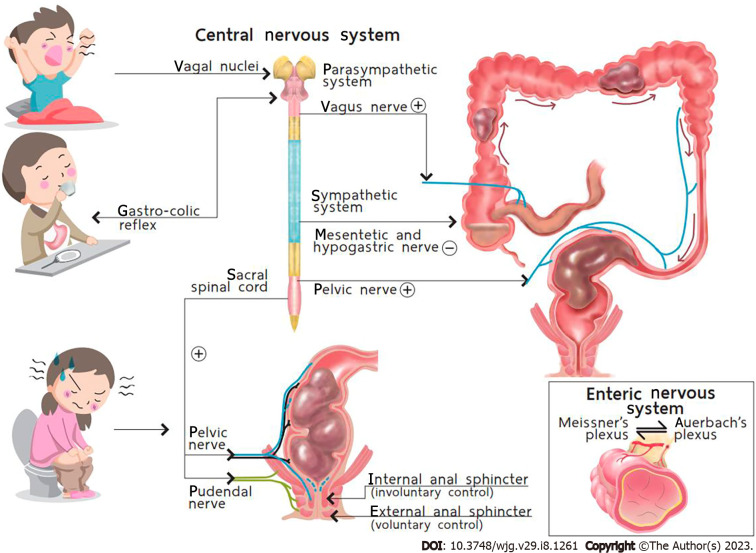
Normal defecation dynamics. Citation: Palittiya Sintusek. Pediatric lower gastrointestinal motility disorders. In: Werawatganon D, editor. Practical Neurogastroenterology and motility: Basic, testing, and treatment. Bangkok: Printable Inc, 2021: 417. Copyright ©The Authors 2021. Published by Thai Neurogastroenterology and Motility Society. The authors have obtained the permission for figure using from Thai Neurogastroenterology and Motility Society (Supplementary material).
Figure 3
Figure 3
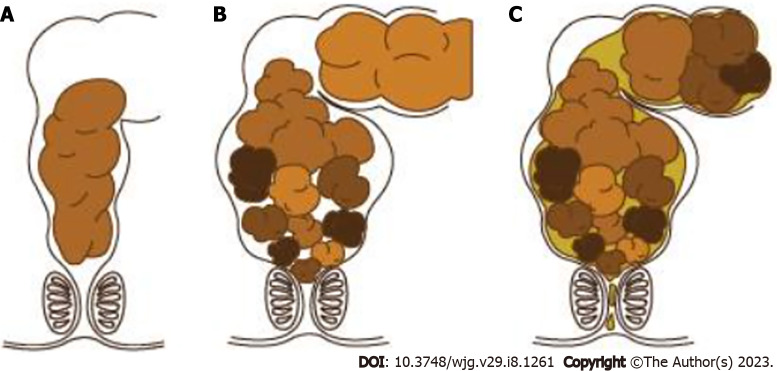
Accumulation of fecal mass in the rectum causes rectal wall distension and fecal soiling. A: Normal stool; B: Massive stool are retained in the rectum from withholding behavior; C: Liquid stool can leak out the anus or fecal soiling. A-C: Citation: Palittiya Sintusek. Chronic constipation. In: Supapitiporn K, editor. Pediatric practice: simple&applicable. Bangkok: Chulalongkorn University, 2021: 96. Copyright ©The Authors 2017. Published by Department of Pediatrics, Chulalongkorn University. The authors have obtained the permission for figure using from Department of Pediatrics, Chulalongkorn University (Supplementary material).
Figure 4
Figure 4
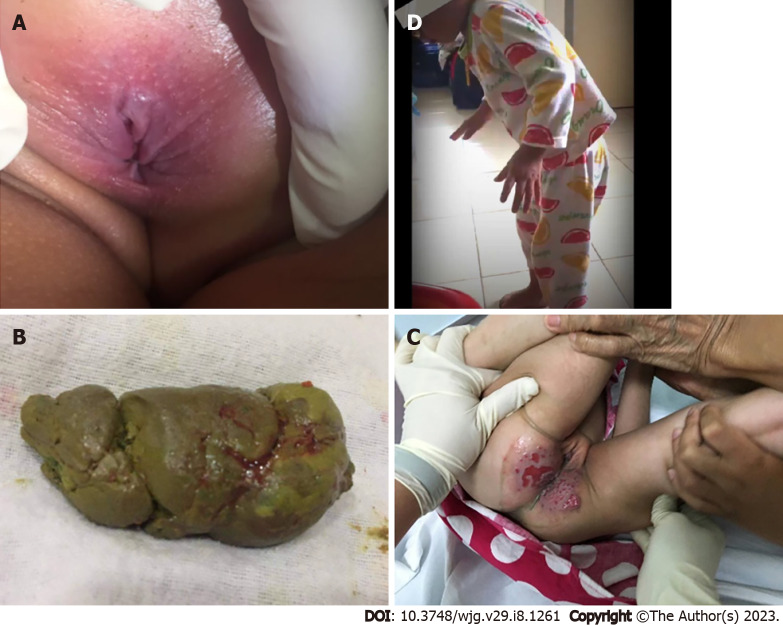
Clinical manifestations in constipated children. A: Anal fissure usually at the 6 o’clock or posterior parts; B: Blood coated, hard, and lumpy stool; C: Rectal abrasion from fecal incontinence that was misdiagnosed as chronic diarrhea; D: Retentive posture. A-D: Citation: Palittiya Sintusek. Chronic constipation. In: Supapitiporn K, editor. Pediatric practice: simple&applicable. Bangkok: Chulalongkorn University, 2021: 96. Copyright ©The Authors 2017. Published by Department of Pediatrics, Chulalongkorn University. The authors have obtained the permission for figure using from Department of Pediatrics, Chulalongkorn University (Supplementary material).
Figure 5
Figure 5
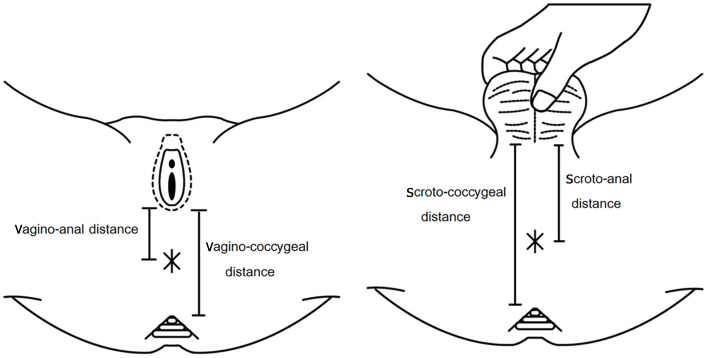
Landmarks for the measurement of the anogenital index. Citation: Palittiya Sintusek. Chronic constipation. In: Supapitiporn K, editor. Pediatric practice: simple&applicable. Bangkok: Chulalongkorn University, 2021: 96. Copyright ©The Authors 2017. Published by Department of Pediatrics, Chulalongkorn University. The authors have obtained the permission for figure using from Department of Pediatrics, Chulalongkorn University (Supplementary material).
Figure 6
Figure 6
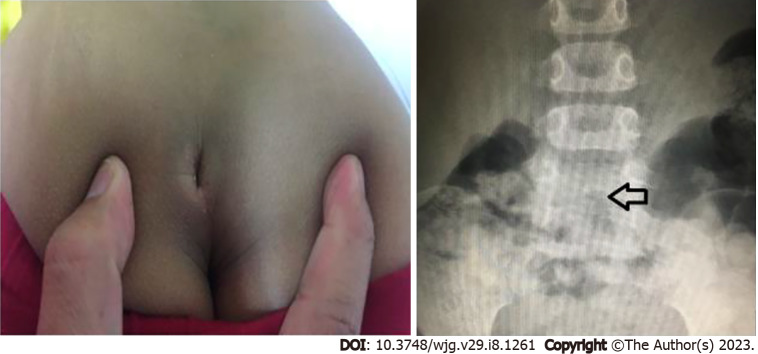
Sacral dimple and spinal dysraphism on spinal radiography (arrow) in a 5-year-old boy with intractable constipation. A: Sacral dimple; B: Spinal dysraphism.
Figure 7
Figure 7
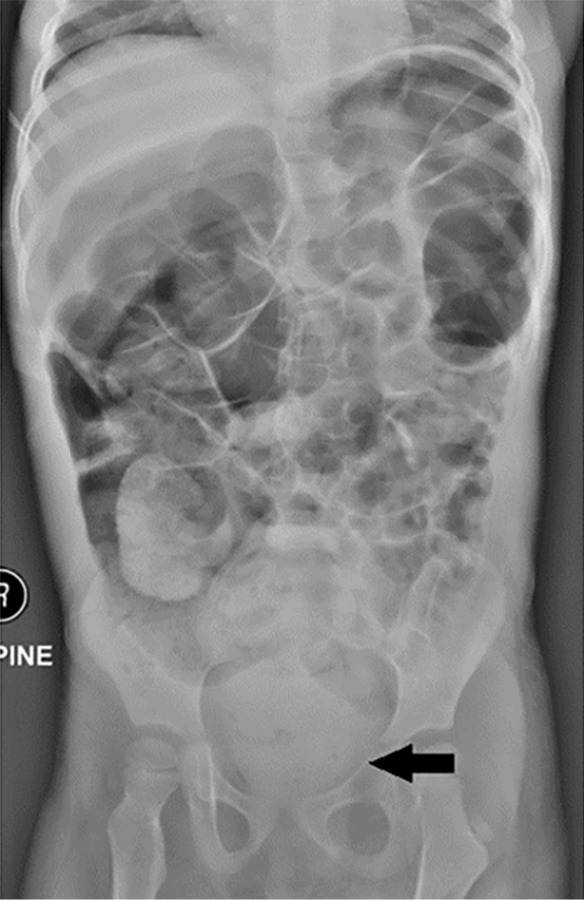
Abdominal radiography of a 3-year-old girl with a chief complaint of chronic diarrhea for 4 mo shows fecal impaction in the rectum. Citation: Palittiya Sintusek. Chronic constipation. In: Supapitiporn K, editor. Pediatric practice: simple&applicable. Bangkok: Chulalongkorn University, 2021: 96. Copyright ©The Authors 2017. Published by Department of Pediatrics, Chulalongkorn University. The authors have obtained the permission for figure using from Department of Pediatrics, Chulalongkorn University (Supplementary material).
Figure 8
Figure 8
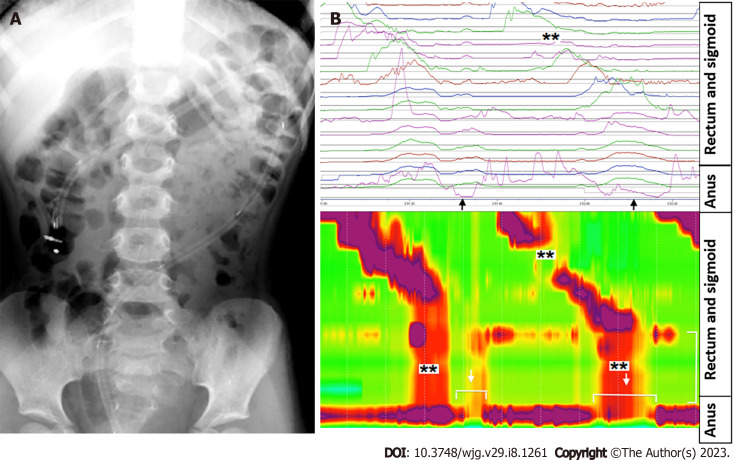
High amplitude propagating contractions. A: Proper position of the colonic catheter; B: graphical demonstration of abnormal high amplitude propagating contractions (HAPCs) with absent HAPCs at the sigmoid region (**) but preserved colo-anal reflex (arrow). A and B: Citation: Palittiya Sintusek. Chronic constipation. In: Supapitiporn K, editor. Pediatric practice: simple&applicable. Bangkok: Chulalongkorn University, 2021: 96. Copyright ©The Authors 2017. Published by Department of Pediatrics, Chulalongkorn University. The authors have obtained the permission for figure using from Department of Pediatrics, Chulalongkorn University (Supplementary material).
Figure 9
Figure 9
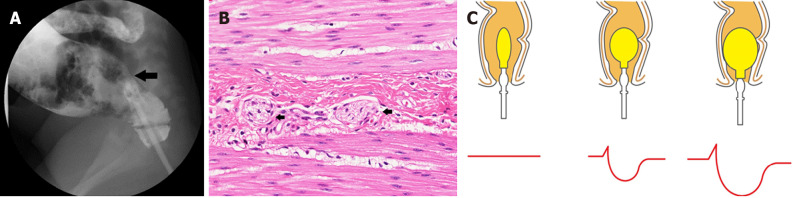
Investigations for organic constipation. A: Transition zone after barium enema in a child diagnosed with Hirschsprung’s disease; B: Histopathology revealing no ganglion cells in the nerve plexuses (myenteric plexus) of the muscular propria layer. Arrow shows thick nerve trunk but without ganglion cells; C: Anorectal manometry showing rectoanal inhibitory reflex. A-C: Citation: Palittiya Sintusek. Pediatric lower gastrointestinal motility disorders. In: Werawatganon D, editor. Practical Neurogastroenterology and motility: Basic, testing, and treatment. Bangkok: Printable Inc, 2021: 417. Copyright ©The Authors 2021. Published by Thai Neurogastroenterology and Motility Society. The authors have obtained the permission for figure using from Thai Neurogastroenterology and Motility Society (Supplementary material).
Figure 10
Figure 10
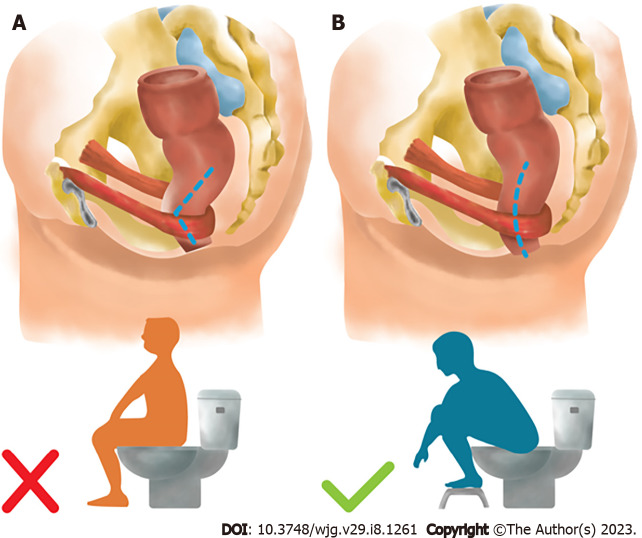
Position during defecation. A: Improper position during defecation; B: Proper position to open the rectoanal angle and facilitate stool expulsion during defecation.
Figure 11
Figure 11
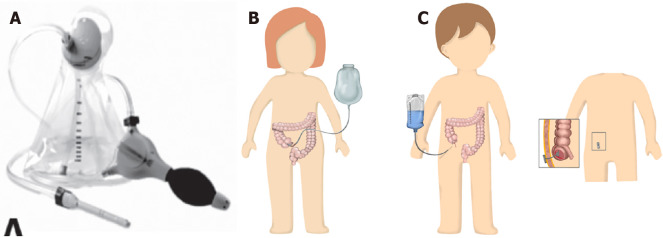
Rectal irrigation method. A: Transanal irrigation; B and C: Antegrade continence enema. A-C: Citation: Palittiya Sintusek. Pediatric lower gastrointestinal motility disorders. In: Werawatganon D, editor. Practical Neurogastroenterology and motility: Basic, testing, and treatment. Bangkok: Printable Inc, 2021: 423-424. Copyright ©The Authors 2021. Published by Thai Neurogastroenterology and Motility Society. The authors have obtained the permission for figure using from Thai Neurogastroenterology and Motility Society (Supplementary material).
Figure 12
Figure 12
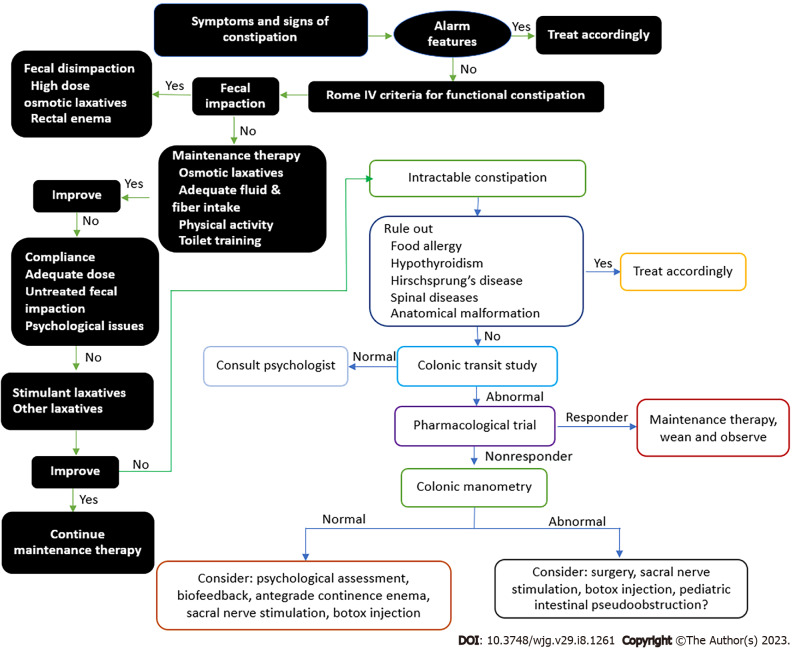
Algorithm for the management of children presenting with signs and symptoms of constipation.

References

    1. Benninga MA, Voskuijl WP, Taminiau JA. Childhood constipation: is there new light in the tunnel? J Pediatr Gastroenterol Nutr. 2004;39:448–464. - PubMed
    1. Boronat AC, Ferreira-Maia AP, Matijasevich A, Wang YP. Epidemiology of functional gastrointestinal disorders in children and adolescents: A systematic review. World J Gastroenterol. 2017;23:3915–3927. - PMC - PubMed
    1. Vriesman MH, Benninga MA. Functional constipation and fecal incontinence. In: Wyllie R. Pediatric gastrointestinal and liver diseases. Philadelphia: Elsevier, 2021: 106-118.
    1. Koppen IJN, Vriesman MH, Saps M, Rajindrajith S, Shi X, van Etten-Jamaludin FS, Di Lorenzo C, Benninga MA, Tabbers MM. Prevalence of Functional Defecation Disorders in Children: A Systematic Review and Meta-Analysis. J Pediatr. 2018;198:121–130.e6. - PubMed
    1. Rial R, Uc A. Functional constipation. In: Kleinman RE, Goulet O-J, Mieli-Vergani G, Sanderson IR, Sherman PM, Shneider BL, editors. Walker’s peadiatric gastrointestinal disease. United States: People’s medical publishing house, 2018: 991-1005.