


Spatiotemporal spread of tick-borne encephalitis in the EU/EEA, 2012 to 2020
- PMID: 36927718
- PMCID: PMC10021474
- DOI: 10.2807/1560-7917.ES.2023.28.11.2200543
Spatiotemporal spread of tick-borne encephalitis in the EU/EEA, 2012 to 2020
Abstract
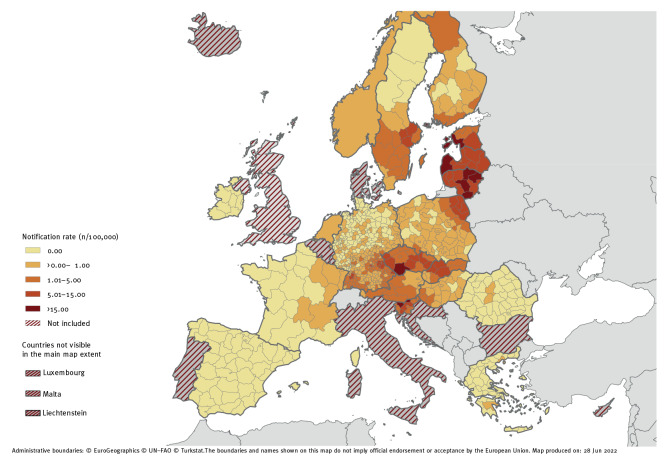
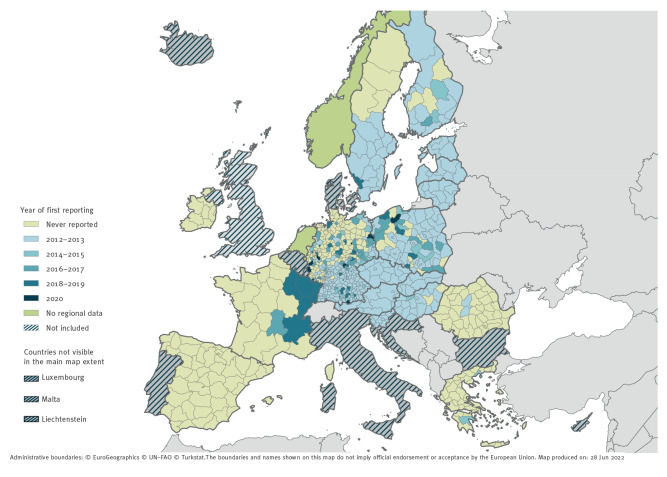
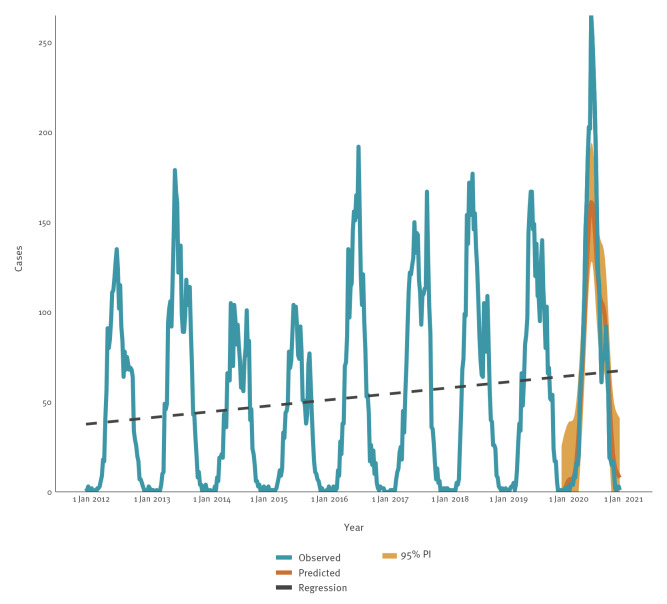
BackgroundTick-borne encephalitis (TBE) is a vaccine-preventable disease involving the central nervous system. TBE became a notifiable disease on the EU/EEA level in 2012.AimWe aimed to provide an updated epidemiological assessment of TBE in the EU/EEA, focusing on spatiotemporal changes.MethodsWe performed a descriptive analysis of case characteristics, time and location using data of human TBE cases reported by EU/EEA countries to the European Centre for Disease Prevention and Control with disease onset in 2012-2020. We analysed data at EU/EEA, national, and subnational levels and calculated notification rates using Eurostat population data. Regression models were used for temporal analysis.ResultsFrom 2012 to 2020, 19 countries reported 29,974 TBE cases, of which 24,629 (98.6%) were autochthonous. Czechia, Germany and Lithuania reported 52.9% of all cases. The highest notification rates were recorded in Lithuania, Latvia, and Estonia (16.2, 9.5 and 7.5 cases/100,000 population, respectively). Fifty regions from 10 countries, had a notification rate ≥ 5/100,000. There was an increasing trend in number of cases during the study period with an estimated 0.053 additional TBE cases every week. In 2020, 11.5% more TBE cases were reported than predicted based on data from 2016 to 2019. A geographical spread of cases was observed, particularly in regions situated north-west of known endemic regions.ConclusionA close monitoring of ongoing changes to the TBE epidemiological situation in Europe can support the timely adaption of vaccination recommendations. Further analyses to identify populations and geographical areas where vaccination programmes can be of benefit are needed.
Keywords: European Union; Tick-borne encephalitis; epidemiology; public health; surveillance; vaccination.
Conflict of interest statement
Figures
References
MeSH terms
Substances
LinkOut - more resources
Full Text Sources