


Termination of seizures by ictal transcranial focal cortex stimulation
- PMID: 36929857
- PMCID: PMC10235555
- DOI: 10.1002/epi4.12728
Termination of seizures by ictal transcranial focal cortex stimulation
Abstract
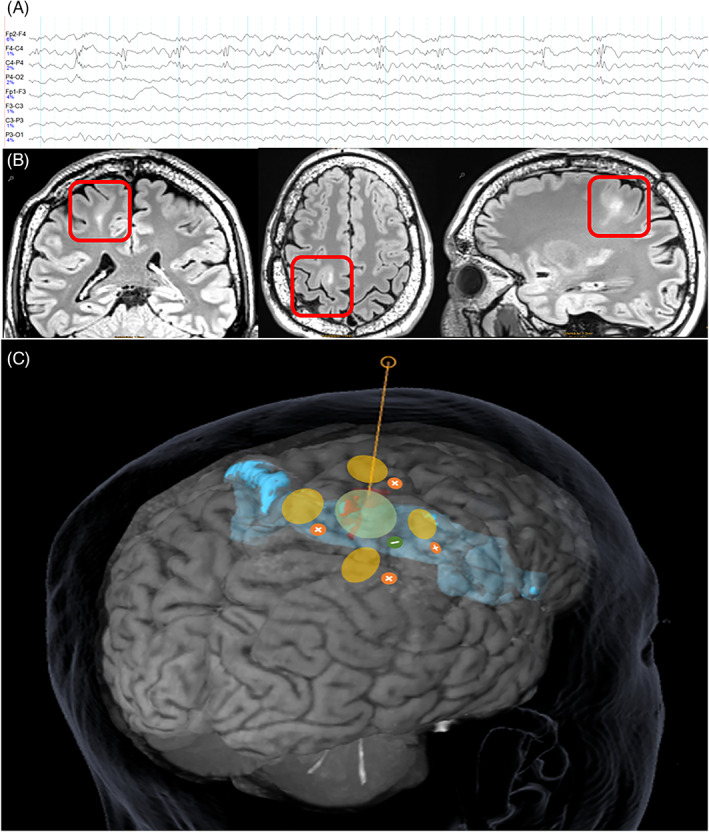
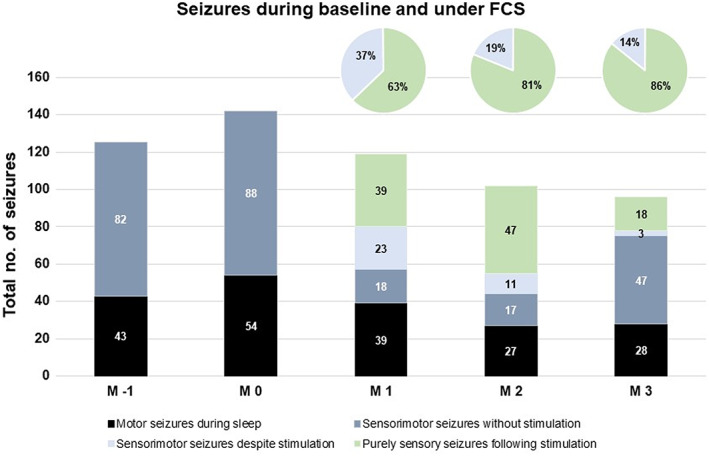
Whereas high-level evidence exists on chronic neuromodulatory effects of different brain stimulation approaches in reducing seizure frequency, evidence for acute antiseizure effects of electrical brain stimulation during seizures is sparse. As part of an ongoing trial, we implanted a patient with a novel focal cortex stimulation (FCS) device with a Laplacian electrode placed over a precentral focal cortical dysplasia. The baseline seizure frequency was 125 per month, consisting of (i) focal aware sensory seizures that invariably progressed to uni- or bilateral tonic contraction and clonic jerking, and (ii) primary motor seizures. Besides an overall reduction in seizure frequency, on-demand stimulation had an immediate effect on seizures with a sensory phase, whereby 63%-86% of these seizures were terminated by ictal stimulation. These observations provide the first evidence that ictal self-triggered transcranial focal cortex stimulation can significantly interfere with the progression of seizure semiology.
Keywords: ictal stimulation; neurostimulation; seizure termination; transcranial stimulation.
© 2023 The Authors. Epilepsia Open published by Wiley Periodicals LLC on behalf of International League Against Epilepsy.
Conflict of interest statement
ASB has received research support for leading the clinical trial and recruiting patients at the Freiburg Epilepsy Center from the company PRECISIS producing the EASEE device, from the German Ministry of Research and Education, and from the Ministry of Science Baden‐Wuerttemberg for projects to develop intelligent implants for neurostimulation. MH was an investigator in the clinical trials EASEE and PIMIDES and recruited patients at the Freiburg Epilepsy Center.
Figures
References
-
- Ben‐Menachem E, Manon‐Espaillat R, Ristanovic R, Wilder BJ, Stefan H, Mirza W, et al. Vagus nerve stimulation for treatment of partial seizures: 1. A controlled study of effect on seizures. First international Vagus nerve stimulation study group. Epilepsia. 1994;35(3):616–26. - PubMed
-
- Fisher R, Salanova V, Witt T, Worth R, Henry T, Gross R, et al. Electrical stimulation of the anterior nucleus of thalamus for treatment of refractory epilepsy. Epilepsia. 2010;51(5):899–908. - PubMed
-
- Hampel KG, Vatter H, Elger CE, Surges R. Cardiac‐based vagus nerve stimulation reduced seizure duration in a patient with refractory epilepsy. Seizure. 2015;26:81–5. - PubMed
Publication types
MeSH terms
LinkOut - more resources
Full Text Sources
Medical
Research Materials
