


Probiotics and Prebiotics as Dietary Supplements for the Adjunctive Treatment of Type 2 Diabetes
- PMID: 36929892
- PMCID: PMC10280329
- DOI: 10.33073/pjm-2023-013
Probiotics and Prebiotics as Dietary Supplements for the Adjunctive Treatment of Type 2 Diabetes
Abstract
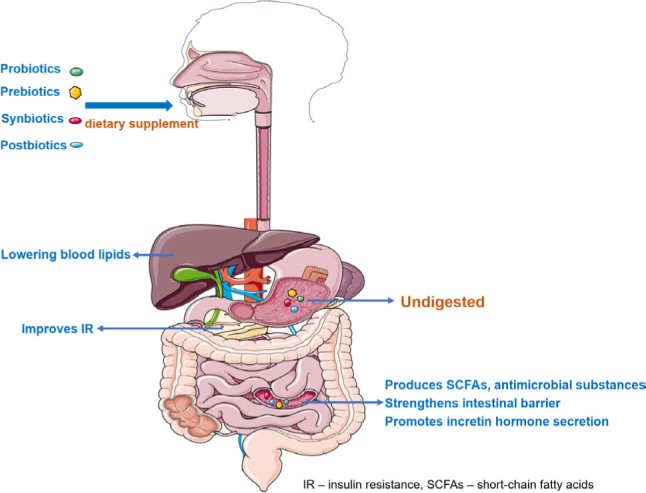
In modern lifestyles, high-fat diets and prolonged inactivity lead to more people developing type 2 diabetes (T2D). Based on the modern pathogenesis of T2D, food, and its components have become one of the top concerns for patients. Recent studies have found that dysbiosis and gut-related inflammation are more common in T2D patients. Probiotics and prebiotics play complementary roles in the gut as dietary supplements. Together, they may help improve dysbiosis and intestinal inflammation in people with T2D, increase the production of blood glucose-lowering hormones such as incretin, and help reduce insulin resistance and lower blood glucose. Therefore, changing the dietary structure and increasing the intake of probiotics and prebiotics is expected to become a new strategy for the adjuvant treatment of T2D.
Keywords: microbiota; prebiotics; probiotics; type 2 diabetes.
© 2023 YUYING WANG et al., published by Sciendo.
Conflict of interest statement
References
-
- AL-Dulaimi M, Algburi A, Abdelhameed A, Mazanko MS, Rudoy DV, Ermakov AM, Chikindas ML Antimicrobial and anti-biofilm activity of polymyxin E alone and in combination with probiotic strains of Bacillus subtilis KATMIRA1933 and Bacillus amyloliquefaciens B-1895 against clinical isolates of selected Acinetobacter spp.: a preliminary study Pathogens. 2021 NaN10(12):1574. doi: 10.3390/pathogens10121574. . . ; ( ): - DOI - PMC - PubMed
-
- Bock PM, Telo GH, Ramalho R, Sbaraini M, Leivas G, Martins AF, Schaan BD The effect of probiotics, prebiotics or synbiotics on metabolic outcomes in individuals with diabetes: a systematic review and meta-analysis Diabetologia. 2021 NaN64(1):26. doi: 10.1007/s00125-020-05295-1. . . ; ( ): –. - DOI - PubMed
-
- Buse JB, DeFronzo RA, Rosenstock J, Kim T, Burns C, Skare S, Baron A, Fineman M The primary glucose-lowering effect of metformin resides in the gut, not the circulation: results from short-term pharmacokinetic and 12-week dose-ranging studies Diabetes Care. 2016 NaN39(2):198. doi: 10.2337/dc15-0488. . . ; ( ): –. - DOI - PubMed
MeSH terms
Substances
LinkOut - more resources
Full Text Sources
Medical
