


Socioeconomic and clinical factors associated with excessive gestational weight gain
- PMID: 36930325
- PMCID: PMC10021048
- DOI: 10.1007/s00404-023-07000-0
Socioeconomic and clinical factors associated with excessive gestational weight gain
Abstract
Purpose: Excessive gestational weight gain (EGWG) is associated with adverse maternal and offspring outcomes but efforts to identify women at high risk for EGWG have been limited. The objective of this study is to identify socioeconomic and clinical factors associated with EGWG.
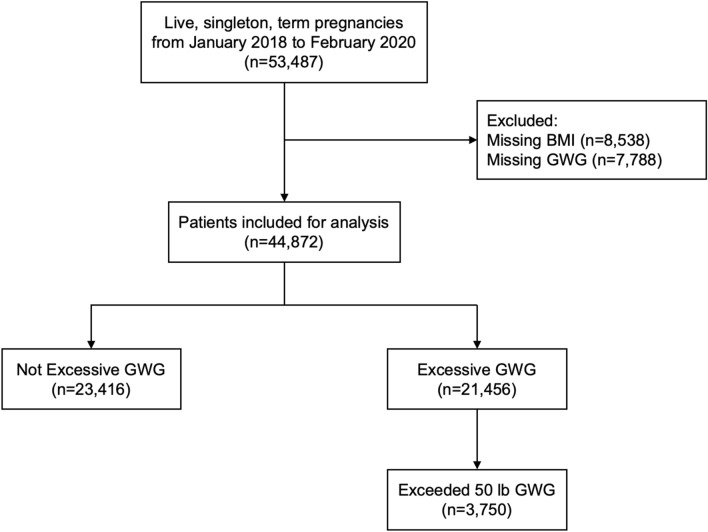
Methods: This retrospective cohort included pregnant patients who delivered live, term, singleton newborns between January 2018 and February 2020 at seven hospitals within a large health system in New York. Patients were stratified by pre-pregnancy body mass index and then classified based on whether they exceeded the Institute of Medicine guidelines for gestational weight gain (GWG) and whether they gained more than 50 pounds in pregnancy.
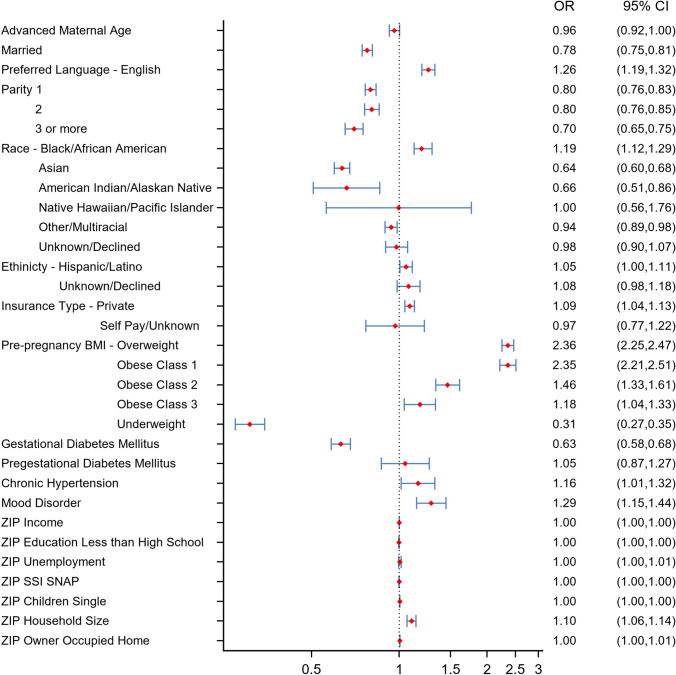
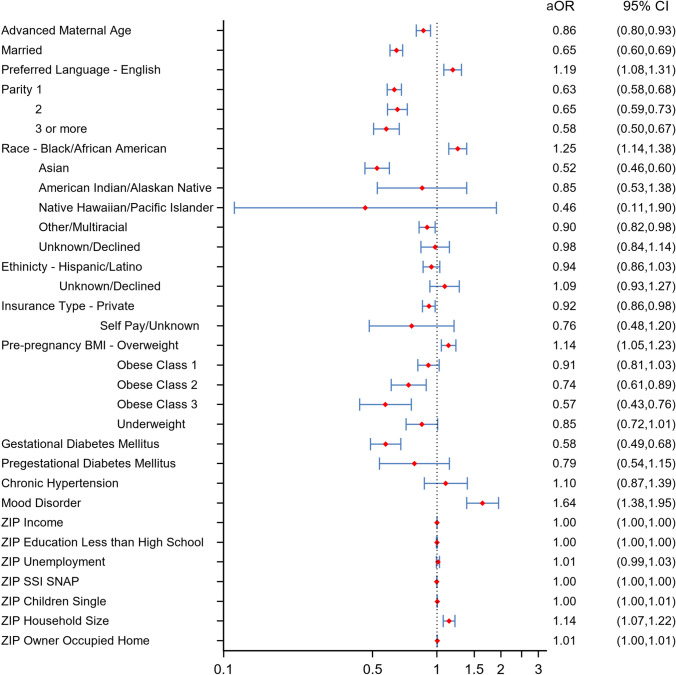
Results: A total of 44,872 subjects were included for analysis: 48% had EGWG and 17% had GWG exceeding 50 pounds. Patients with EGWG were more likely to be Black race, English speakers, overweight or obese pre-pregnancy, and have a mood disorder diagnosis. Patients who were underweight, multiparous, and those with gestational diabetes were less likely to have EGWG.
Conclusion: Sociodemographic and clinical findings associated with GWG > 50 pounds were similar but only overweight and not obese patients were at increased risk. Patients at risk for EGWG may benefit from early nutrition counseling and education on lifestyle changes.
Keywords: Body mass index; Gestational weight gain; Maternal weight gain; Obesity; Pregnancy.
© 2023. The Author(s), under exclusive licence to Springer-Verlag GmbH Germany, part of Springer Nature.
Conflict of interest statement
The authors report no conflicts of interest and have nothing to disclose. The authors report no financial support.
Figures
References
-
- American Community Survey. (2020). United States Census Bureau. Available at https://www.census.gov/programs-surveys/acs. Accessed 1 July 2021.
-
- Asvanarunat E. Outcomes of gestational weight gain outside the Institute of Medicine Guidelines. J Med Assoc Thai. 2014;97(11):1119–1125. - PubMed
MeSH terms
LinkOut - more resources
Full Text Sources
