


Fitness correlates of blubber oxidative stress and cellular defences in grey seals (Halichoerus grypus): support for the life-history-oxidative stress theory from an animal model of simultaneous lactation and fasting
- PMID: 36933172
- PMCID: PMC10469160
- DOI: 10.1007/s12192-023-01332-1
Fitness correlates of blubber oxidative stress and cellular defences in grey seals (Halichoerus grypus): support for the life-history-oxidative stress theory from an animal model of simultaneous lactation and fasting
Abstract
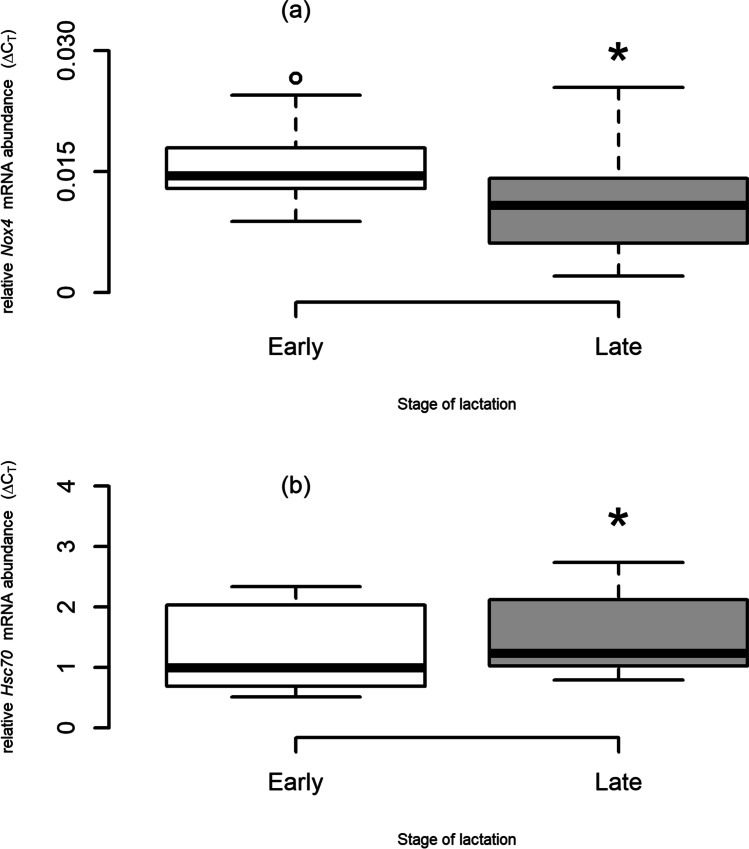
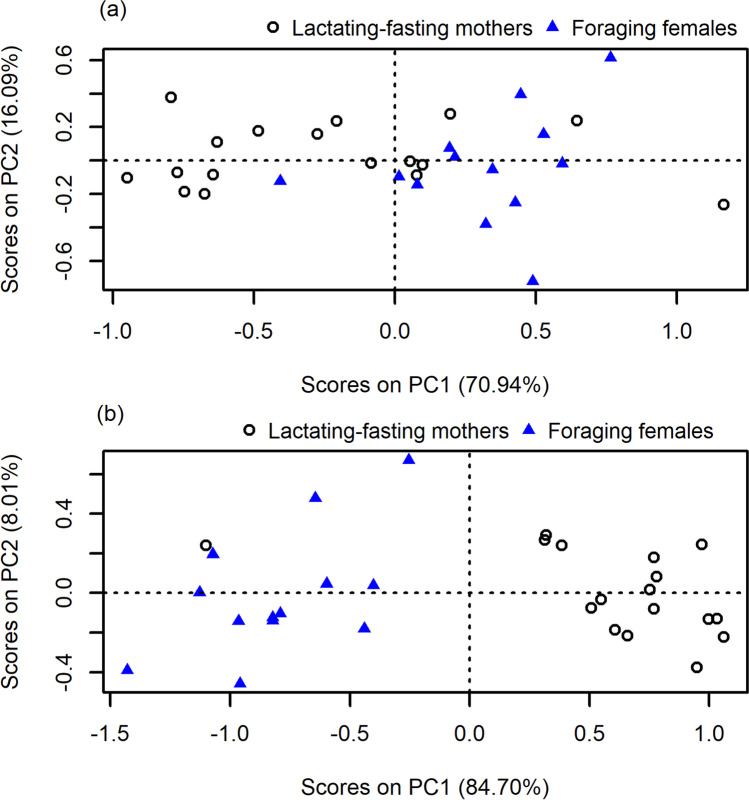
Life-history-oxidative stress theory predicts that elevated energy costs during reproduction reduce allocation to defences and increase cellular stress, with fitness consequences, particularly when resources are limited. As capital breeders, grey seals are a natural system in which to test this theory. We investigated oxidative damage (malondialdehyde (MDA) concentration) and cellular defences (relative mRNA abundance of heat shock proteins (Hsps) and redox enzymes (REs)) in blubber of wild female grey seals during the lactation fast (n = 17) and summer foraging (n = 13). Transcript abundance of Hsc70 increased, and Nox4, a pro-oxidant enzyme, decreased throughout lactation. Foraging females had higher mRNA abundance of some Hsps and lower RE transcript abundance and MDA concentrations, suggesting they experienced lower oxidative stress than lactating mothers, which diverted resources into pup rearing at the expense of blubber tissue damage. Lactation duration and maternal mass loss rate were both positively related to pup weaning mass. Pups whose mothers had higher blubber glutathione-S-transferase (GST) expression at early lactation gained mass more slowly. Higher glutathione peroxidase (GPx) and lower catalase (CAT) were associated with longer lactation but reduced maternal transfer efficiency and lower pup weaning mass. Cellular stress, and the ability to mount effective cellular defences, could proscribe lactation strategy in grey seal mothers and thus affect pup survival probability. These data support the life-history-oxidative stress hypothesis in a capital breeding mammal and suggest lactation is a period of heightened vulnerability to environmental factors that exacerbate cellular stress. Fitness consequences of stress may thus be accentuated during periods of rapid environmental change.
Keywords: Adipose; Cellular chaperone; Cellular stress; Pinniped; Trade off.
© 2023. The Author(s).
Conflict of interest statement
The authors declare no competing interests.
Figures

References
-
- Al Jothery AH, Vaanholt LM, Mody N, Arnous A, Lykkesfeldt J, Bünger L, Hill WG, Mitchel SE, Allison DB, Speakman JR. Oxidative costs of reproduction in mouse strains selected for different levels of food intake and which differ in reproductive performance. Sci Rep. 2016;6:36353. doi: 10.1038/srep36353. - DOI - PMC - PubMed
-
- Alonso-Alvarez C, Bertrand S, Devevey G, Prost J, Faivre B, Sorci G. Increased susceptibility to oxidative stress as a proximate cost of reproduction. Ecol Lett. 2004;7:363–368. doi: 10.1111/j.1461-0248.2004.00594.x. - DOI
-
- Andersen CL, Jensen JL, Ørntoft TF. Normalisation of real-time quantitative reverse transcription-PCR data: a model-based variance estimation approach to identify genes suited for normalisation, applied to bladder and colon cancer data sets. Cancer Res. 2004;64:5245–5250. doi: 10.1158/0008-5472.CAN-04-0496. - DOI - PubMed
-
- Atkinson SN, Ramsay MA. The effects of prolonged fasting of the body composition and reproductive success of female polar bears (Ursus maritimus) Funct Ecol. 1995;9:559–567. doi: 10.2307/2390145. - DOI
Publication types
MeSH terms
Substances
LinkOut - more resources
Full Text Sources
Research Materials
Miscellaneous
