


Summary and Concluding Remarks: Patterns of Birth Cohort‒Specific Smoking Histories
- PMID: 36935130
- PMCID: PMC11193149
- DOI: 10.1016/j.amepre.2022.12.007
Summary and Concluding Remarks: Patterns of Birth Cohort‒Specific Smoking Histories
Abstract
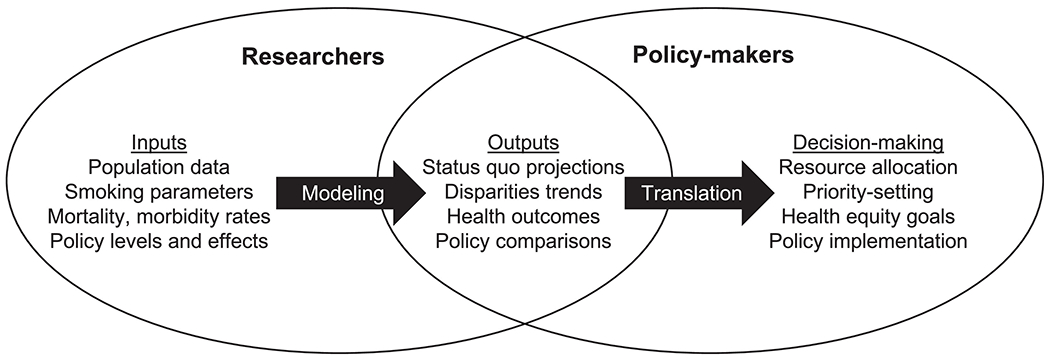
The Cancer Intervention and Surveillance Modeling Network (CISNET) Lung Working Group age-period-cohort methodology to study smoking patterns can be applied to tackle important issues in tobacco control and public health. This paper summarizes the analyses of smoking patterns in the U.S. by race/ethnicity, educational attainment, and family income and for each of the 50 U.S. states using the CISNET Lung Working Group age-period-cohort approach. We describe how decision makers, policy advocates, and researchers can use the sociodemographic analyses in this supplement to project state smoking trends and develop effective state-level tobacco control strategies. The all-cause mortality RR estimates associated with smoking for U.S. race/ethnicity and education groups are also discussed in the context of research that measures and evaluates health disparities. Finally, the application of the CISNET Lung Working Group age-period-cohort methodology to Brazil is reviewed with a view to how the same types of analyses can be applied to other low- and middle-income countries.
Copyright © 2023. Published by Elsevier Inc.
Figures
References
-
- Passel JS, Lopex MH, Cohn D. U.S. Hispanic population continued its geographic spread in the 2010s Washington, DC: Pew Foundation; 2022. [Available from: https://www.pewresearch.org/fact-tank/2022/02/03/u-s-hispanic-population... accessed 2022 October 10.
Publication types
MeSH terms
Grants and funding
LinkOut - more resources
Full Text Sources
Medical
