


Antimicrobial resistance in methicillin-resistant staphylococcus aureus
- PMID: 36936699
- PMCID: PMC10018568
- DOI: 10.1016/j.sjbs.2023.103604
Antimicrobial resistance in methicillin-resistant staphylococcus aureus
Abstract
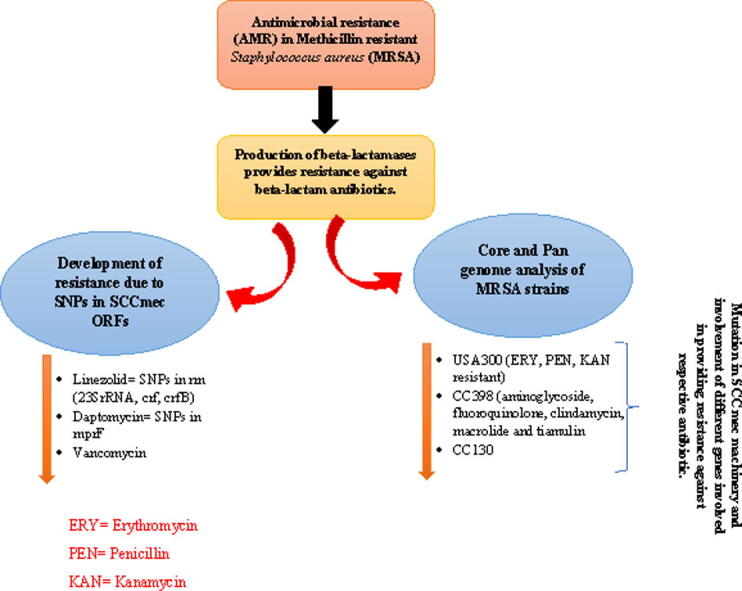
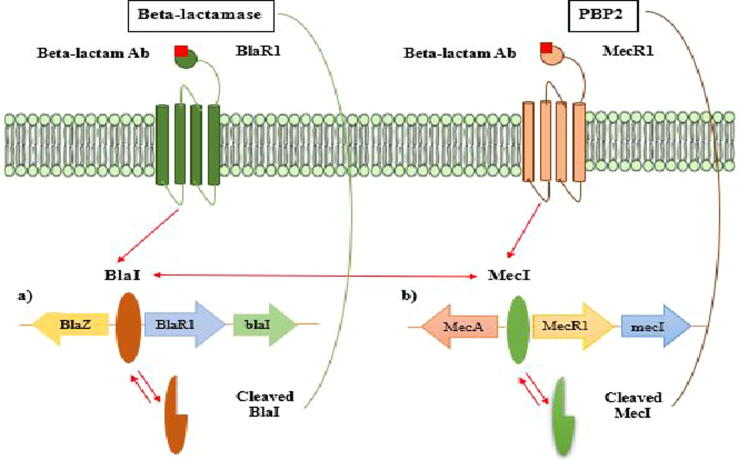
In the medical community, antibiotics are revered as a miracle because they stop diseases brought on by pathogenic bacteria. Antibiotics have become the cornerstone of contemporary medical advancements ever since penicillin was discovered. Antibiotic resistance developed among germs quickly, placing a strain in the medical field. Methicillin-resistant Staphylococcus aureus (MRSA), Since 1961, has emerged as the major general antimicrobial resistant bacteria (AMR) worldwide. MRSA can easily transmit across the hospital system and has mostly gained resistance to medications called beta-lactamases. This enzyme destroys the cell wall of beta-lactam antibiotics resulting in resistance against that respective antibiotic. Daptomycin, linezolid and vancomycin were previously used to treat MRSA infections. However, due to mutations and Single nucleotide polymorphisms (SNPs) in Open reading frames (ORFs) and SCCmec machinery of respective antibody, MRSA developed resistance against those antibiotics. The MRSA strains (USA300, CC398, CC130 etc.), when their pan-genomes were analyzed were found the genes involved in invoking resistance against the antibiotics as well as the epidemiology of that respective strain. PENC (penicillin plus potassium clavulanate) is the new antibiotic showing potential in treatment of MRSA though it is itself resistant against penicillin alone. In this review, our main focus is on mechanism of development of AMR in MRSA, how different ORFs are involved in evoking resistance in MRSA and what is the core-genome of different antimicrobial resistant MRSA.
Keywords: Antibiotics; Antimicrobial resistant bacteria; MRSA; Methicillin resistance mechanism of MRSA Methicillin resistance mechanism of MRSA.
© 2023 The Authors.
Conflict of interest statement
The authors declare that they have no known competing financial interests or personal relationships that could have appeared to influence the work reported in this paper.
Figures
References
-
- Abraham E., Chain E. An enzyme from bacteria able to destroy penicillin. 1940. Rev. Infect. Dis. 1988;10(4):677–678. - PubMed
-
- Ahmed M.O., Baptiste K.E. Vancomycin-resistant enterococci: a review of antimicrobial resistance mechanisms and perspectives of human and animal health. Microb. Drug Resist. 2018;24(5):590–606. - PubMed
-
- Aklilu E., et al. Molecular epidemiology of methicillin-resistant Staphylococcus aureus (MRSA) among veterinary students and personnel at a veterinary hospital in Malaysia. Vet. Microbiol. 2013;164(3–4):352–358. - PubMed
-
- Barlow M. What antimicrobial resistance has taught us about horizontal gene transfer. Journal of Horizontal Gene Transfer. 2009:397–411. - PubMed
Publication types
LinkOut - more resources
Full Text Sources
