


Symptom Severity and Treatment Satisfaction in Patients with Idiopathic Hypersomnia: The Real World Idiopathic Hypersomnia Outcomes Study (ARISE)
- PMID: 36937782
- PMCID: PMC10015981
- DOI: 10.2147/NSS.S386021
Symptom Severity and Treatment Satisfaction in Patients with Idiopathic Hypersomnia: The Real World Idiopathic Hypersomnia Outcomes Study (ARISE)
Abstract
Objective: Idiopathic hypersomnia is a debilitating sleep disorder characterized by excessive daytime sleepiness, sleep inertia, and prolonged sleep duration. The patient burden of idiopathic hypersomnia is poorly understood. The Real World Idiopathic Hypersomnia Outcomes Study (ARISE) evaluated symptoms and treatment effectiveness/satisfaction in participants with idiopathic hypersomnia.
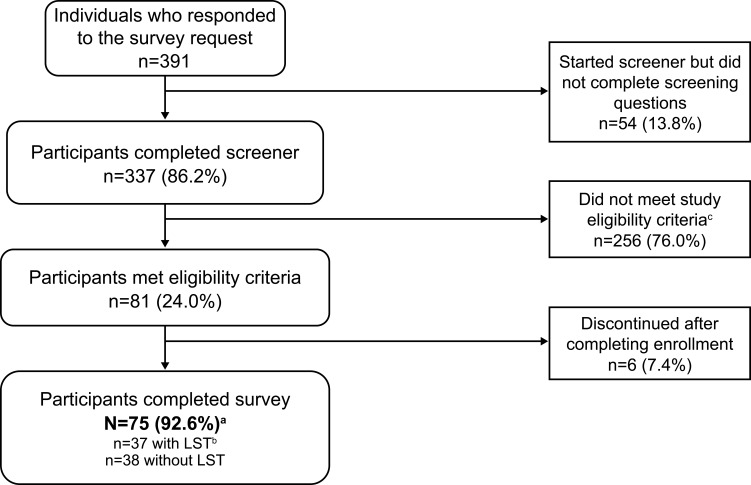
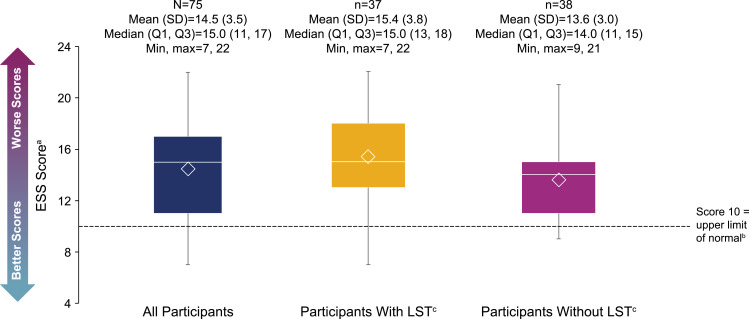
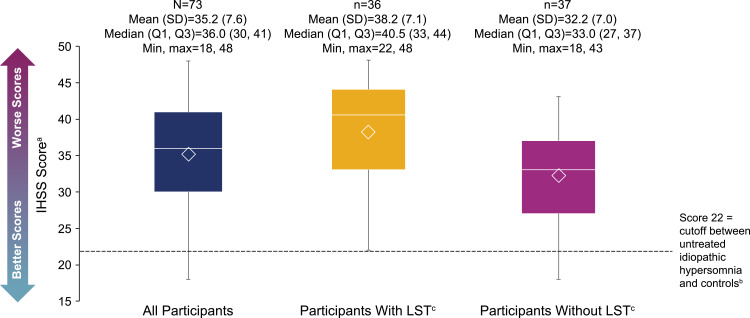
Methods: ARISE was a United States-based virtual cross-sectional survey. Participants were adults 21-65 years of age with idiopathic hypersomnia recruited from social media, the Hypersomnia Foundation website, and a patient panel. Self-assessments included the Epworth Sleepiness Scale (ESS), Idiopathic Hypersomnia Severity Scale (IHSS), Treatment Satisfaction Questionnaire for Medication, version II (TSQM-vII), and additional treatment questions. Data were analyzed for all participants and for subgroups with/without long sleep time (LST; ≥11 hours in 24 hours).
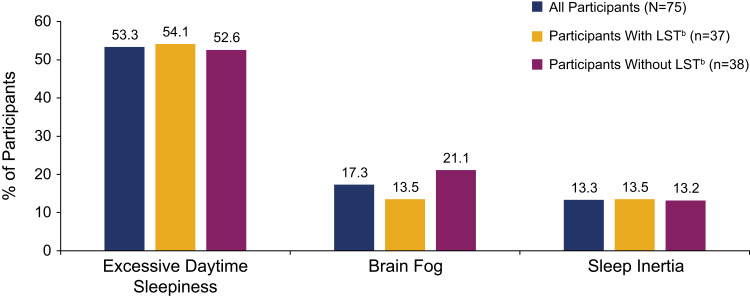
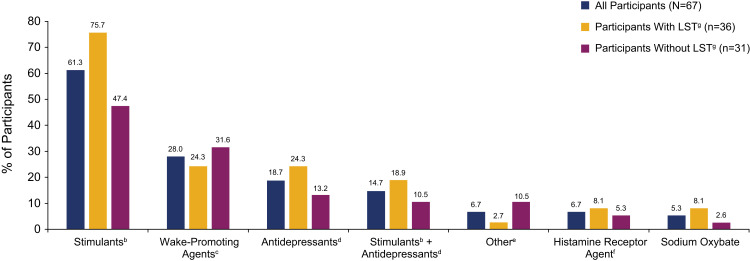
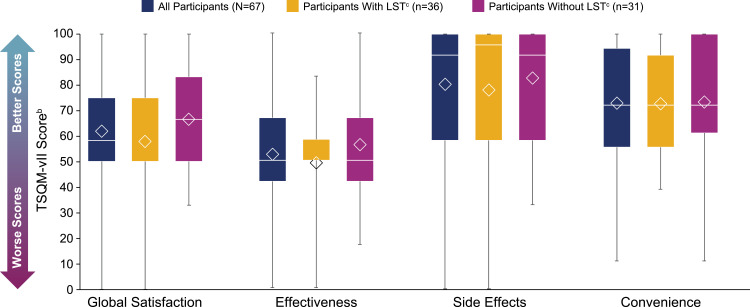
Results: Of 75 participants enrolled, most were female (81.3%). The mean (SD) age was 34.1 (10.7) years and 49% had LST. Most participants took off-label prescription medications (89.3%) and/or used other measures (93.3%) to manage their symptoms. The mean (SD) ESS score was 14.5 (3.5) and the mean IHSS score was 35.2 (7.6). Treatment satisfaction was low (mean [SD] TSQM-vII score: overall, 61.9 [21.2]; with LST, 57.9 [21.4]; without LST, 66.7 [20.3]), primarily driven by dissatisfaction with treatment effectiveness. The most common classes of prescription medications used were stimulants (61.3%), wake-promoting agents (28.0%), and antidepressants (18.7%); non-prescription measures used to manage symptoms included caffeine (73.3%), planned naps (34.7%), and individual accommodations (32.0%).
Conclusion: Overall, participants with idiopathic hypersomnia, with or without LST, had substantial symptom burden despite most of the study population taking off-label medications and using nonprescription measures to manage symptoms.
Keywords: antidepressants; sleep disorder; sodium oxybate; stimulants; wake-promoting agents.
© 2023 Schneider et al.
Conflict of interest statement
LD Schneider is a compensated member of advisory boards and speakers bureaus for Jazz Pharmaceuticals, Eisai, and Harmony Biosciences. He is an employee of Alphabet, Inc. J Stevens, W Macfadden, and DS Fuller are full-time employees of Jazz Pharmaceuticals who, in the course of this employment, have received stock options exercisable for, and other stock awards of, ordinary shares of Jazz Pharmaceuticals, plc. AM Husain has received consultancy fees and/or research funding from Jazz Pharmaceuticals, UCB, BlackThorn, Sage, Eisai, Marinus, Pipeline Pharm, and Neurelis, as well as royalties from Springer, Demos Medical, and Wolters Kluwer, and holds an editorship role with Wolters Kluwer. He is a Data and Safety Monitoring Board (DSMB) member for Merck, Eisai and UCB Pharma. D Ito is an employee of Stratevi, a consulting firm that received research funding from Jazz Pharmaceuticals to conduct this study. PC Zee serves on scientific advisory boards for Jazz, Eisai, and Harmony Biosciences and, as a consultant for CVS Caremark, owns stock in Teva. The authors report no other conflicts of interest in this work.
Figures
References
-
- American Academy of Sleep Medicine. Idiopathic hypersomnia. In: International Classification of Sleep Disorders. 3rd ed. Darien, IL: American Academy of Sleep Medicine; 2014.
LinkOut - more resources
Full Text Sources
