Monovision Correction Preference and Eye Dominance Measurements
- PMID: 36939712
- PMCID: PMC10043500
- DOI: 10.1167/tvst.12.3.18
Monovision Correction Preference and Eye Dominance Measurements
Abstract
Purpose: To propose new methods for eye selection in presbyopic monovision corrections.
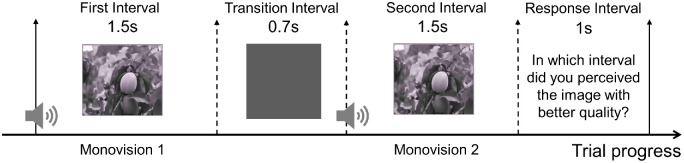
Methods: Twenty subjects with presbyopia performed two standard methods of binary eye dominance identification (sensory with +1.50 diopters [D ]and +0.50 D and sighting with "hole-in-the-card") and two psychophysical methods of perceived visual quality: (1) the Preferential test, 26 natural images were judged with the near addition in one eye or in the other in a 2-interval forced-choice task, and the Eye Dominance Strength (EDS) defined as the proportion of trials where one monovision is preferred over the other; (2) the Multifocal Acceptance Score (MAS-2EV) test, the perceived quality of a natural images set (for 2 luminance levels and distances) was scored and EDS defined as the score difference between monovision in one eye or the other. Left-eye and right-eye dominance are indicated with negative and positive values, respectively. Tests were performed using a Simultaneous Vision Simulator, which allows rapid changes between corrections.
Results: Standard sensory and sighting dominances matched in only 55% of subjects. The Preferential EDS (ranging from -0.7 to +0.9) and MAS-2EV EDS (ranging from -0.6 to +0.4) were highly correlated. Selecting the eye for far in monovision with the MAS-2EV, sensory, or sighting tests would have resulted in 79%, 64%, and 43% success considering the Preferential test as the gold standard.
Conclusions: Tests based on perceptual preference allow selection of the preferred monovision correction and measurement of dominance strength.
Translational relevance: The binocular visual simulator allows efficient implementation of eye preference tests for monovision in clinical use.
Conflict of interest statement
Disclosure:
Figures


References
-
- Harris MG, Classé JG. Clinicolegal considerations of monovision. J Am Optom Assoc. 1988; 59: 491–495. - PubMed
-
- Jain S, Arora I, Azar DT. Success of monovision in presbyopes: Review of the literature and potential applications to refractive surgery. Surv Ophthalmol. 1996; 40: 491–499. - PubMed
-
- Mapp AP, Ono H, Barbeito R. What does the dominant eye dominate? A brief and somewhat contentious review. Percept Psychophys. 2003; 65: 310–317. - PubMed
-
- Barbeito R. Sighting dominance: An explanation based on the processing of visual direction in tests of sighting dominance. Vision Res. 1981; 21: 855–860. - PubMed
-
- Evans BJW. Monovision: A review. Ophthalmic Physiol Opt. 2007; 27: 417–439. - PubMed
Publication types
MeSH terms
Grants and funding
LinkOut - more resources
Full Text Sources