


Synthetic bacterial consortia transplantation for the treatment of Gardnerella vaginalis-induced bacterial vaginosis in mice
- PMID: 36941732
- PMCID: PMC10026434
- DOI: 10.1186/s40168-023-01497-y
Synthetic bacterial consortia transplantation for the treatment of Gardnerella vaginalis-induced bacterial vaginosis in mice
Abstract
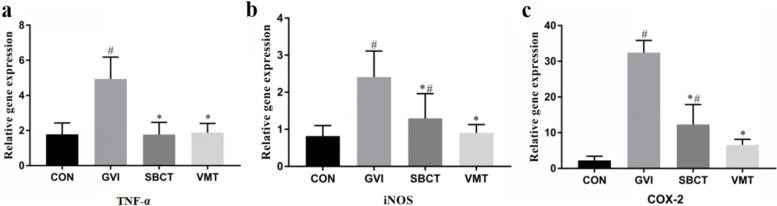
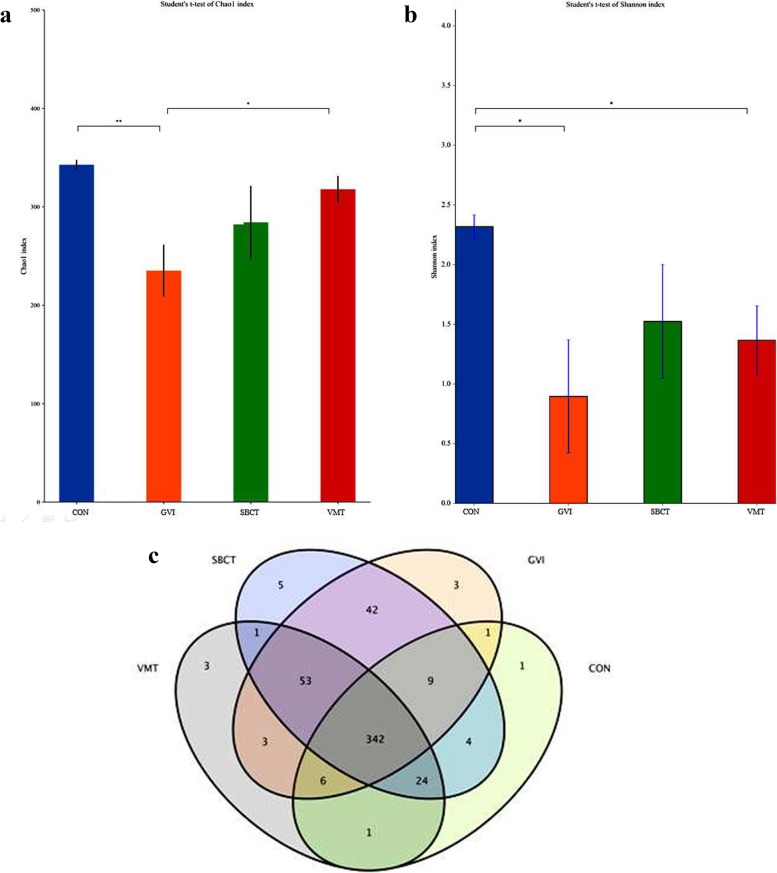
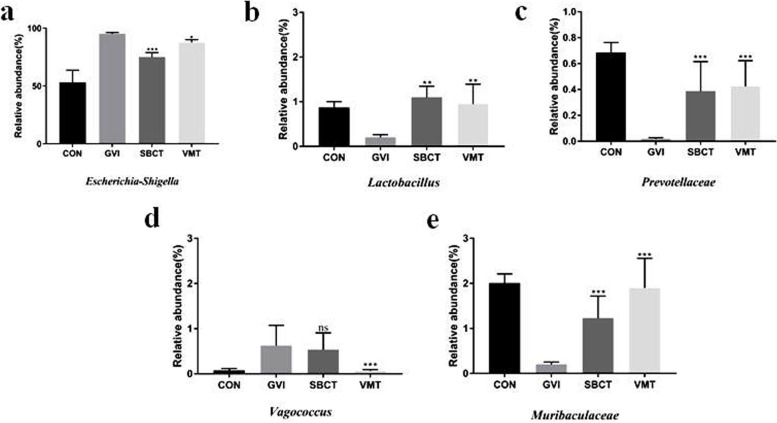
Bacterial vaginosis (BV) is a disease caused by vaginal microbiota dysbiosis. Here, we propose the use of synthetic bacterial consortia transplantation (SBCT) for the treatment of Gardnerella vaginalis-induced BV mice. The results showed that SBCT significantly reduced vaginal tissue damage and restored the vaginal microbiota, decreased the secretion of pro-inflammatory cytokines (IL-1β and IL-8), and suppressed NF-κB activation. IL-17, iNOS, and COX-2 expression in vaginal tissue were also down-regulated. However, IL-10 and Foxp3 showed up-regulated expression in mice. Compared with vaginal microbiota transplantation (VMT), results indicated that VMT was more effective than SBCT in suppressing G. vaginalis-induced inflammation. The obtained results suggest that synthetic bacterial consortia might be used as a potential biotherapeutic agent for the treatment of G. vaginalis-induced bacterial vaginosis. Video Abstract.
Keywords: Bacterial vaginosis; Lactic acid bacteria; Synthetic bacterial consortia transplantation; Vaginal microbiota.
© 2023. The Author(s).
Conflict of interest statement
The authors declare no competing interests.
Figures







References
Publication types
MeSH terms
Substances
LinkOut - more resources
Full Text Sources
Molecular Biology Databases
Research Materials
