Health-related quality of life and associated factors after hip fracture. Results from a six-month prospective cohort study
- PMID: 36942001
- PMCID: PMC10024485
- DOI: 10.7717/peerj.14671
Health-related quality of life and associated factors after hip fracture. Results from a six-month prospective cohort study
Abstract
Background: Hip fractures are a major public health problem with increasing relevance in aging societies. They are associated with high mortality rates, morbidity, and loss of independence. The aim of the EMAAge study was to determine the impact of hip fractures on patient-reported health-related quality of life (HRQOL), and to identify potential risk factors for worse outcomes.
Methods: EMAAge is a multicenter, prospective cohort study of patients who suffered a hip fracture. Patients or, if necessary, proxies were interviewed after initial treatment and after six months using standardized questionnaires including the EQ-5D-5L instrument, the Oxford Hip Score, the PHQ-4, the Short Nutritional Assessment Questionnaire, and items on patients living situation. Medical data on diagnoses, comorbidities, medications, and hospital care were derived from hospital information systems.
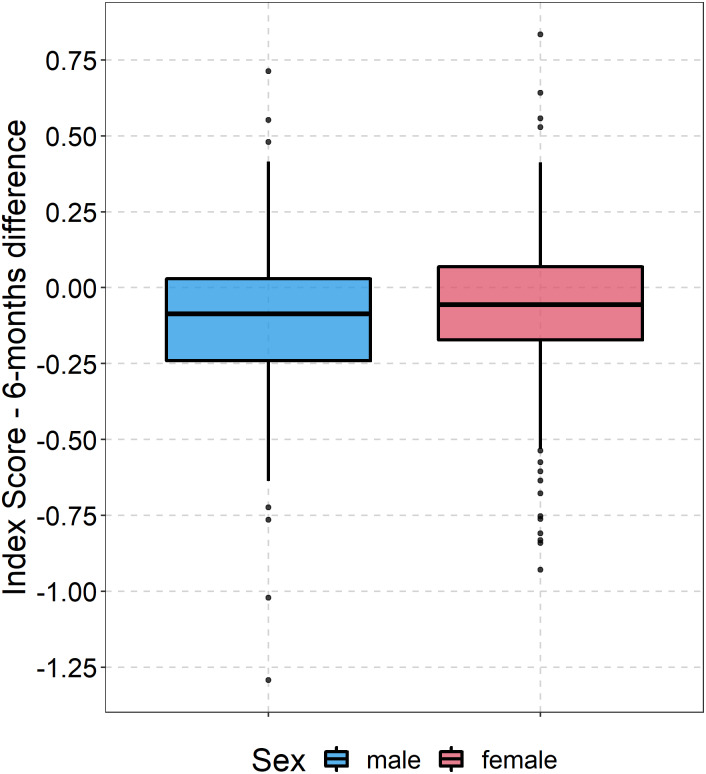
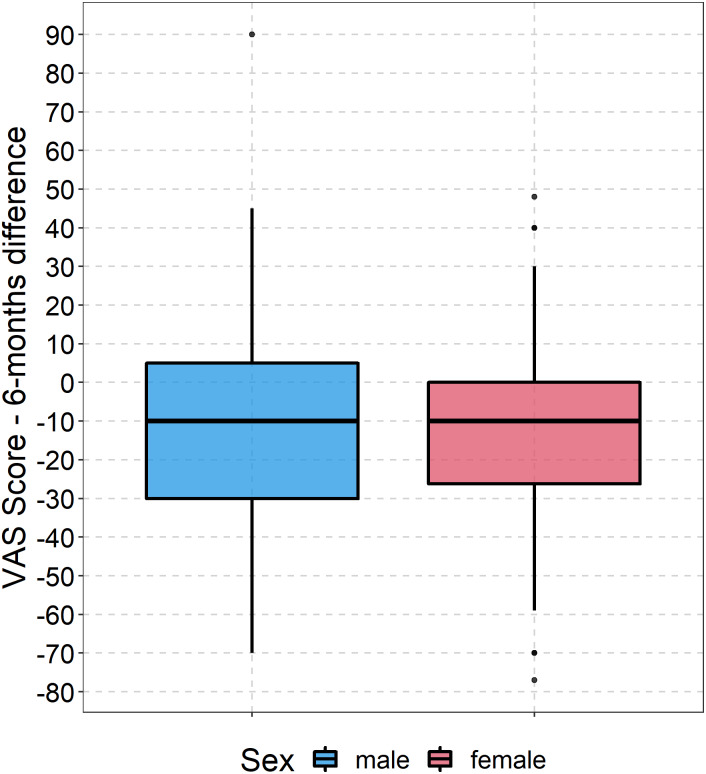
Results: A total of 326 patients were included. EQ-5D index values decreased from a mean of 0.70 at baseline to 0.63 at six months. The mean self-rated health on the EQ-VAS decreased from 69.9 to 59.4. Multivariable linear regression models revealed three relevant associated factors with the six-months EQ-5D index: symptoms of depression and anxiety, pre-fracture limitations in activities of daily living, and no referral to a rehabilitation facility had a negative impact. In addition, the six-months EQ-VAS was negatively associated with polypharmacy, living in a facility, and migration background.
Conclusions: Hip fractures have a substantial negative impact on patients HRQOL. Our results suggest that there are modifying factors that need further investigation including polypharmacy and migration background. Structured and timely rehabilitation seems to be a protective factor.
Keywords: Elderly; Health care; Health services research; Health-related quality of life; Hip fracture; Observational study; Patient-reported outcomes; Quality of life.
2023 Deutschbein et al.
Conflict of interest statement
The authors declare there are no competing interests.
Figures
References
-
- Amarilla-Donoso FJ, López-Espuela F, Roncero-Martín R, Leal-Hernandez O, Puerto-Parejo LM, Aliaga-Vera I, Toribio-Felipe R, Lavado-García JM. Quality of life in elderly people after a hip fracture: a prospective study. Health and Quality of Life Outcomes. 2020a;18:71. doi: 10.1186/s12955-020-01314-2. - DOI - PMC - PubMed
-
- Brauns H, Scherer S, Steinmann S. The CASMIN educational classification in international comparative research. In: Hoffmeyer-Zlotnik JHP, Wolf C, editors. Advances in cross-national comparison: a european working book for demographic and socio-economic variables. Springer US; Boston, MA: 2003. pp. 221–244.
Publication types
MeSH terms
LinkOut - more resources
Full Text Sources
Medical