This is a preprint.
Treatment seeking behaviours, antibiotic use and relationships to multi-drug resistance: A study of urinary tract infection patients in Kenya, Tanzania and Uganda
- PMID: 36945627
- PMCID: PMC10029025
- DOI: 10.1101/2023.03.04.23286801
Treatment seeking behaviours, antibiotic use and relationships to multi-drug resistance: A study of urinary tract infection patients in Kenya, Tanzania and Uganda
Update in
-
Treatment seeking behaviours, antibiotic use and relationships to multi-drug resistance: A study of urinary tract infection patients in Kenya, Tanzania and Uganda.PLOS Glob Public Health. 2024 Feb 16;4(2):e0002709. doi: 10.1371/journal.pgph.0002709. eCollection 2024. PLOS Glob Public Health. 2024. PMID: 38363770 Free PMC article.
Abstract
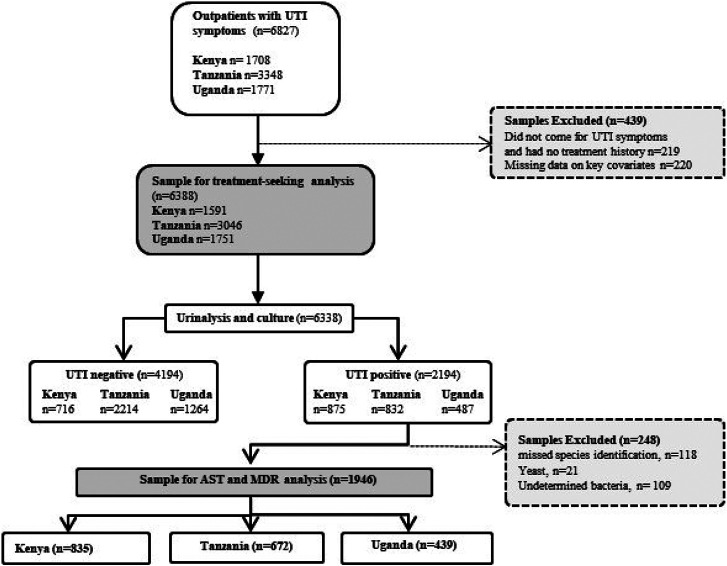
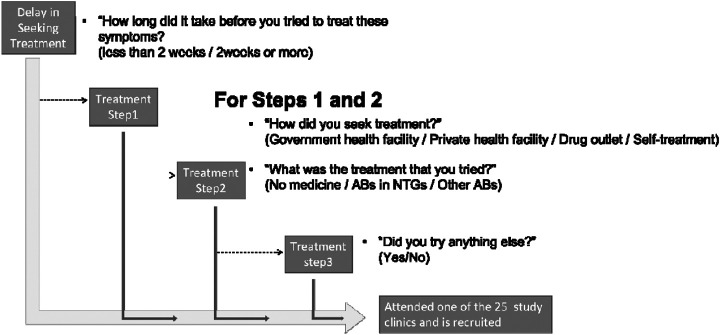
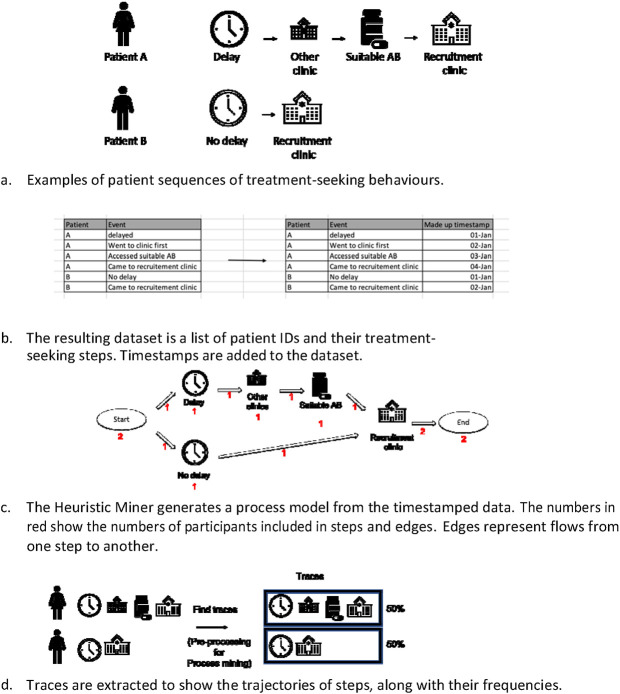
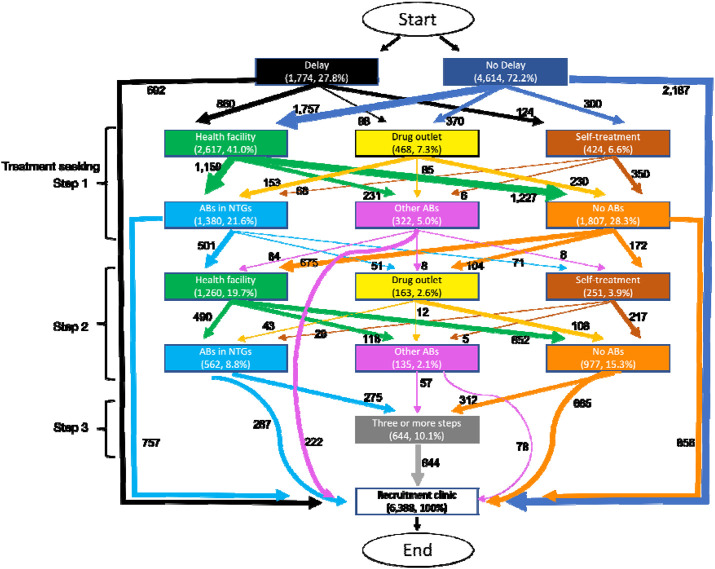
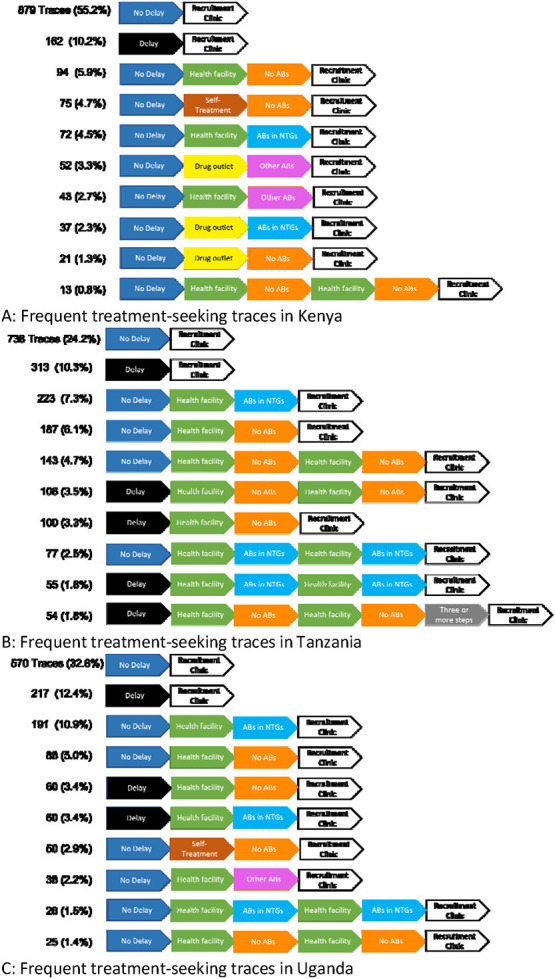
Antibacterial resistance (ABR) is a major public health threat. An important accelerating factor is treatment-seeking behaviours, including inappropriate antibiotic (AB) use. In many low- and middle-income countries (LMICs) this includes taking ABs with and without prescription sourced from various providers, including health facilities and community drug sellers. However, investigations of complex treatment-seeking, AB use and drug resistance in LMICs are scarce. The Holistic Approach to Unravel Antibacterial Resistance in East Africa (HATUA) Consortium collected questionnaire and microbiological data from 6,827 adult outpatients with urinary tract infection (UTI)-like symptoms presenting at healthcare facilities in Kenya, Tanzania and Uganda. Among 6,388 patients we analysed patterns of self-reported treatment seeking behaviours ('patient pathways') using process mining and single-channel sequence analysis. Of those with microbiologically confirmed UTI (n=1,946), we used logistic regression to assessed the relationship between treatment seeking behaviour, AB use, and likelihood of having a multi-drug resistant (MDR) UTI. The most common treatment pathways for UTI-like symptoms included attending health facilities, rather than other providers (e.g. drug sellers). Patients from the sites sampled in Tanzania and Uganda, where prevalence of MDR UTI was over 50%, were more likely to report treatment failures, and have repeated visits to clinics/other providers, than those from Kenyan sites, where MDR UTI rates were lower (33%). There was no strong or consistent relationship between individual AB use and risk of MDR UTI, after accounting for country context. The results highlight challenges East African patients face in accessing effective UTI treatment. These challenges increase where rates of MDR UTI are higher, suggesting a reinforcing circle of failed treatment attempts and sustained selection for drug resistance. Whilst individual behaviours may contribute to the risk of MDR UTI, our data show that factors related to context are stronger drivers of ABR.
Keywords: Sub-Saharan Africa; Urinary tract infection; antibacterial resistance; antibiotic use; healthcare use.
Conflict of interest statement
Conflict of Interest None
Figures

References
-
- Holmes AH, Moore LSP, Sundsfjord A, Steinbakk M, Regmi S, Karkey A, et al. Understanding the mechanisms and drivers of antimicrobial resistance. The Lancet. 2016. Jan 9;387(10014):176–87. - PubMed
-
- O’Neill J. Antimicrobial Resistance : Tackling a crisis for the health and wealth of nations. 2014.
-
- D’Costa VM, King CE, Kalan L, Morar M, Sung WWL, Schwarz C, et al. Antibiotic resistance is ancient. Nature. 2011. Sep;477(7365):457–61. - PubMed
Publication types
Grants and funding
LinkOut - more resources
Full Text Sources